A quiet corner of far northern California where a great plug-dome volcano still steams, and boiling mud pots, hissing fumaroles and clear alpine lakes sit within a few miles of each other. A place of all four kinds of volcano, snow into July, and almost no crowds. Yellowstone's shy, wild cousin.
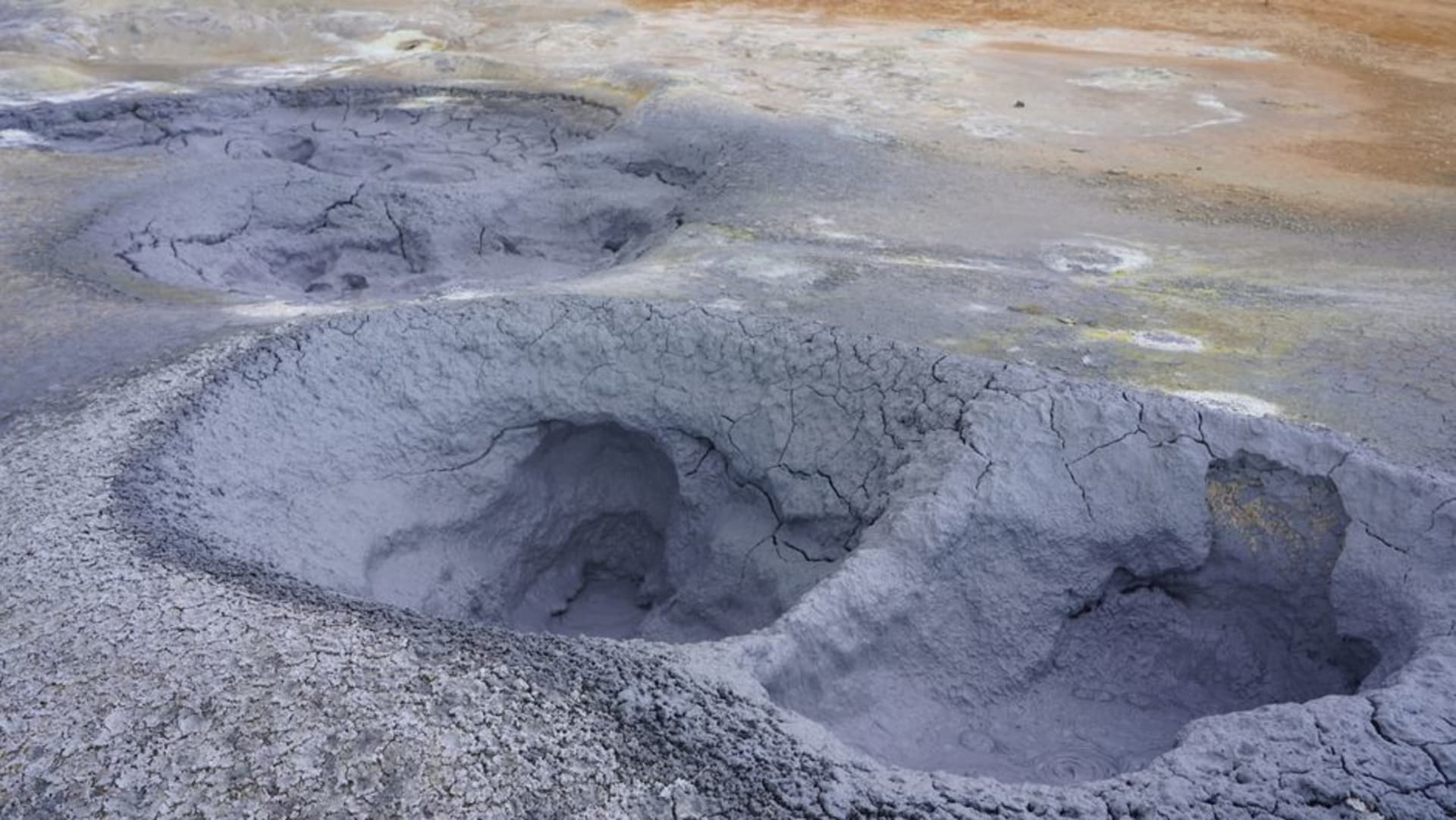
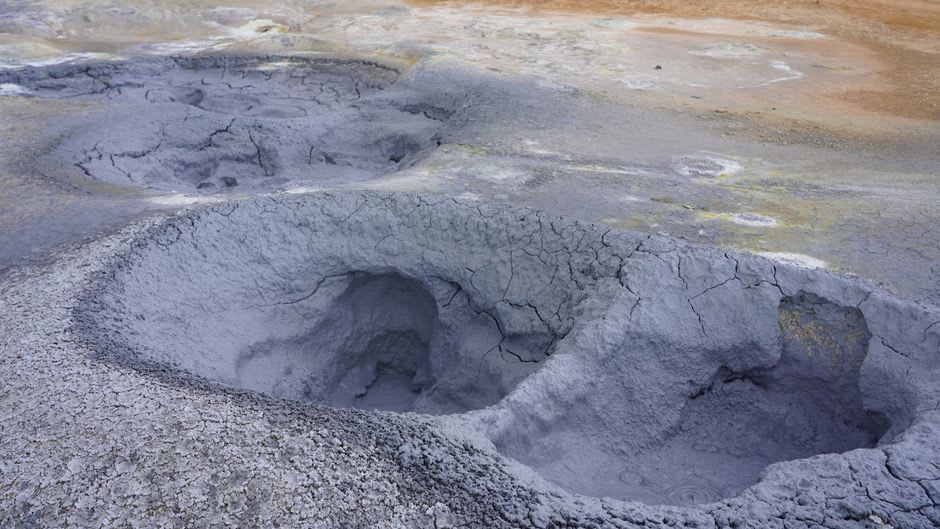
The smell reached us first — that low sulphur reek, eggs and hot rock — before the boardwalk even came into view. We were at Bumpass Hell, and below us the ground had simply given up being solid: pools of milk-blue water boiling, grey mud pots plopping like porridge, steam screaming out of vents in the bare pale earth. Lia leaned over the rail and said the thing everyone says here, that it looks like the planet is still under construction. It is. Lassen last erupted in 1917, which in volcano time was a moment ago, and standing on that groaning ground you feel it. We had this whole otherworld nearly to ourselves.
Bumpass Hell
The name comes from a guide named Bumpass who lost a leg breaking through the thin crust into the boiling ground below, which is the sort of history that keeps you on the boardwalk. The trail winds a couple of miles down into the largest hydrothermal basin in the park, and the closer you get the louder and stranger it becomes — the biggest fumarole here roars like a jet engine, throwing steam thirty feet up. We spent an hour just watching a single mud pot breathe, its grey surface bulging and bursting in slow motion. Lia filmed it for her sister and could not stop laughing at the noise.
The peak and the lakes
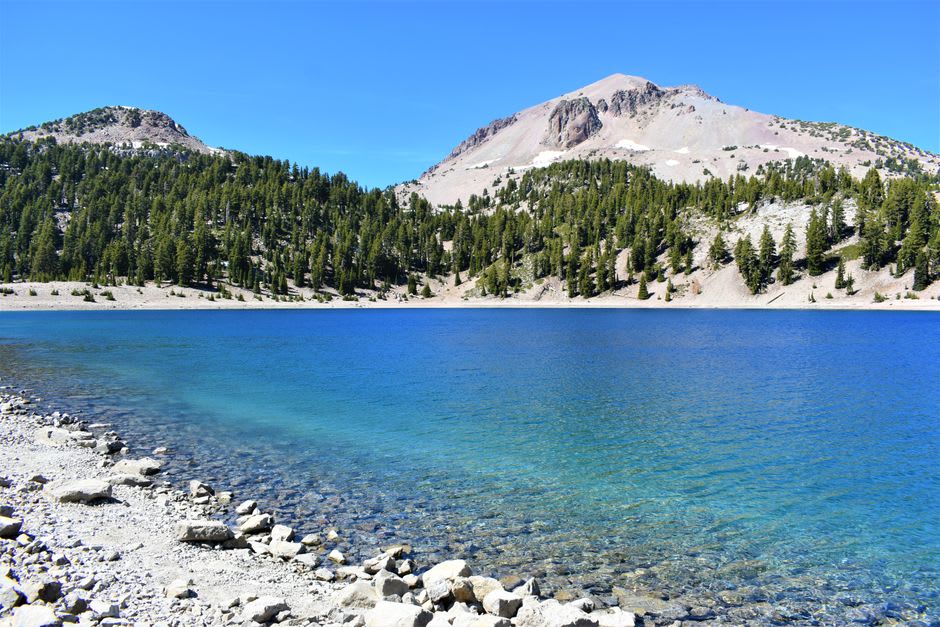
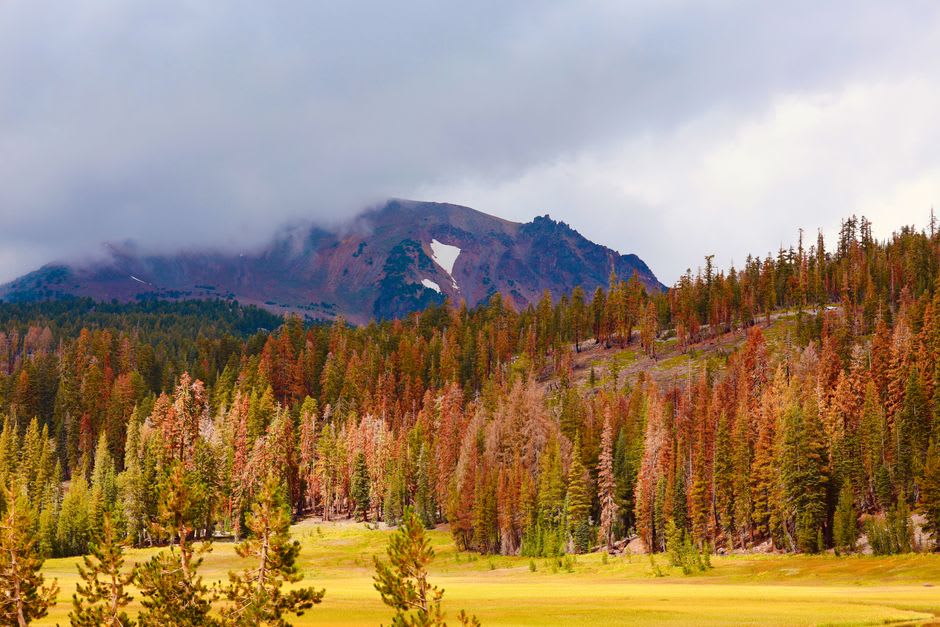
Lassen Peak itself is one of the largest plug-dome volcanoes in the world, and the road climbs high around its flank to over 8,000 feet, where snow lingers into July. We didn’t summit — the trail was still buried in white when we came in June — but we hiked instead to Lake Helen, a bowl of impossibly clear meltwater so cold it made my teeth ache to touch it, the peak doubled on its surface. Further down, Manzanita Lake gave us the postcard: the whole mountain reflected without a ripple at dawn, a family of mergansers cutting the only wake. We ate breakfast on a log and said nothing for a long while.
The empty park
What stays with me most about Lassen is how few people share it. It sits too far north for the Yosemite crowds and lacks a single headline sight, and so it stays quiet — we drove the length of the volcanic highway passing the odd car, stopping wherever we liked. At the Sulphur Works, steam vents hiss right beside the road. At the Devastated Area, we walked among boulders the 1915 eruption hurled miles downslope, now furred with returning pine. In the evening the sky over the meadows filled with more stars than either of us had seen in years, the Milky Way a clear smear, and the cold came down hard and clean off the peak.
Getting There
Lassen Volcanic sits in far northern California, about an hour east of Redding, which has the nearest airport and sits on I-5. The main volcanic highway (Highway 89) runs through the park connecting the northwest and southwest entrances, but it is closed by snow for much of the year — typically only fully open from June or July into October, so check conditions before you go. There is no public transit; a car is essential, and services inside are limited, so fuel and stock up in Redding or Chester. The southwest entrance puts you closest to Bumpass Hell and the peak trail.
Keep exploring
More of California