Badlands National Park
"You stand on the rim and the prairie just falls apart in front of you into something that looks like another planet."
Where the Prairie Falls Apart
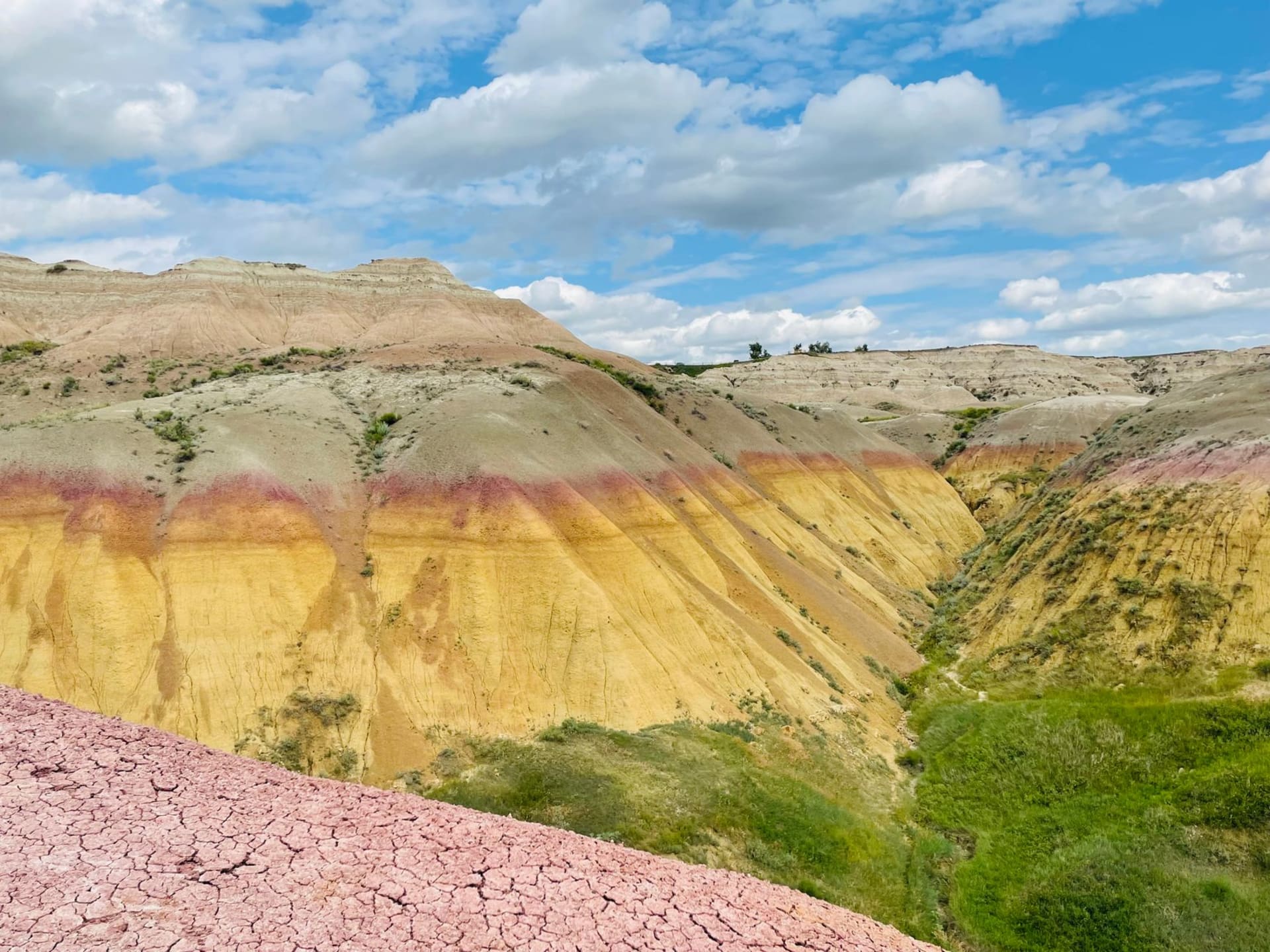
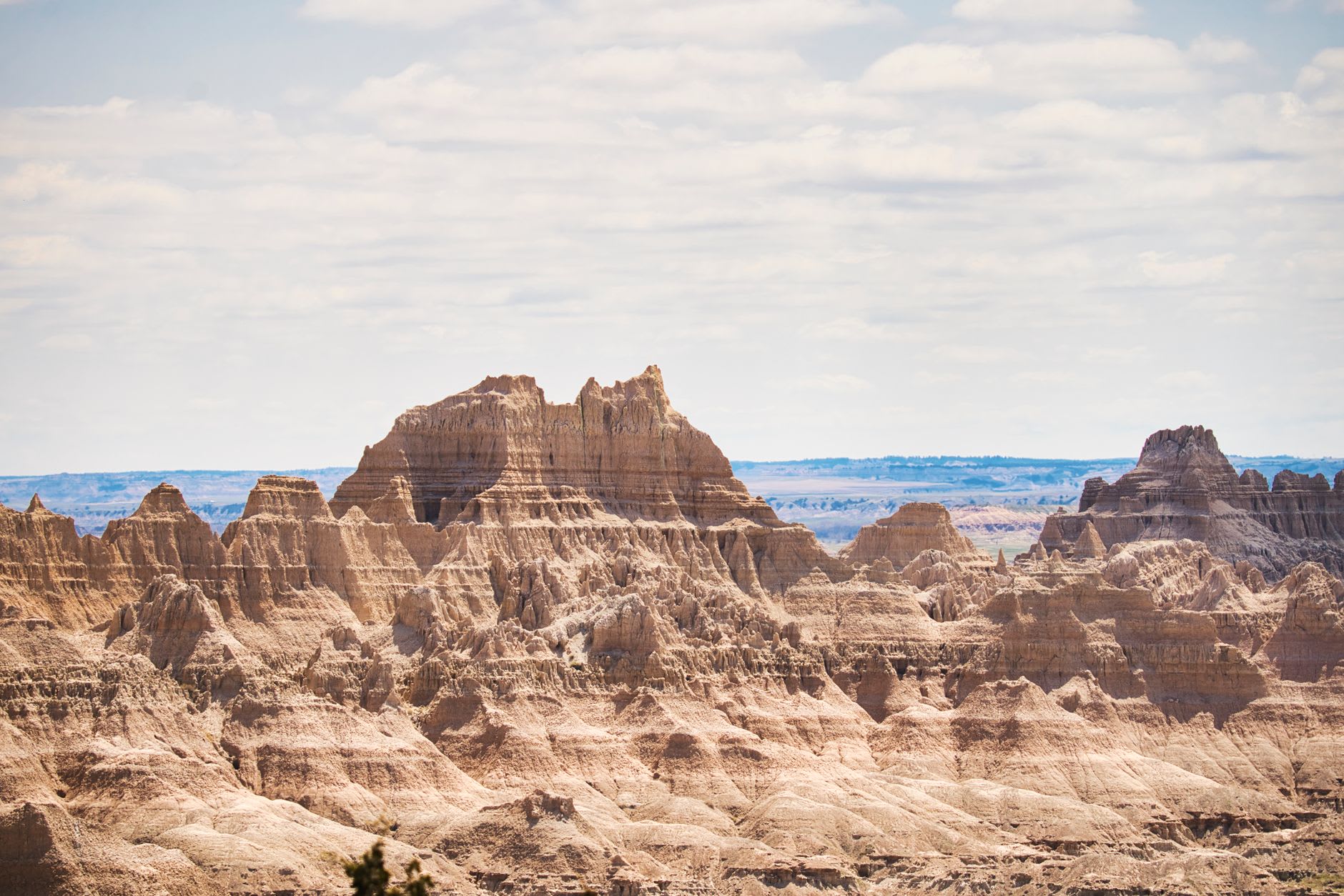
I had low expectations for South Dakota, which is exactly the wrong attitude and one the Badlands corrected within about four minutes. You drive across an ocean of flat golden grassland, the kind of place that makes you understand why people invented the word monotonous, and then the ground simply collapses. A whole landscape of eroded ridges, gullies, and banded spires drops away below the rim, striped in pink, tan, grey, and rust like a cross-section of the planet’s own diary. The Lakota called it mako sica, bad land, and French trappers translated it directly; both groups meant it as a warning, not an advertisement.
We drove the Badlands Loop Road in late afternoon, which is when the place earns its reputation. The low sun rakes across the formations and the bands of color separate and intensify until the whole thing looks lit from within. Lia, who had been mildly grumpy about the long drive from anywhere, went quiet at the Pinnacles Overlook and stayed quiet for a long time, which is how I know it landed.
Bison, Bighorns, and the Open Grass
The northern unit pairs the rock with one of the largest mixed-grass prairies left in the national park system, and that grass is full of animals. We came around a bend and had to stop for a herd of bison crossing the road with the total indifference of creatures that know they outweigh your rental car. Bighorn sheep pick their way along the formations. Prairie dog towns spread across the flats, the animals popping up and chirping alarm at hawks overhead. There are black-footed ferrets here too, one of the rarest mammals in North America, reintroduced into these prairie dog colonies, though you would be extraordinarily lucky to see one.
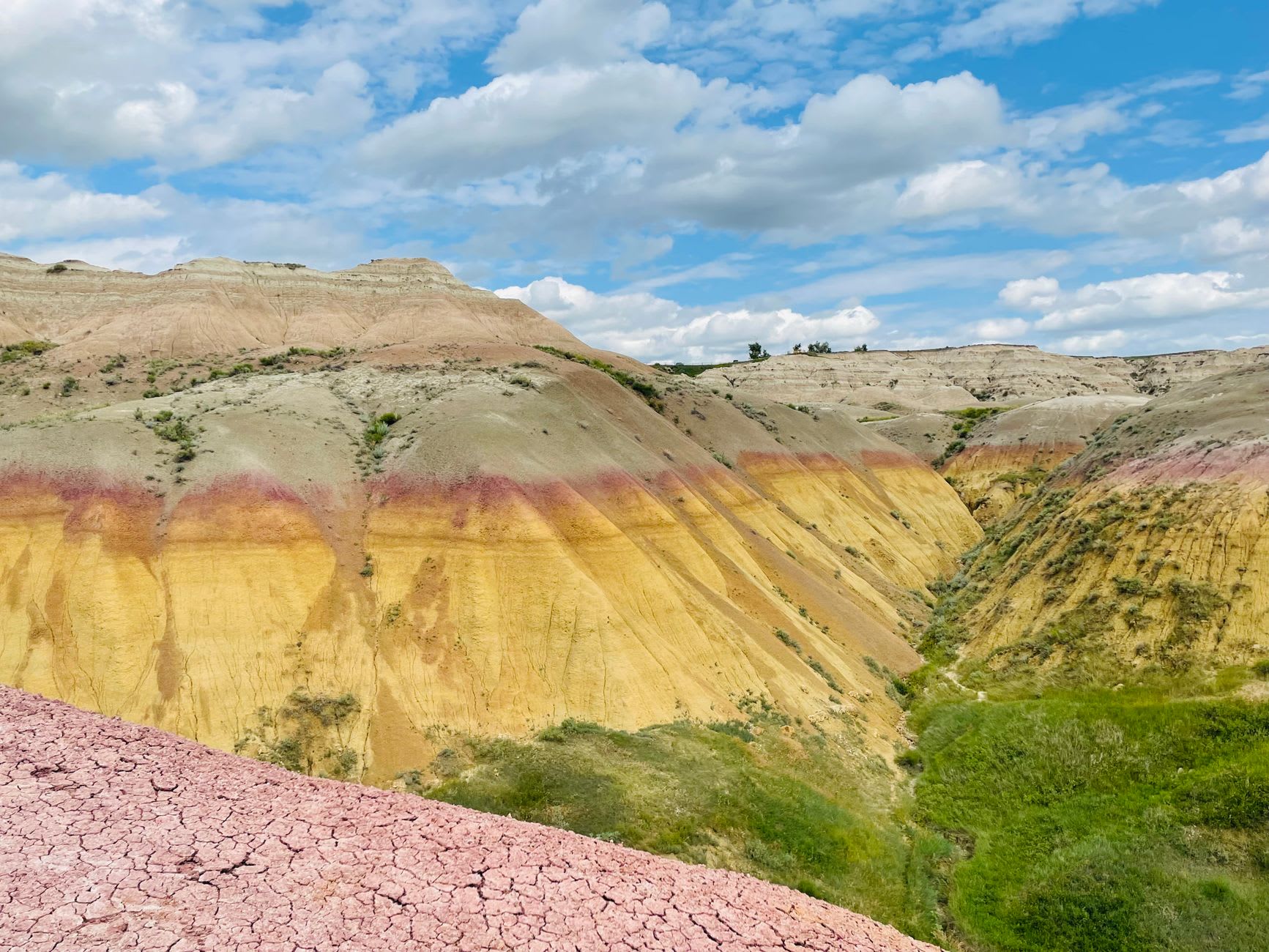
The fossils underfoot are part of the appeal. This was a sea, then a forest, then a vast floodplain, and the eroding rock continually exposes the bones of creatures that lived here 30 million years ago. There is a small fossil prep lab in the visitor center where you can watch people working on actual specimens, which I found far more interesting than I expected.
The Wall and the Dark
The Badlands Wall — the long ragged escarpment that divides the upper and lower prairie — is the park’s spine, and the best of the short trails climb up onto and through it. The Notch Trail involves a log ladder up a gully and a payoff view down into the eroded valley that is worth the mild exposure. It is hot, dry, exposed work; carry water like your life depends on it, because in July it briefly does.
After dark the park turns into one of the better stargazing spots in the country. We laid out on the still-warm asphalt of an overlook with almost nobody around and watched the Milky Way come up over the spires. It is the kind of sky that has mostly disappeared from the places people actually live, and it alone justifies staying the night rather than passing through.
When to go: Late spring and early autumn for tolerable temperatures and good light; summer is brutally hot and exposed, winter cold but starkly beautiful and nearly empty. Stay for sunset and the night sky, which is when the park is at its best and the day-trippers have all gone.