There’s a version of British mountains that the rest of the world doesn’t take seriously, and I understand why — on a map, Snowdon is only 1,085 metres, barely a foothill by Alpine standards. Then you actually climb it, in horizontal Welsh rain, on a path scoured by ten thousand years of glaciers, and you understand that altitude isn’t the point. Snowdonia — Eryri in Welsh, and locals increasingly insist on the Welsh — is one of the most atmospheric landscapes I’ve walked in Europe, and it nearly broke me.
Up Snowdon, the Hard Way
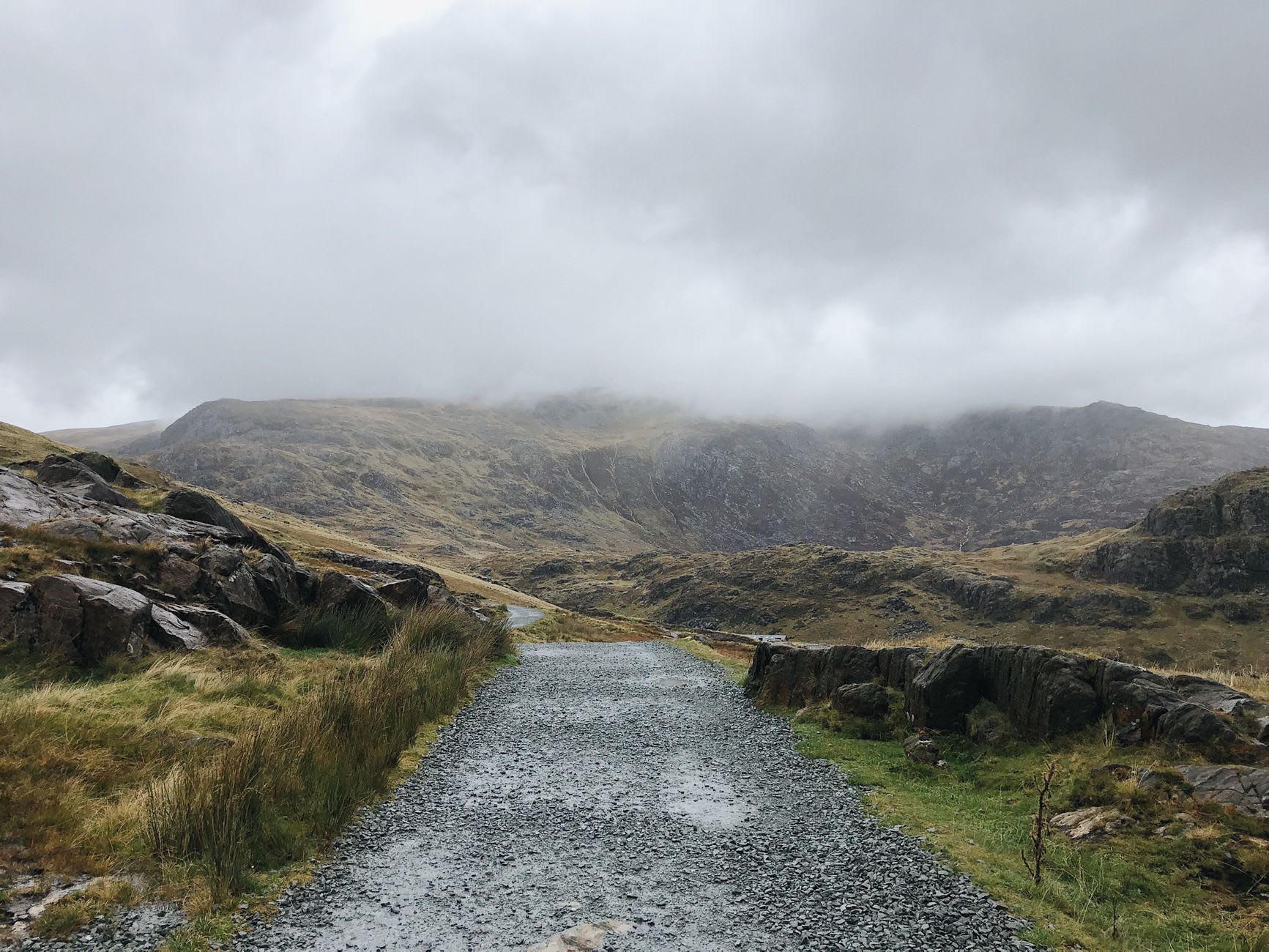
We climbed Yr Wyddfa, the Welsh name for the summit, via the Pyg Track, which the guidebook called moderate and my knees called something else. The morning began clear, which in Snowdonia is a trap. By the time we reached the ridge, cloud had swallowed everything and the wind was throwing rain sideways with real conviction. Lia, who grew up somewhere warm, kept laughing in disbelief, water streaming off her hood. We could see maybe twenty metres in any direction.
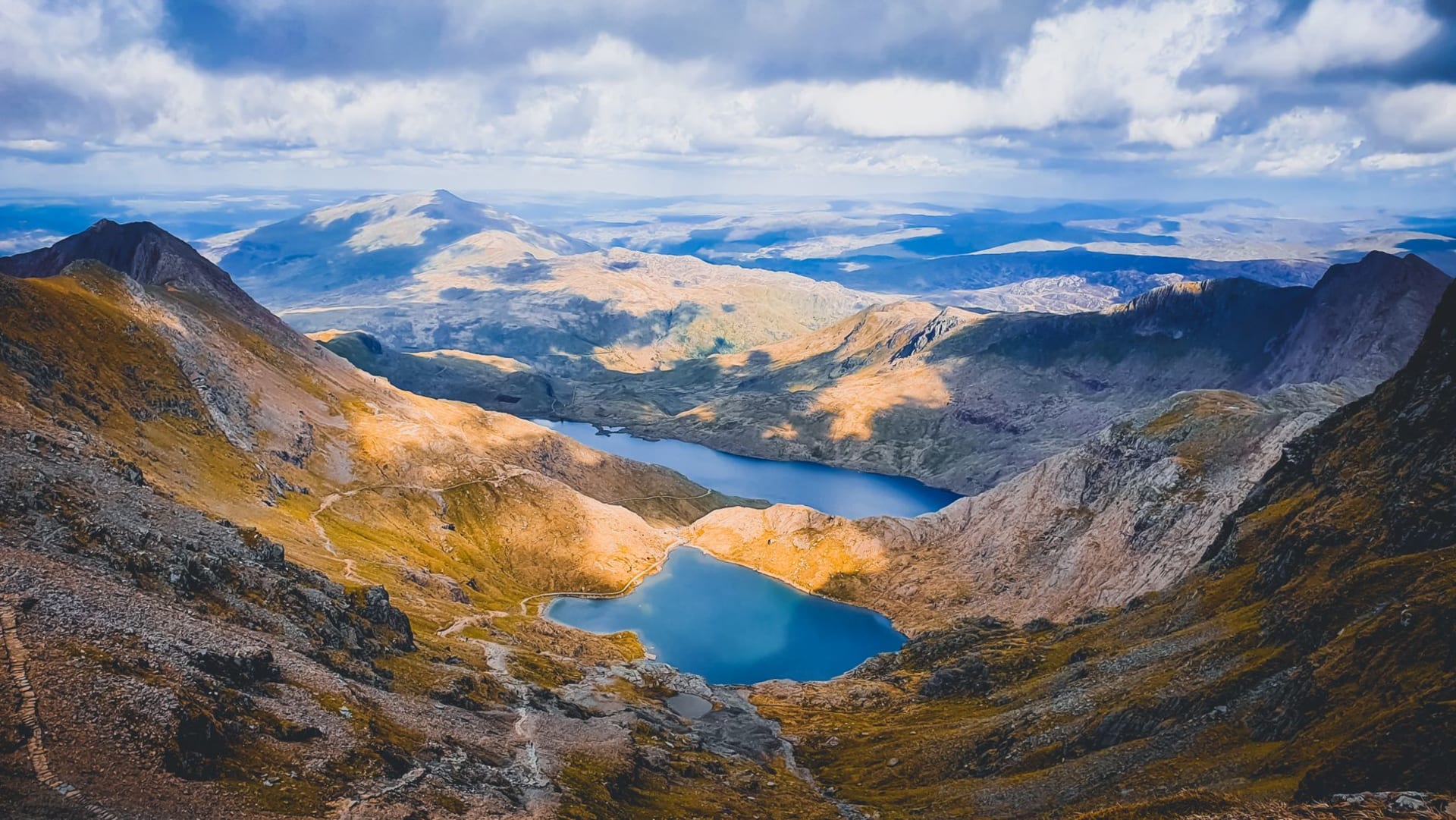
And then, near the summit, the cloud tore open for about ninety seconds. Below us, the glacial cwms fell away into lakes the colour of slate, the whole sculpted bowl of the range laid out cold and enormous. Then it closed again. There’s a train to the top, a little rack-and-pinion thing that’s been running since 1896, and at the summit café we shared a table with sodden hikers and warm, dry train passengers, the two tribes eyeing each other with mutual incomprehension.
Slate and the Villages Below
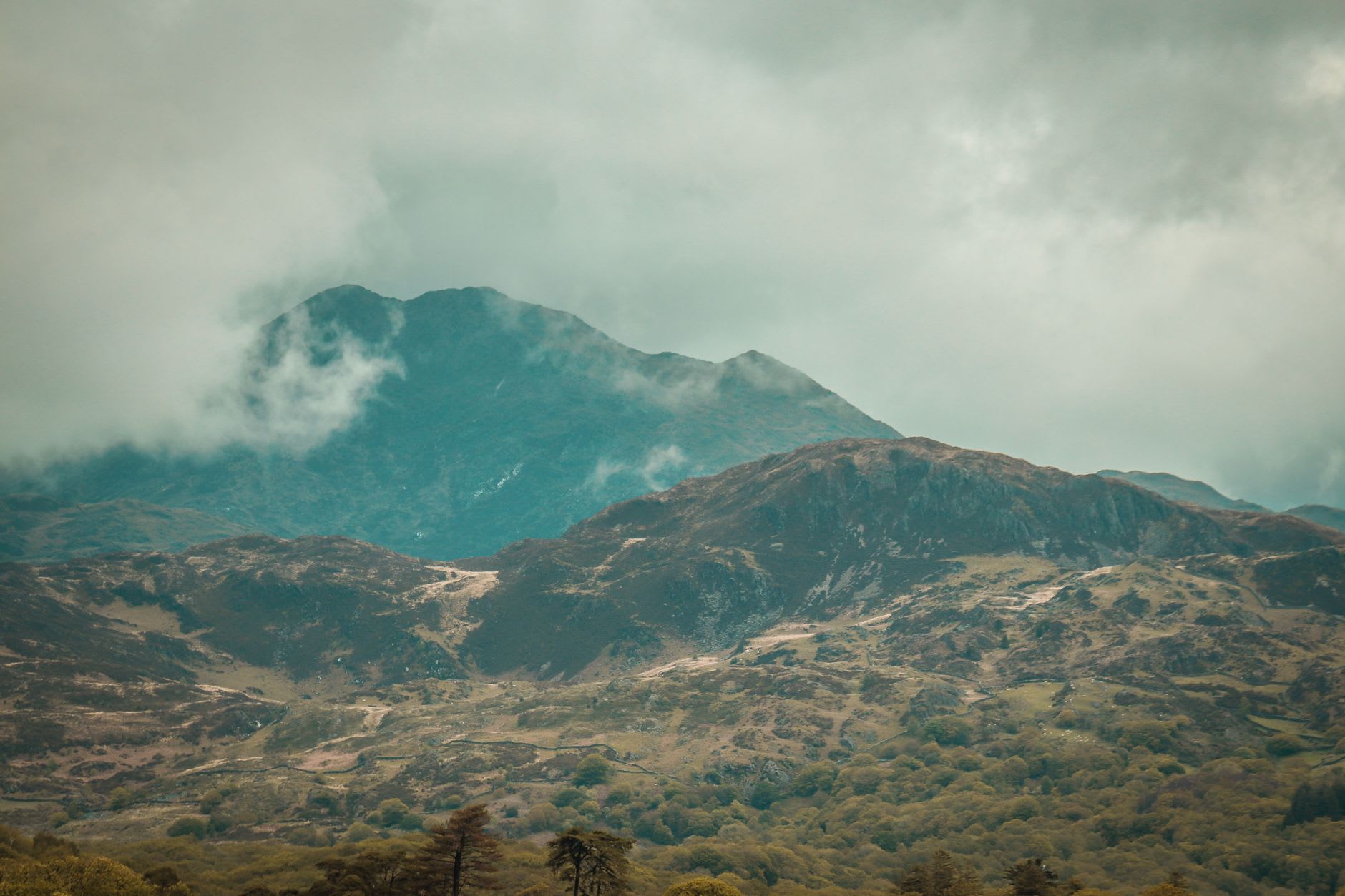
Snowdonia isn’t only mountains. The valleys are stitched together by villages built almost entirely of slate — grey roofs, grey walls, grey chapels — because for over a century this region roofed the world. The slate quarries of Blaenau Ffestiniog and the surrounding area are now a UNESCO World Heritage Site, and you can feel the weight of that industrial past everywhere: vast terraced spoil heaps, abandoned inclines, whole hillsides carved into geometric scars.
We took the Ffestiniog narrow-gauge railway, originally built to haul slate down to the coast, now hauling tourists like us through some genuinely spectacular country. I’m not usually a train-for-its-own-sake person, but Lia insisted, and she was right. The little carriages wound through oak woods and along contour lines with views that opened and closed like curtains.
The Welsh of It
What I didn’t expect was how Welsh Snowdonia feels — and I mean that linguistically. This is one of the strongholds of the Welsh language, and in the village shops and pubs you hear it spoken naturally, not performed for visitors. We ended a long wet day in a pub in Beddgelert with a fire going and a pint of something local, listening to two old men argue in Welsh about, as far as I could tell, sheep. I understood nothing and enjoyed all of it. That’s a particular kind of travel pleasure: being completely, contentedly outside the conversation.
When to go: May, June, and September give the best odds on weather, though “best odds” in Snowdonia still means pack full waterproofs. Summer is busiest, especially on the Snowdon paths — start early to beat both crowds and afternoon cloud. Winter turns the peaks genuinely alpine and is for experienced, equipped walkers only.