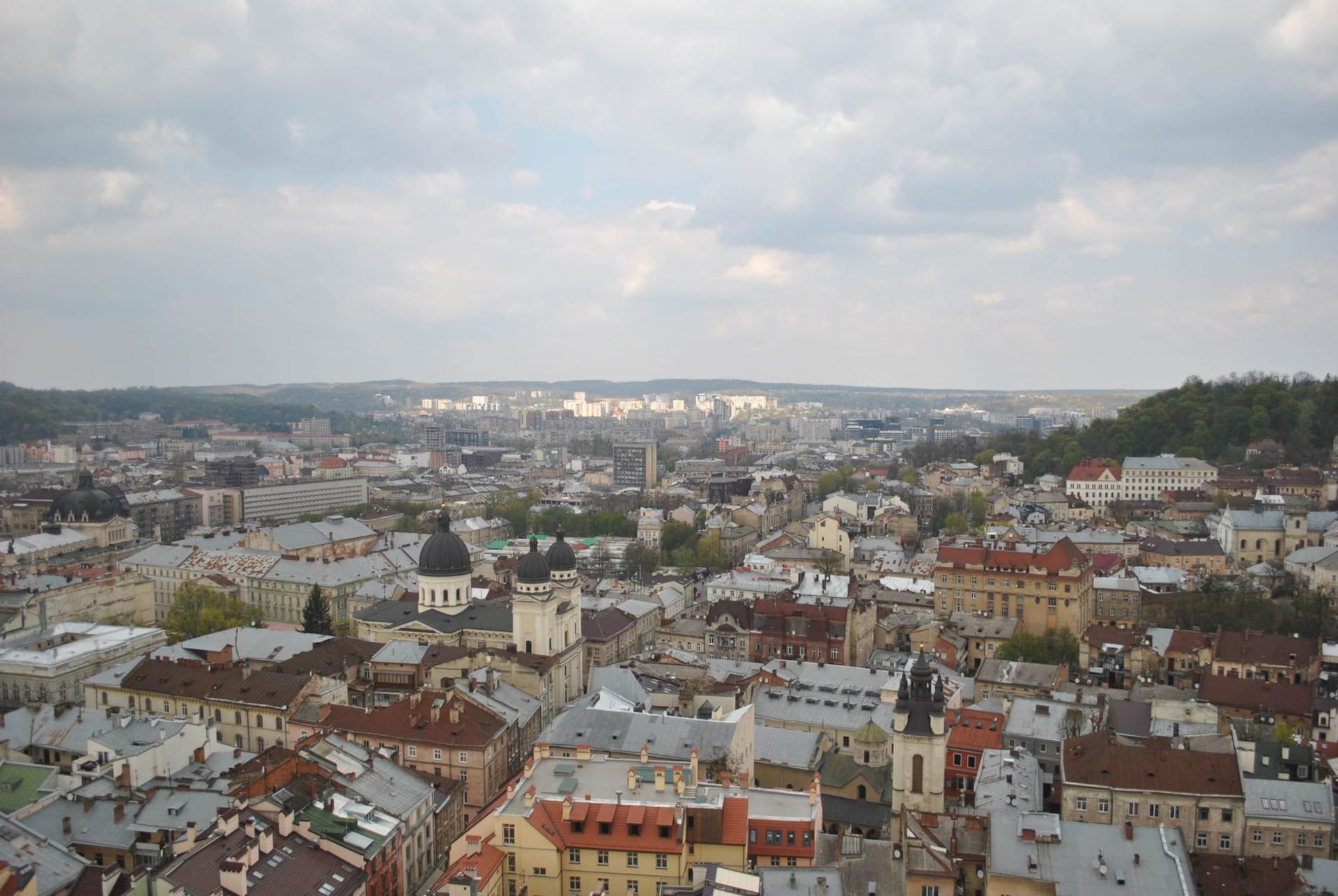
Lviv
"Lviv is the city that kept insisting it was somewhere else, and ended up being entirely itself."
Lia and I arrived by overnight train from Warsaw, which is exactly how you should arrive in Lviv — bleary, a little stiff, stepping off the platform into a city that smells of roasting coffee before you’ve fully oriented yourself. The railway station alone is worth ten minutes of standing still: a grand neo-baroque pile from 1904 that sets the architectural tone for everything that follows. Lviv has been part of Poland, Austria-Hungary, and the Soviet Union, and the city wears all of those eras without apology.
The Old Town and Rynok Square
The historic center is compact enough to walk in an afternoon but dense enough to occupy three days. Rynok Square is the heart — a Renaissance market square ringed by merchant houses painted in that specific palette of ochre, terracotta, and faded green that I associate with Central Europe at its most photogenic. The square gets crowded with tour groups mid-morning, so I made a point of being there at seven, when it was just delivery trucks and pigeons and a man hosing down the cobblestones. The Black House and the Kornyakt Palace face each other across the square with a kind of architectural competitiveness that still reads five centuries later.
Coffee as Municipal Identity
I don’t think I’ve been to a city more sincerely committed to coffee as cultural practice. Lviv has its own bean — a local roast called Lviv Coffee that you’ll find packaged in shops all over the old town — and dozens of independent cafés ranging from the historically themed and theatrical to the minimalist and serious. We spent a morning working through a tasting menu at a small roastery near the Dominican Cathedral, and it was one of those pleasantly pointless indulgences that travel allows. The barista explained the varietals in Ukrainian, Lia translated the parts she caught, and we nodded with the confidence of people who know nothing about coffee and enjoy it anyway.
Armenian Quarter and the Hidden Courtyards
The real texture of Lviv is in the passages. Wander off Rynok Square into the surrounding streets and you find courtyards that open unexpectedly: a crumbling Baroque facade giving onto a garden, a Renaissance arcade behind a doorway that looks residential. The Armenian Cathedral, rebuilt over several centuries, has a cloister of extraordinary calm. The Armenian community has been in Lviv since the Middle Ages, and their architectural presence gives the old town a polyphony you don’t find in more homogeneous historic centers.
The High Castle Hill
Above the old town, the remains of a 14th-century castle offer the mandatory panorama: a sea of orange rooftiles and copper spires stretching toward hills on the western horizon. I climbed up at dusk when the light was lateral and everything glowed — a cliché that remains valid. The park around the ruins is where locals jog and walk dogs and do the things people do when they live somewhere that tourists come to admire. Watching both groups navigate the same path without much interaction is its own small entertainment.
When to go: May through September is comfortable for walking the cobblestoned old town; spring is especially lovely when the lindens are in bloom and the café terraces are just reopening. December brings a famous Christmas market around Rynok Square that draws visitors from across Central Europe. Check current travel advisories before booking.