Queen Elizabeth National Park
"The lions were twelve meters up in a fig tree and they looked entirely unbothered by this."
There is a subspecies of behavior among African lions concentrated almost exclusively in the Ishasha sector of Queen Elizabeth National Park and in Tanzania’s Lake Manyara region: they climb trees and stay there. Nobody has fully explained this. Researchers suggest it might be about thermoregulation — tree canopies catch more breeze — or about escaping flies, or about a better vantage for spotting prey. Whatever the reason, seeing a 150-kilogram cat draped over a fig branch like a coat thrown over a hook is its own category of strange.
The Ishasha Sector
Ishasha is the park’s southern section, close to the Congo border, and it requires a deliberate detour if you’re coming from Bwindi. Most people make that detour. The trees the lions favor are large fig trees and Acacia sieberiana scattered across the Ntungwe and Ishasha river floodplains — open enough for vehicles to get close, shaded enough to explain the appeal. Morning drives before the heat builds are best; the lions descend from their perches in cooler weather and hunt, then return. A pride of seven, we found on one morning, was distributed across three trees with the calm logic of a family who had discovered the same hammock problem.
The southern sector also has large elephant herds, buffalo, and Uganda kob in numbers that can be disorienting. The kob is Uganda’s national animal and earns the designation by being genuinely everywhere — the males fight in leks, the females graze in calm parallel lines, and the whole species seems to have understood that the national park is a reasonable arrangement.
Crater Lakes and the Rift
The Bunyaruguru and Katwe-Kabatoro crater lake fields sit within or adjacent to the park and offer a completely different kind of beauty. These are explosion craters — phreatic blasts from past volcanic activity — that have filled with water and developed their own ecosystems. Lake Katwe is a soda lake that has been mined for salt for centuries. Its pale violet-pink color at sunrise, surrounded by salt flats where flamingos sometimes feed, looks either prehistoric or rendered, depending on your mood.
The Kazinga Channel connects Lake George to Lake Edward and runs through the heart of the park. A boat cruise here has the same structure as the Murchison boat trip — slow movement, animals at the water’s edge — but the atmosphere is different: more tropical, more humid, the banks greener and more compressed.
Kasenyi Plains
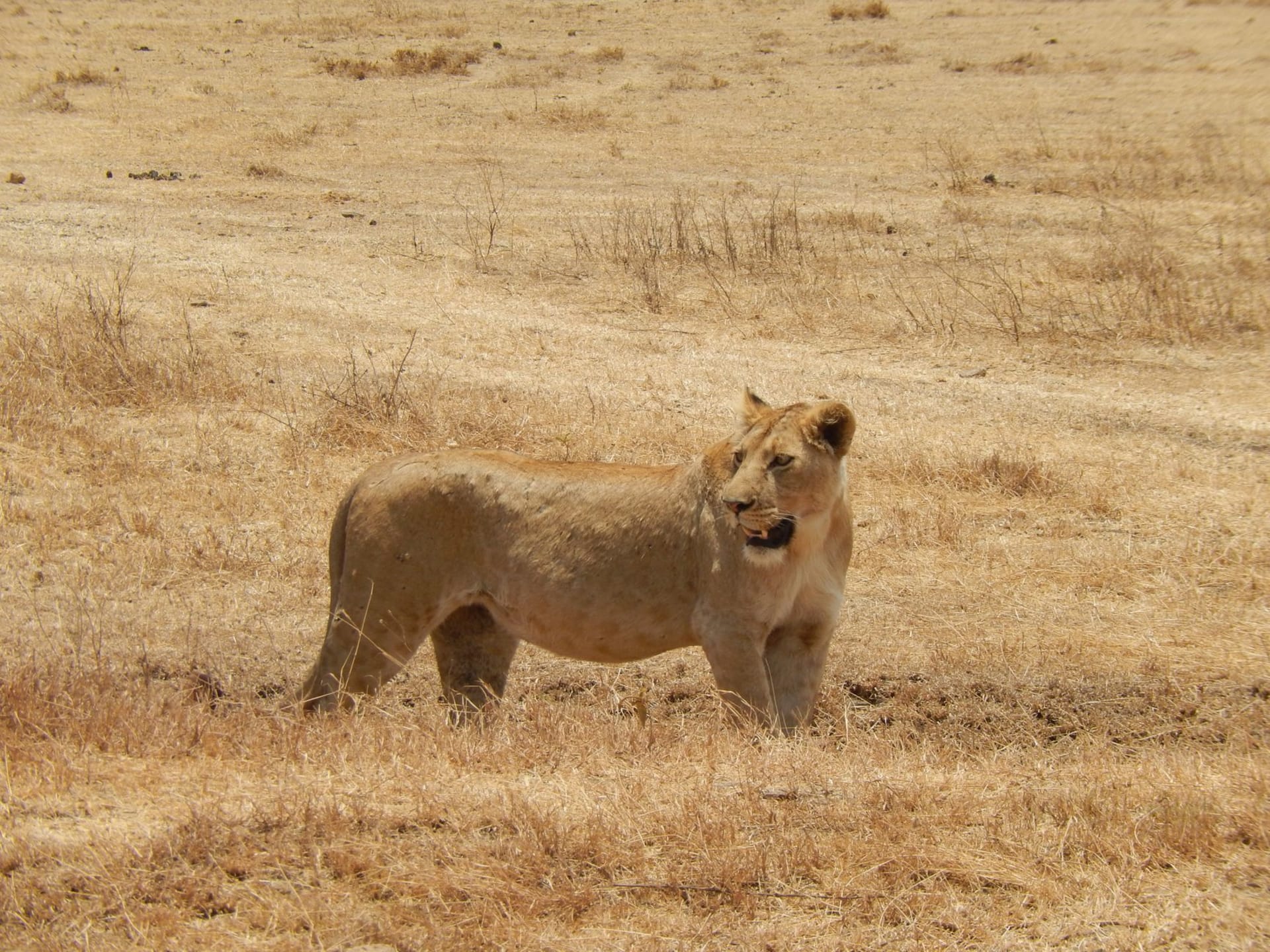
The central Kasenyi area is the park’s main game-drive zone and where lions are found when they’ve decided not to be in trees. The plains here feel genuinely East African in the classic sense — wide, golden in late afternoon, cut by luggas where elephants dig for water in the dry season. Leopards are present but require patience and luck that didn’t visit me on either of my two drives there. The park is honest about this; nobody pretends the leopard is guaranteed.
Accommodation ranges from budget banda-style camps near Mweya peninsula to well-designed lodges with rift valley views. Mweya itself sits on a narrow peninsula between the Kazinga Channel and Lake Edward, and the sunset over the water — pink-orange over Congo hills — is reliably excellent.
When to go: June through August and December through February are the dry months, easiest for game drives and road access. The Ishasha sector road can become difficult in heavy rain. The tree-climbing lions are visible year-round, though morning drives in cooler months give the best chance of catching them still aloft.