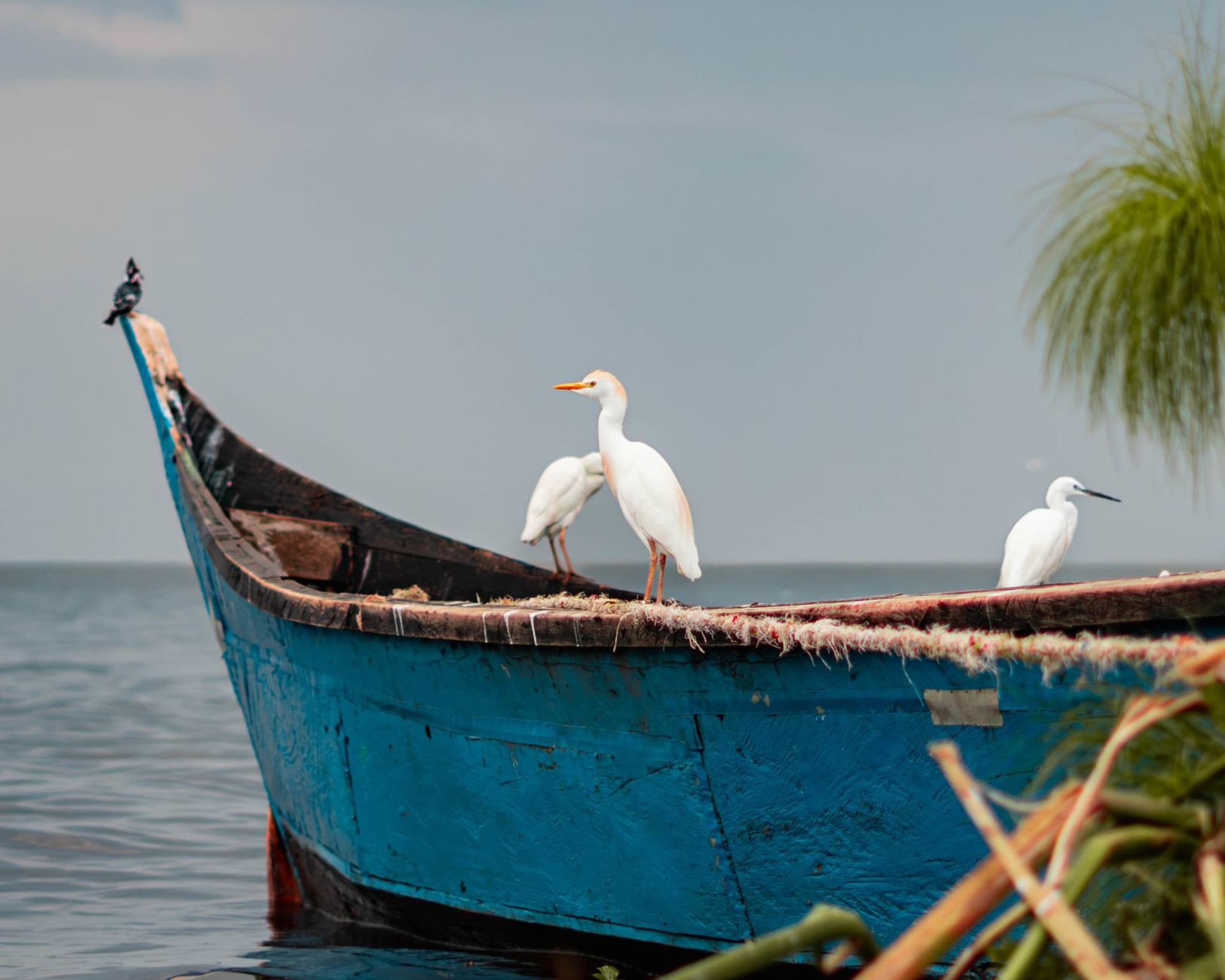
Lake Victoria & Entebbe
"The lake is so large it makes its own weather. I watched a storm move across the water for two hours without it reaching shore."
Most people experience Entebbe as forty-five minutes of transit — the airport is there, Kampala is an hour away, and the logic of a connecting flight makes the peninsula feel like a doorway rather than a destination. I spent three extra days there on a return trip that was meant to be forty-eight hours and never fully explained it afterward. The botanical gardens, the lake at dusk, the fish restaurants, and the specific pace of a government town that didn’t become a capital — they added up to something I hadn’t accounted for.
The Botanical Gardens
The Entebbe Botanical Gardens were established in 1898 and sit on the lake shore with the casual authority of a place that has been growing for 128 years without particularly caring whether you visit. The trees are enormous. African mahogany, strangler figs, waterberry trees, and a collection of palms that takes half an afternoon to walk through properly. Monkeys move through the canopy continuously — red-tailed, vervet, and occasionally the larger black-and-white colobus, which moves differently, slower and more deliberate, like it has made peace with gravity.
At the garden’s edge, the lawn drops to the lake. In the afternoon the light on the water goes low and copper and the hippopotami in the adjacent marsh begin to stir. Their bellowing carries across the water without concern for the boats working the fishing grounds.
Lake Victoria’s Scale
Lake Victoria is 68,800 square kilometers and you cannot comprehend this number standing at the shore. What you can comprehend is that it looks like a sea — the far shore of Tanzania, when visible at all, is only a pale line in the distance. The lake generates its own storms, which form visibly over the water and track in directions that seem to ignore prevailing wind patterns. Fishing communities on the Ugandan shore — at Ggaba, Kasenyi, and the islands — have lived with this volatility for generations.
The Sesse Islands, about 90 kilometers southwest of Entebbe, are the lake’s most accessible archipelago on the Uganda side. Ferries run from Bukakata port. The islands have forest, fishing villages, and accommodation that ranges from basic to genuinely comfortable. The pace there is calibrated to water transport and weather, which means it is slow, and this is not a complaint.
Ngamba Island Chimpanzee Sanctuary
Ngamba Island sits 23 kilometers from Entebbe and is a chimpanzee sanctuary for individuals rescued from the bushmeat trade and illegal pet industry. It is not a national park experience — these chimps are habituated to humans by necessity, not by wildlife protocol — but the sanctuary is serious in its rehabilitation work and transparent about what it does and doesn’t do. Boat transfers run daily from Entebbe’s pier and the crossing takes about an hour, with the open lake crossing often producing spray and small swells that catch first-time visitors off guard.
Eating Tilapia
Entebbe’s fish restaurants along the lake road serve Nile tilapia and Nile perch pulled from the lake the same day. The standard preparation is deep-fried whole, served with chips and a salad of tomato and onion with lemon. The texture of fresh tilapia, cooked simply and eaten at a plastic table while the lake turns orange behind it, is one of those Proustian moments that I now associate specifically with Uganda.
The beer is Nile Special lager. It is cold and drinkable and brewed in Jinja, near the river it’s named for.
When to go: Entebbe and Lake Victoria work year-round as a landing point. The dry months of June through August and December through February are better for boat trips to Ngamba and the Sesse Islands, as the lake is calmer and the short crossings are more comfortable. The botanical gardens are lush year-round but particularly vivid during and after the rains.