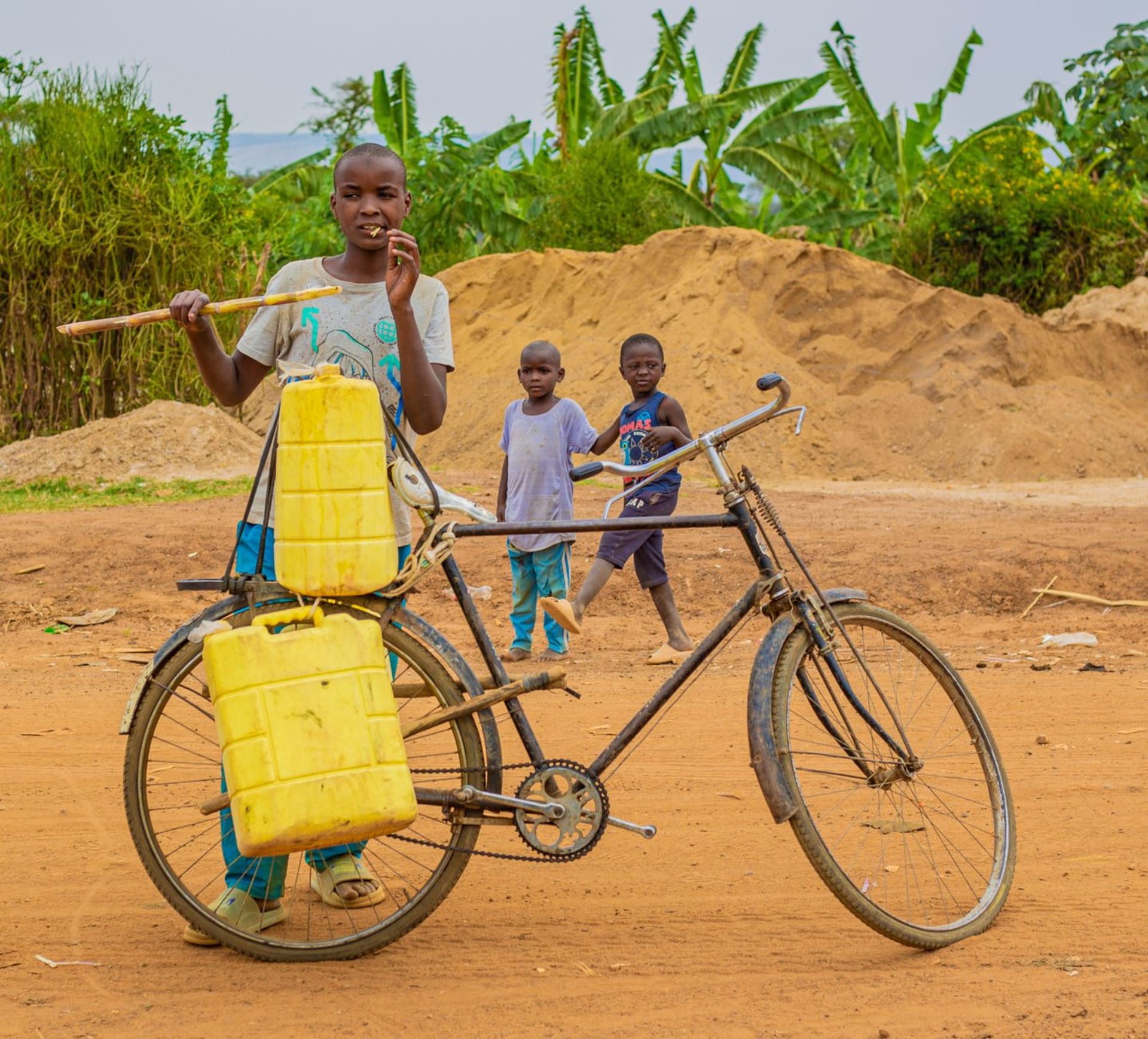
Kampala
"I gave up on understanding the traffic logic around day two. After that Kampala started to feel like itself."
Kampala doesn’t have a grid. It has seven hills with roads laid along their curves and contours, so navigation operates on landmarks and orientation rather than numbered streets. Ask a boda-boda driver for an address and he’ll pause, think about which hill you mean, and then name a nearby mosque or supermarket as a cross-reference. This is not a flaw. It is the city’s spatial grammar, and once you’ve absorbed it the place becomes navigable in a way that doesn’t feel like a puzzle but like a conversation.
Eating Your Way Through the City
The rolex — egg and vegetables fried together and rolled in a chapati — is the city’s essential street food, available from vendors at almost every taxi park and major intersection for less than a dollar. The word is a corruption of “rolled eggs” said fast, and Ugandans are justifiably proud of it. Owino Market, the vast secondhand clothing market near the old taxi park, has food stalls along its edges where women sell groundnut stew over rice from enormous communal pots and the steam smells of palm oil and dried fish.
The restaurant scene in the Kamwokya and Kabalagala neighborhoods has expanded considerably and now includes credible Indian, Lebanese, and Ethiopian food alongside excellent Ugandan cuisine. Steakhouses serving locally raised beef compete for the same clientele as rooftop bars with wifi and strong coffee. The city has money and people who know what to do with it.
The Kasubi Tombs
The Kasubi Tombs are the burial place of the Baganda kingdom’s kabakas (kings) and are a UNESCO World Heritage Site that was partially destroyed by fire in 2010. The reconstruction is ongoing and the site remains active — the tombs are not a museum but a functioning royal shrine. Clan elders maintain it; traditional rituals still happen there. The main structure, a massive thatched building, represents the most architecturally significant example of Ganda architecture remaining.
Entering requires modest dress and permission from the gate attendants. A guide is genuinely necessary and explains the layers of meaning — the symbolic arrangement of the interior, the roles of the different clan members, the way the space is organized around a theology that is both complex and practical.
Wandegeya and the University Area
The area around Makerere University has the energy of a university neighborhood anywhere — cheap food, booksellers, debate, the density of young people making plans. The Makerere campus itself is worth an hour: colonial-era brick buildings on a hill with views over the city, and a small art gallery that shows emerging Ugandan artists.
The National Museum on Kira Road is modest in scale but serious in content, with a collection of Ugandan ethnography and natural history that gives context to the rest of the country. The traditional musical instrument display is especially good.
Nightlife and the Pace of the City
Kampala stays up. The bar scene in Kololo and Kabalagala runs past midnight on weekdays and considerably later on weekends, mixing Ugandan afrobeat and dancehall with international music in roughly equal proportion. Ndere Centre puts on traditional dance performances several nights a week that range from acrobatic to meditative and are completely genuine rather than performed-for-tourists.
The boda-boda (motorcycle taxi) is the city’s circulatory system — faster than any car in traffic, marginally terrifying, and entirely unavoidable if you’re moving between neighborhoods. Helmet provision is legally required, quality varies.
When to go: Kampala functions year-round without seasonal constraints. The heavy rain periods — April to May and October to November — make the city’s unpaved roads difficult but don’t shut anything down. The city is most alive Thursday through Sunday nights. Coming from or going to game parks, a day or two in the city provides useful calibration in both directions.