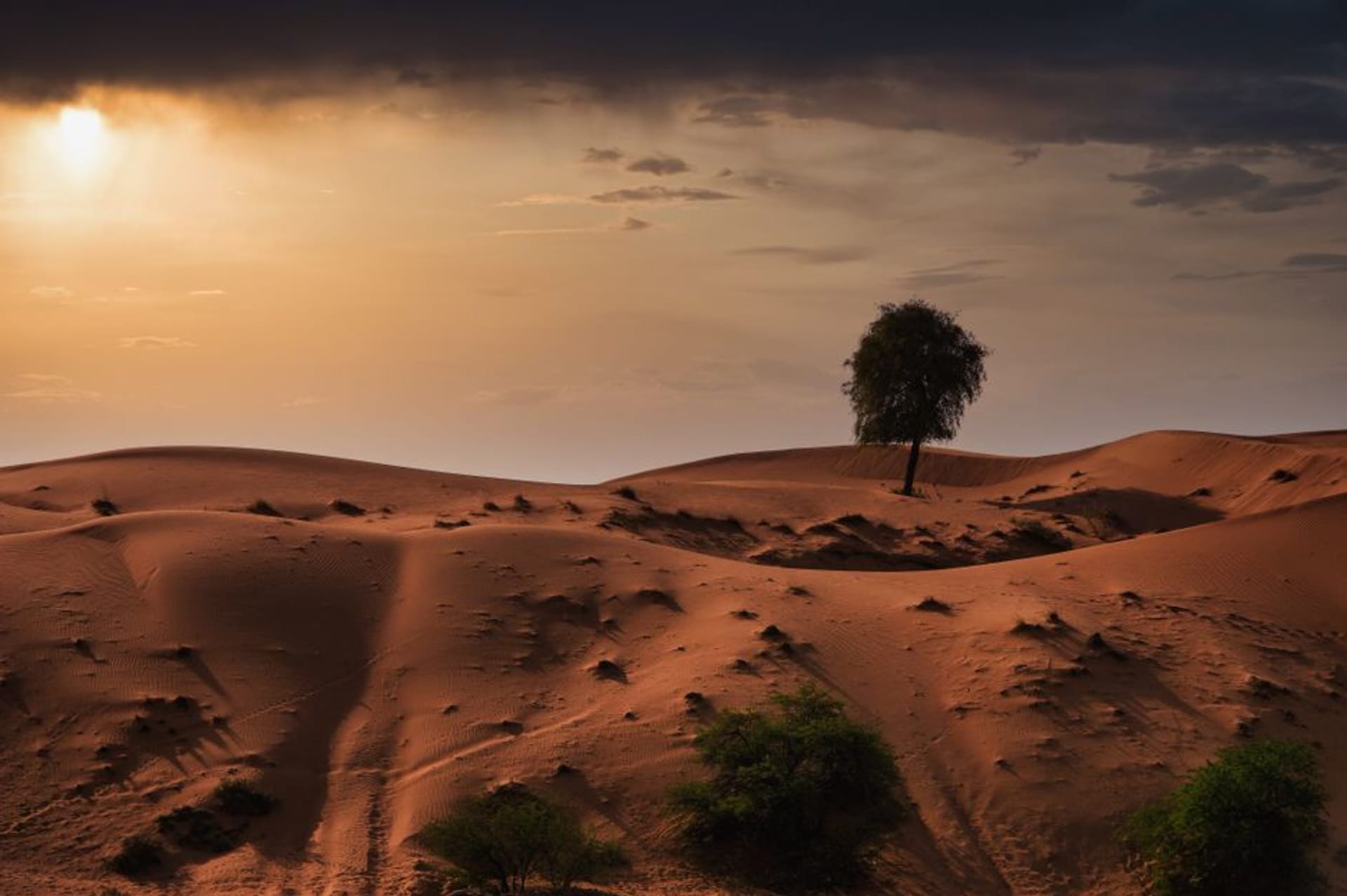
Mleiha, Sharjah
"Four thousand years of burial sites under dunes people now use for skydiving — Mleiha doesn't pick a side."
A red-dune desert an hour from Sharjah's coast, hiding Bronze Age tombs and fossil beds beneath landscape now shared with skydivers and dune buggies.
The drive out to Mleiha takes you away from Sharjah’s coast and its museums into a landscape that changes color as you go — the pale gravel plains near the city giving way, almost abruptly, to deep red dunes that look lit from within at the wrong time of day. I went with a guide from the Mleiha Archaeological Centre, a young Emirati archaeologist who’d worked digs here since university, and within the first ten minutes of the tour she pointed out something that reframed the whole visit: beneath the dunes we were standing on were burial tombs older than the pyramids at Giza.
What’s actually buried here
Mleiha has been continuously excavated since the 1970s, and the finds go back over four thousand years — Bronze Age and Iron Age tombs, a fortified settlement, and fossil beds from a much older era when this desert was a lake system supporting elephants and crocodiles. The Archaeological Centre itself is a low, deliberately unobtrusive building set into the landscape, its exhibits built around actual excavated tombs you can walk out to see in place rather than relics shipped off to a museum elsewhere. Standing at the edge of one open tomb site, my guide explained the burial goods found inside — pottery, weapons, jewelry traded from as far as Mesopotamia — evidence that this stretch of empty desert had been a crossroads of Gulf trade routes millennia before anyone built a port.
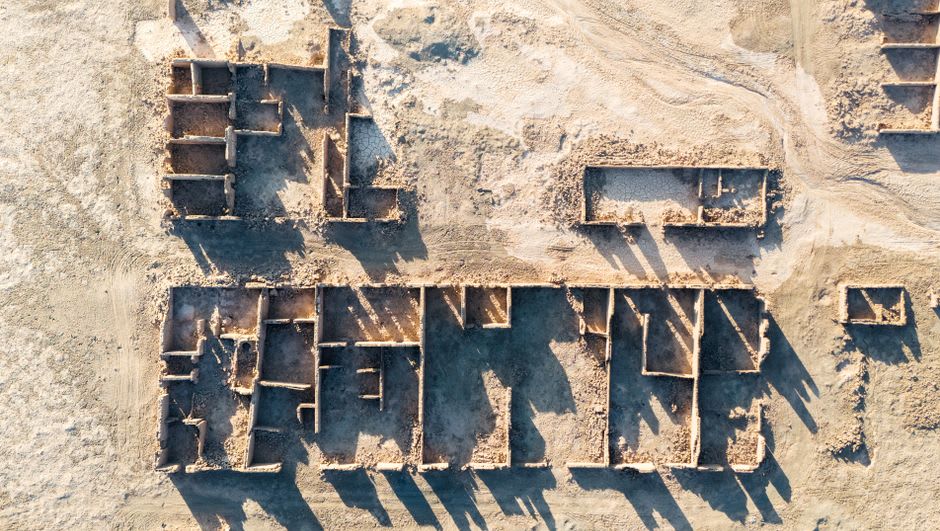
What struck me most was how unresolved the whole area still feels. New tombs are found regularly. My guide mentioned a fossil bed nearby that had only been properly surveyed a few years earlier, turning up traces of an ancient elephant species that once roamed what is now bone-dry dune. It’s a working excavation, not a finished exhibit, and that gives it an energy that a lot of “ancient history” sites, sealed behind glass, don’t have.
The desert’s second life
The same dunes that hide the tombs have become one of the UAE’s adventure-tourism centers, and the contrast is jarring in a way I actually appreciated. An hour after leaving the archaeological site, I was strapped into a dune buggy hammering over the same red sand, and later that evening I watched a skydiver’s parachute open against the fading light, dropping toward a desert camp lit with lanterns. Mleiha doesn’t pretend these two identities — ancient burial ground and adventure playground — sit easily together. It just lets both exist, on the same dunes, sometimes on the same afternoon.
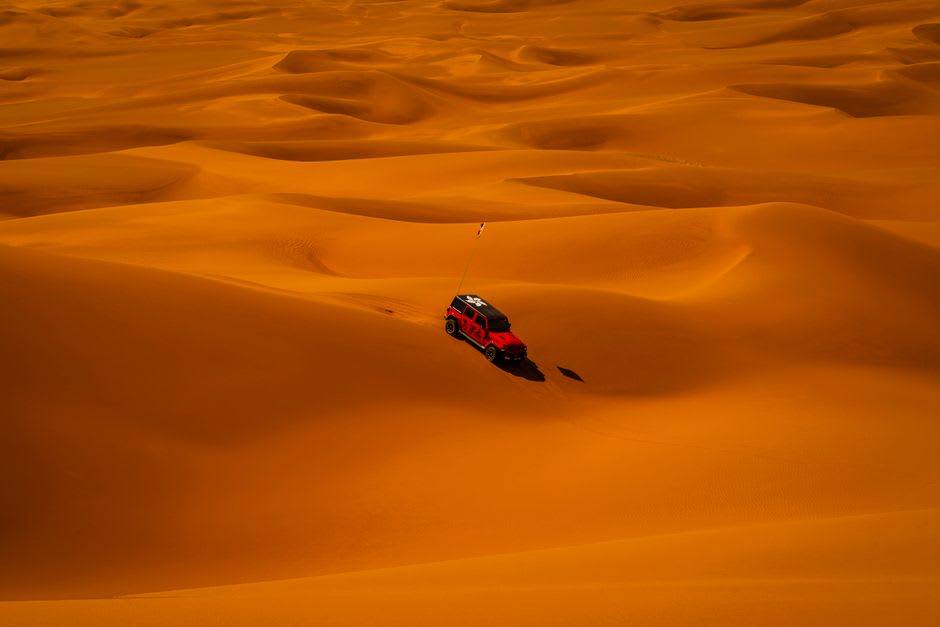
I ended the day at the overnight desert camp near the centre, sitting outside as the dunes cooled from orange to a deep rust color, thinking about how strange it is that a place this quiet has been a crossroads — of trade, of empires, of tourists on buggies — for four thousand years running.
When to go: November through March for daytime temperatures cool enough for hiking and buggy tours; book an overnight camp stay if you can, since the desert at night here, away from any city light, is spectacular.
Keep exploring
More from UAE
 uae
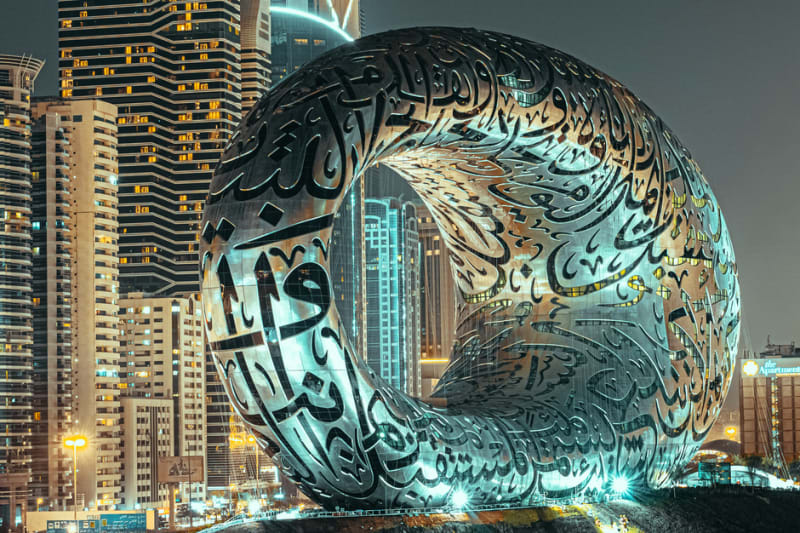
uae Museum of the Future
A torus-shaped building wrapped in swirling Arabic calligraphy, hovering over Downtown Dubai like a monument to whatever comes next — and one of the most photographed buildings on earth.
Explore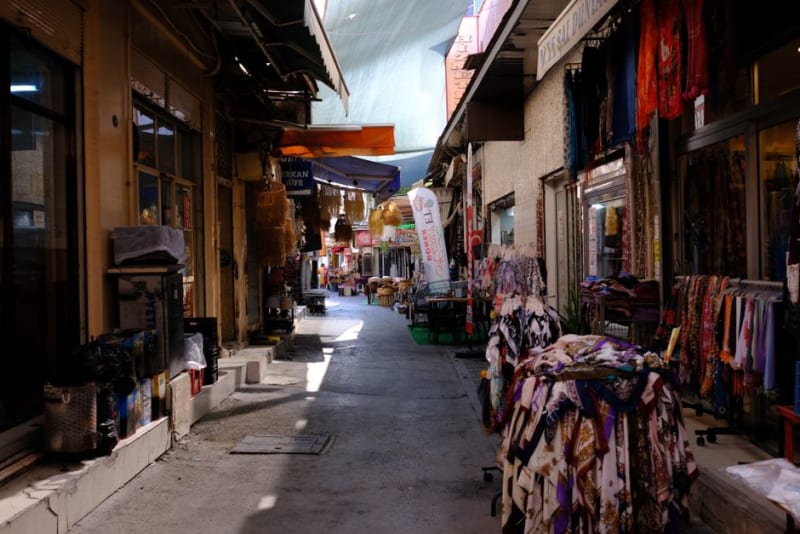 uae
uae Old Dubai (Deira)
The historic trading-port half of the city, where the Gold and Spice Souks still operate on the Creek's north bank and wooden abras carry passengers across for one dirham.
Explore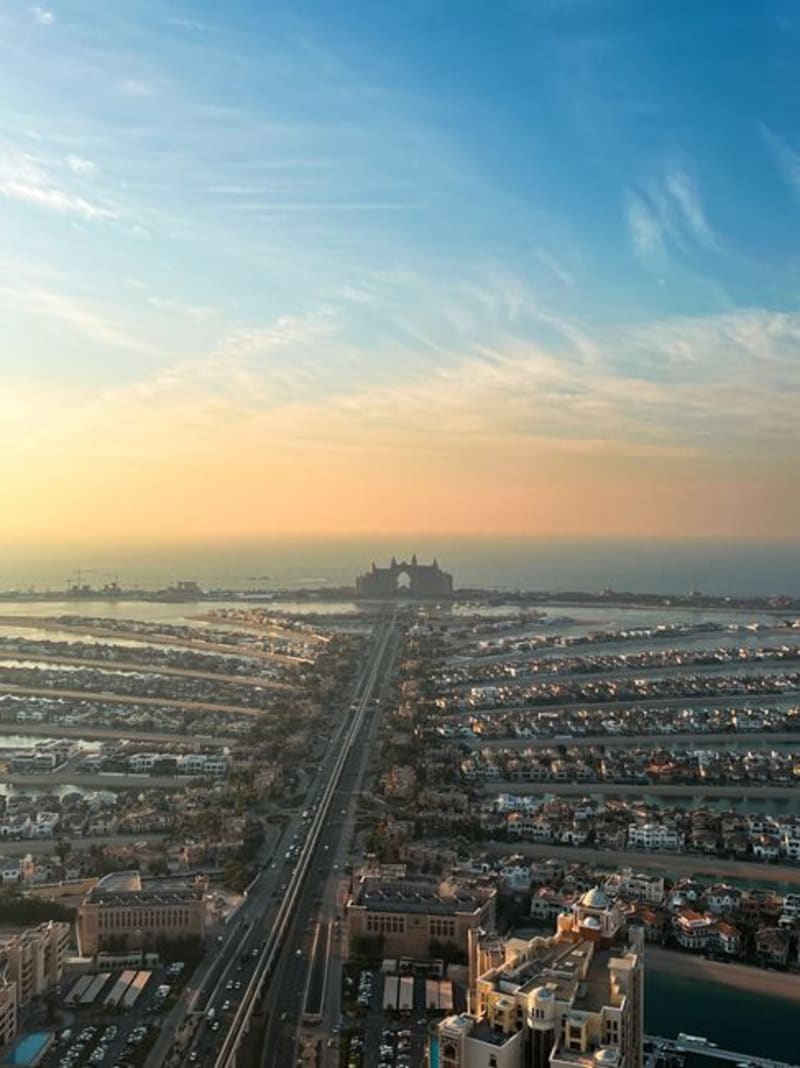 uae
uae Palm Jumeirah
A palm-tree-shaped island built entirely from dredged sand, visible from space and impossible to fully grasp from the ground, with a monorail stitching its fronds together.
Explore uae
uae Ras Al Khaimah
The UAE's adventure emirate, where the Hajar Mountains meet desert dunes and the world's longest zipline launches from a 1,680-meter peak.
Explore uae
uae Sharjah
The UAE's cultural capital, a UNESCO-recognized emirate where Islamic art museums and heritage districts preserve the Gulf's intellectual traditions.
Explore uae
uae Sir Bani Yas
A desert island transformed into a wildlife reserve, where Arabian oryx, giraffes, and cheetahs roam a former royal retreat off Abu Dhabi's coast.
Explore