Burj Khalifa
"Eight hundred and twenty-eight metres, and somehow the elevator ride is the least impressive part."
The tallest structure humans have ever built, 828 metres of steel and glass rising from desert flatland, and an observation deck view that makes the whole city look like a model.
I’ve stood at the base of a few tall buildings, and none of them prepared me for the Burj Khalifa. It’s not that it’s tall in the way a skyscraper is tall — it’s tall in the way a mountain is tall, a scale where your eyes simply refuse to process the top of it from close range. I tried to photograph the whole building from the plaza at its foot and gave up after the third attempt; you need distance, real distance, before it fits in a frame. Completed in 2010 after roughly six years of construction, it held the record for tallest building on Earth by a margin so large that the runner-up isn’t really in the same conversation.
I went up at dawn on my second visit, having done the standard sunset trip the first time, and dawn was the better call by a wide margin. The tour groups hadn’t arrived yet, the observation deck was close to empty, and I watched the sun come up over what looked, from that height, like an ordinary desert — flat, pale, undifferentiated — before the light caught the city grid below and the whole thing snapped into focus: towers, highways, the curve of the coast, the haze that marks where the Gulf begins.
What the height actually does to a city
The engineering story is worth knowing before you go up, because it changes what you’re looking at. The tower’s Y-shaped floor plan, borrowed loosely from Islamic architectural patterns, was designed specifically to reduce wind loads as the structure narrows toward its spire — without that trick, nothing this tall would stand up in a desert wind corridor. “At the Top,” the observation deck package, gets you to either the 124th/125th floor or, for a steeper price, the 148th, where the windows angle outward and the city drops away in a way that made my stomach do something I wasn’t expecting from a stationary building.
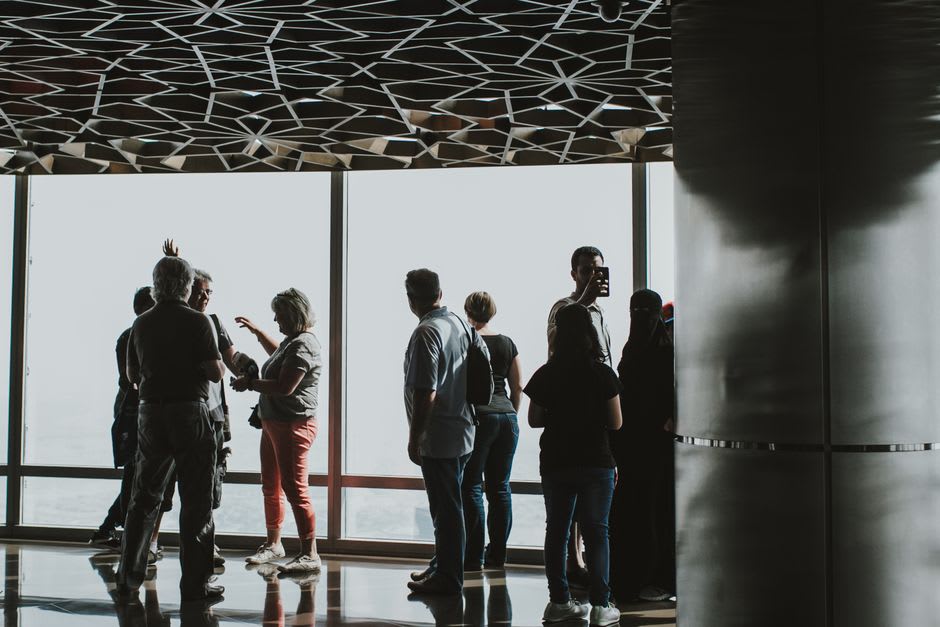
On clear mornings — and you want a clear morning, because Gulf humidity turns the view to soup by midday — you can trace the city’s entire logic from up there: the dense cluster of Downtown giving way to the Marina towers on the coast, the pale nothing of the desert beginning almost immediately behind the last row of buildings. It’s the one place in Dubai where the relationship between the city and the desert it interrupted becomes completely legible.
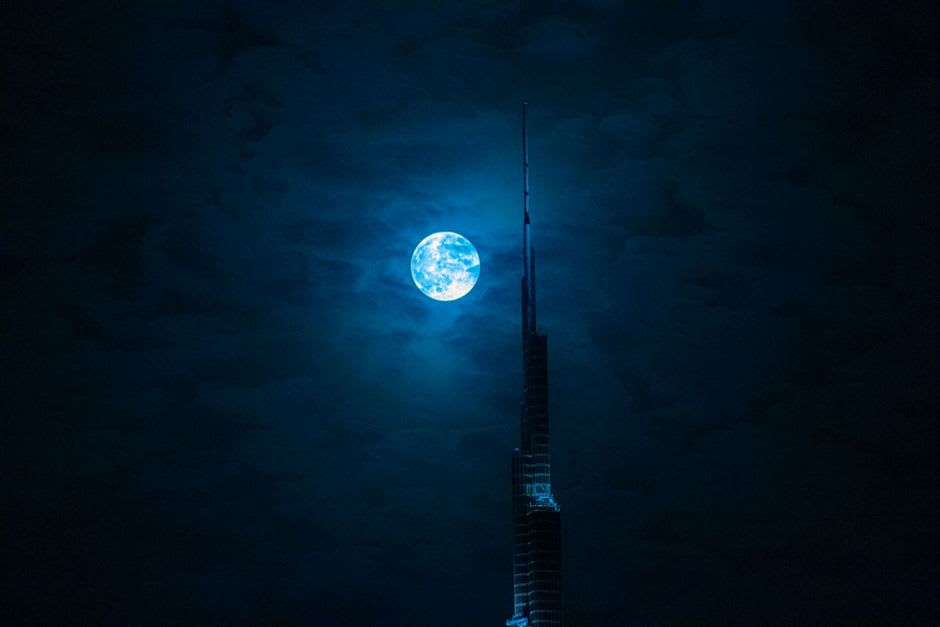
I got talking to one of the deck attendants, a Filipina woman who’d worked there since the opening year, and asked what surprised visitors most. “Not the height,” she said. “The silence. Everyone expects wind noise and there isn’t any.” She was right — up there, sealed behind glass, the city goes mute. You just watch it, the way you’d watch a model of itself.
When to go: Book the dawn slot if it’s offered — fewer crowds, cooler light, and none of the midday haze that dulls the view. November to March gives the clearest air overall.
Keep exploring
More from UAE
 uae
uae City Walk
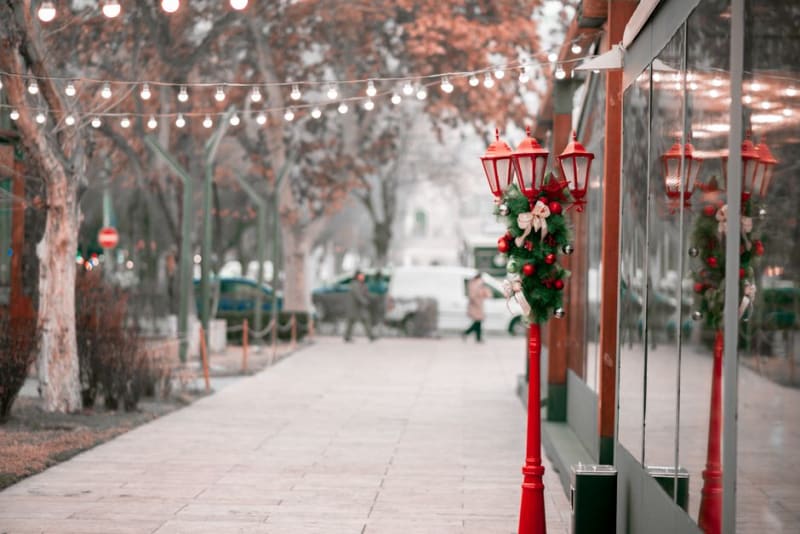
An open-air boulevard near Downtown built to feel like a European city block, with a rainforest hidden behind a glass facade in the middle of it.
Explore uae
uae Corniche Abu Dhabi
An eight-kilometer waterfront promenade of cycling paths and public beaches where Abu Dhabi's skyline reveals itself as spread out rather than stacked.
Explore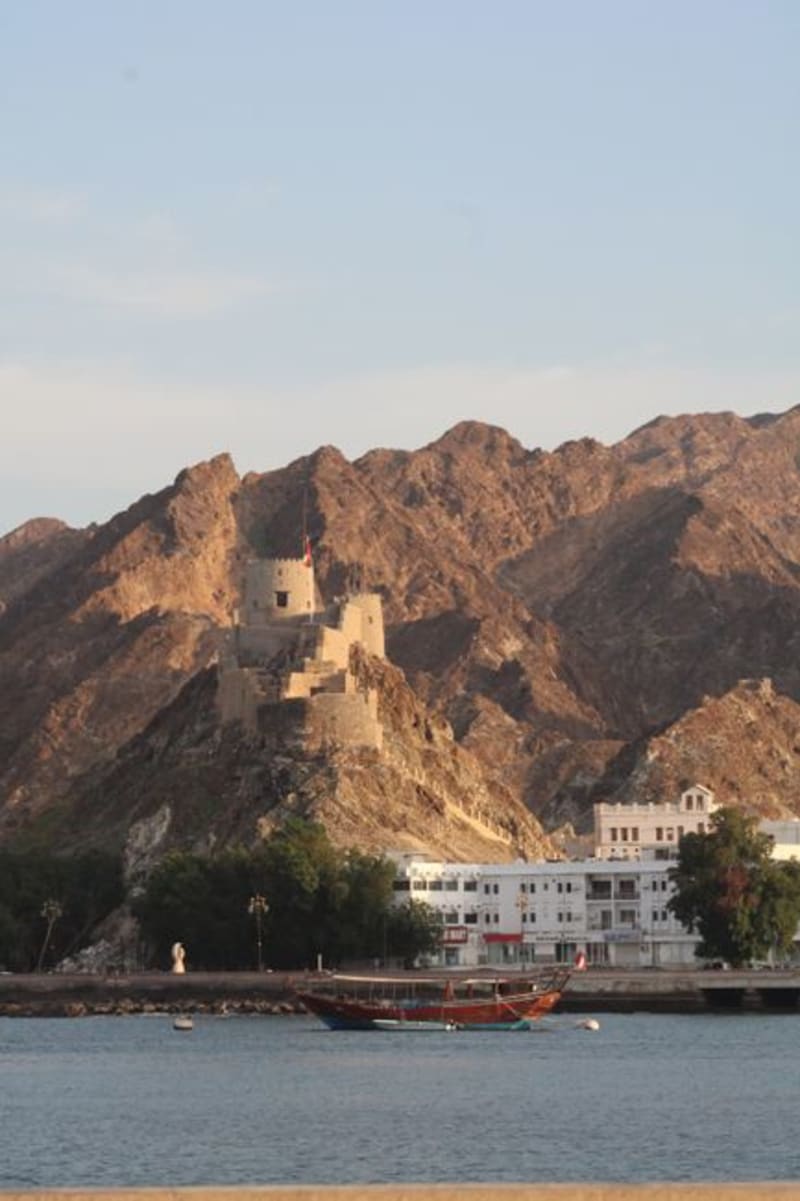 uae
uae Dibba
A town split across three jurisdictions — Fujairah, Sharjah, and Oman — where dhows leave each morning for the fjords of Musandam and the diving is the best on the East Coast.
Explore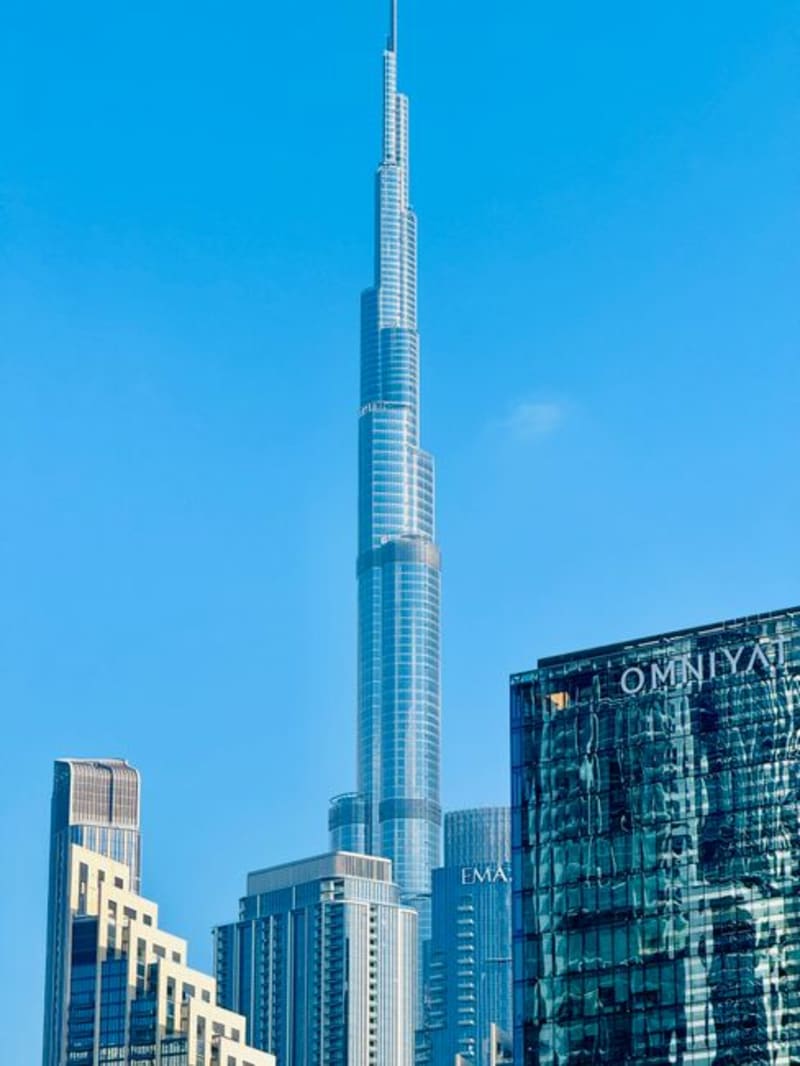 uae
uae Downtown Dubai
The engineered heart of the modern city, built in a single decade around the Burj Khalifa, where a choreographed fountain turns an ordinary evening into a small spectacle.
Explore uae
uae Dubai
A futuristic city-state rising from desert sand, where the world's tallest building overlooks ancient souks and a coastline engineered from ambition.
Explore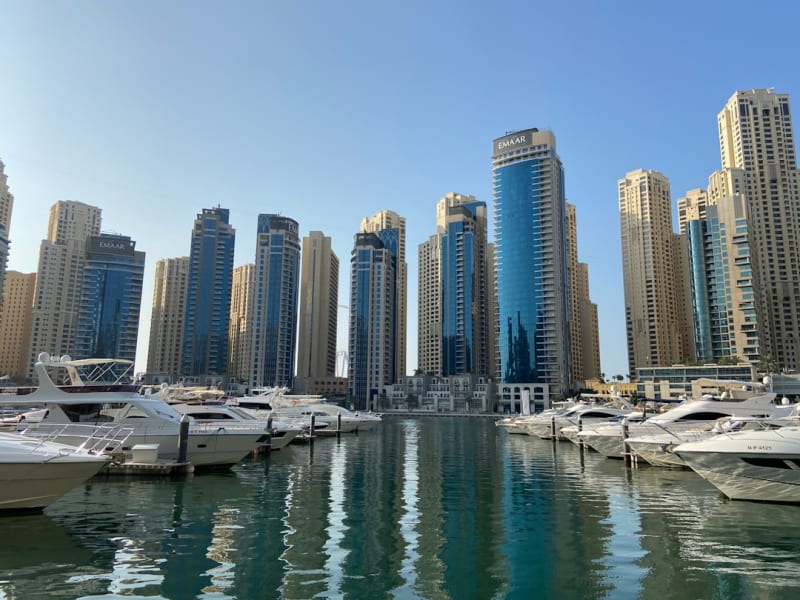 uae
uae Dubai Creek
The natural saltwater inlet that made Dubai a pearling and trading port long before the skyline existed, still crossed today by wooden abras and lined with working dhows.
Explore