A waterfront district along Dubai Creek that rebuilds old Dubai's heritage architecture from scratch, then stitches it to a thoroughly modern promenade of restaurants and art.
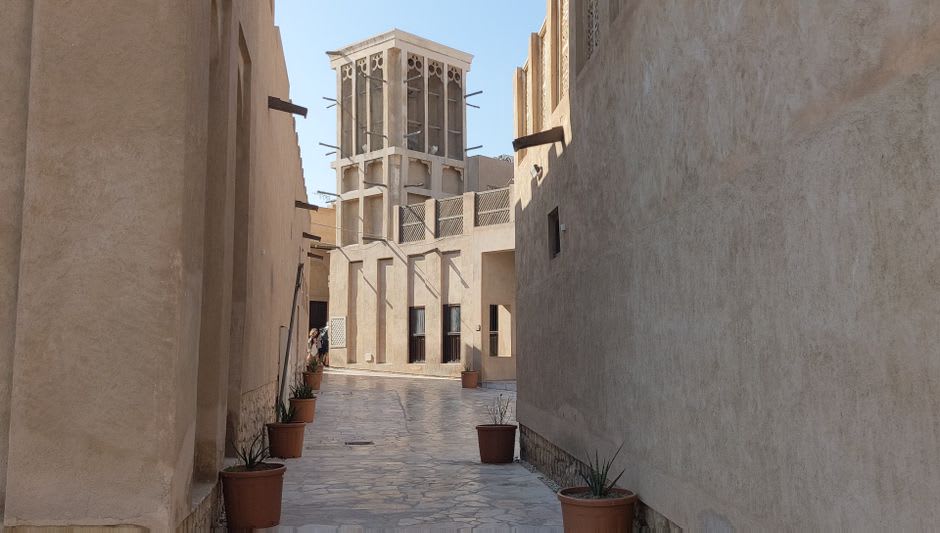
Al Seef confused me at first, in a way I mean as praise. Walking along the creek from the Al Fahidi side, the coral-stone facades and wind towers look exactly like the historic district you’d expect from photos of pre-oil Dubai — until you notice the WiFi symbol stenciled discreetly near a café door, or the polished concrete underfoot where you’d expect packed sand. Al Seef is new. Most of it opened within the last several years, built deliberately to evoke the old trading town while functioning as a fully modern waterfront promenade, and once I understood that, I stopped resenting the artifice and started appreciating the craft of it.
Two districts stitched together
The development splits cleanly into a heritage half — narrow lanes, wind-tower buildings, small museums and art spaces tucked into what looks like century-old architecture — and a modern half further along the creek, glass-fronted restaurants, waterfront bars, and a boardwalk clearly designed for evening strolling rather than daytime commerce. I walked the full length one evening, starting in the heritage lanes where a small gallery was showing calligraphy pieces, and ending forty minutes later at a rooftop restaurant with a direct view across the creek to Deira’s lit-up skyline. The transition between the two halves is almost seamless, which I think is the actual achievement here — most manufactured “heritage districts” announce their seams. This one mostly doesn’t.
An honest use of the creek
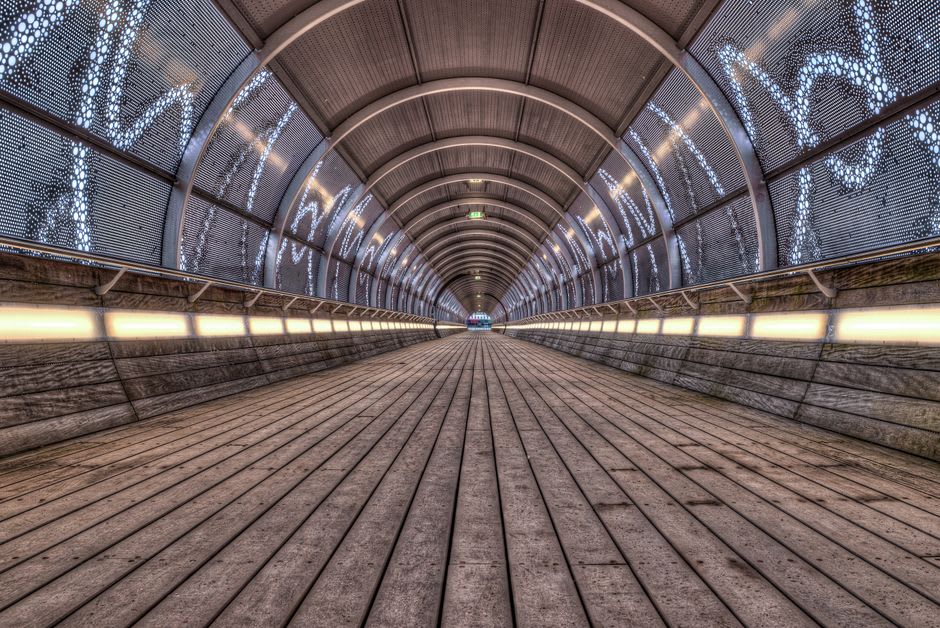
What I liked most was that Al Seef actually uses the water. Abra boats dock along its edge, dhow cruises depart from small piers, and there are stretches of promenade where you can sit at the creek’s edge with your feet nearly over the water, something the older Deira and Bur Dubai banks, dense with working trade, don’t really offer. An installation of oversized lantern sculptures lit the boardwalk after dark during my visit — temporary art, someone told me, rotated in every few months — and it turned a fairly commercial stretch of restaurants into something closer to an open-air gallery.
It’s not authentic in the way the Gold Souk down the creek is authentic. But it’s honest about what it is, and as an evening out — dinner, a walk, a boat ride — it works.
When to go: Evenings year-round for the best light and temperature on the boardwalk; winter (November to March) for comfortable daytime walking too.
Keep exploring
More from UAE
 uae
uae Al Wathba Wetland
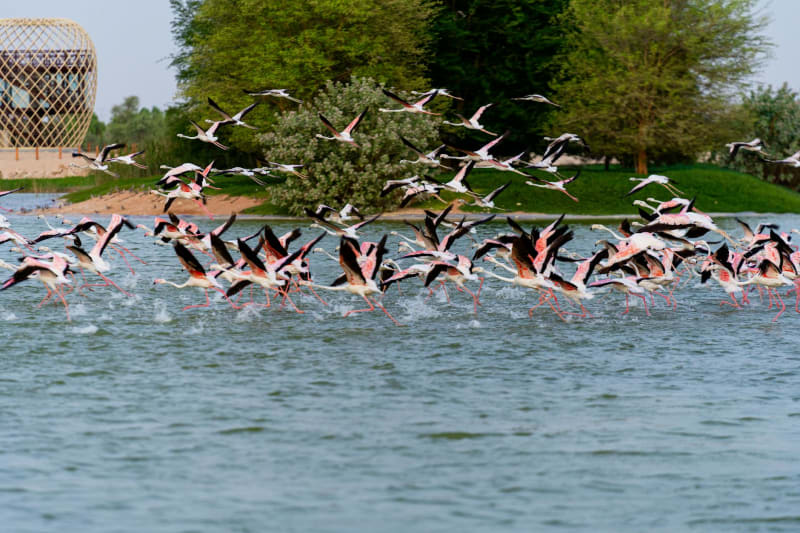
A surprising flamingo sanctuary in the Abu Dhabi desert, pink flocks wading in brackish shallows.
Explore uae
uae Alserkal Avenue
A converted warehouse district in Al Quoz where Dubai's contemporary art scene actually lives, galleries and studios tucked between auto-repair shops and loading docks.
Explore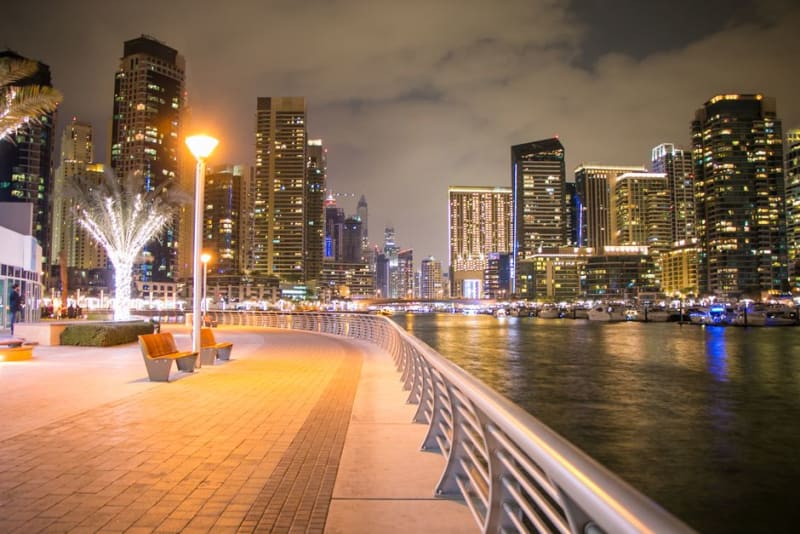 uae
uae Bluewaters Island
A man-made island built around Ain Dubai's giant wheel, its dining promenade and pedestrian bridge to JBR making it one of the coast's more walkable evenings out.
Explore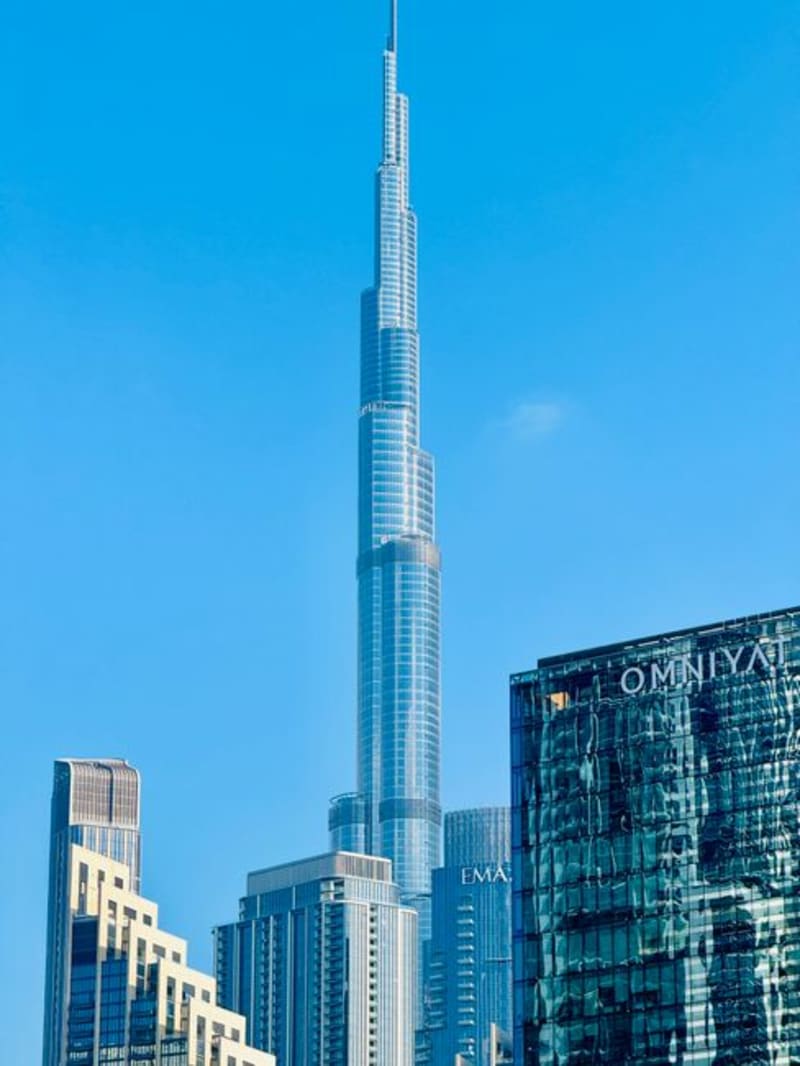 uae
uae Burj Khalifa
The tallest structure humans have ever built, 828 metres of steel and glass rising from desert flatland, and an observation deck view that makes the whole city look like a model.
Explore uae
uae City Walk
An open-air boulevard near Downtown built to feel like a European city block, with a rainforest hidden behind a glass facade in the middle of it.
Explore uae
uae Corniche Abu Dhabi
An eight-kilometer waterfront promenade of cycling paths and public beaches where Abu Dhabi's skyline reveals itself as spread out rather than stacked.
Explore