Nanumanga
"An atoll without a lagoon is like an argument without a middle — it just goes straight from the edge to the point."
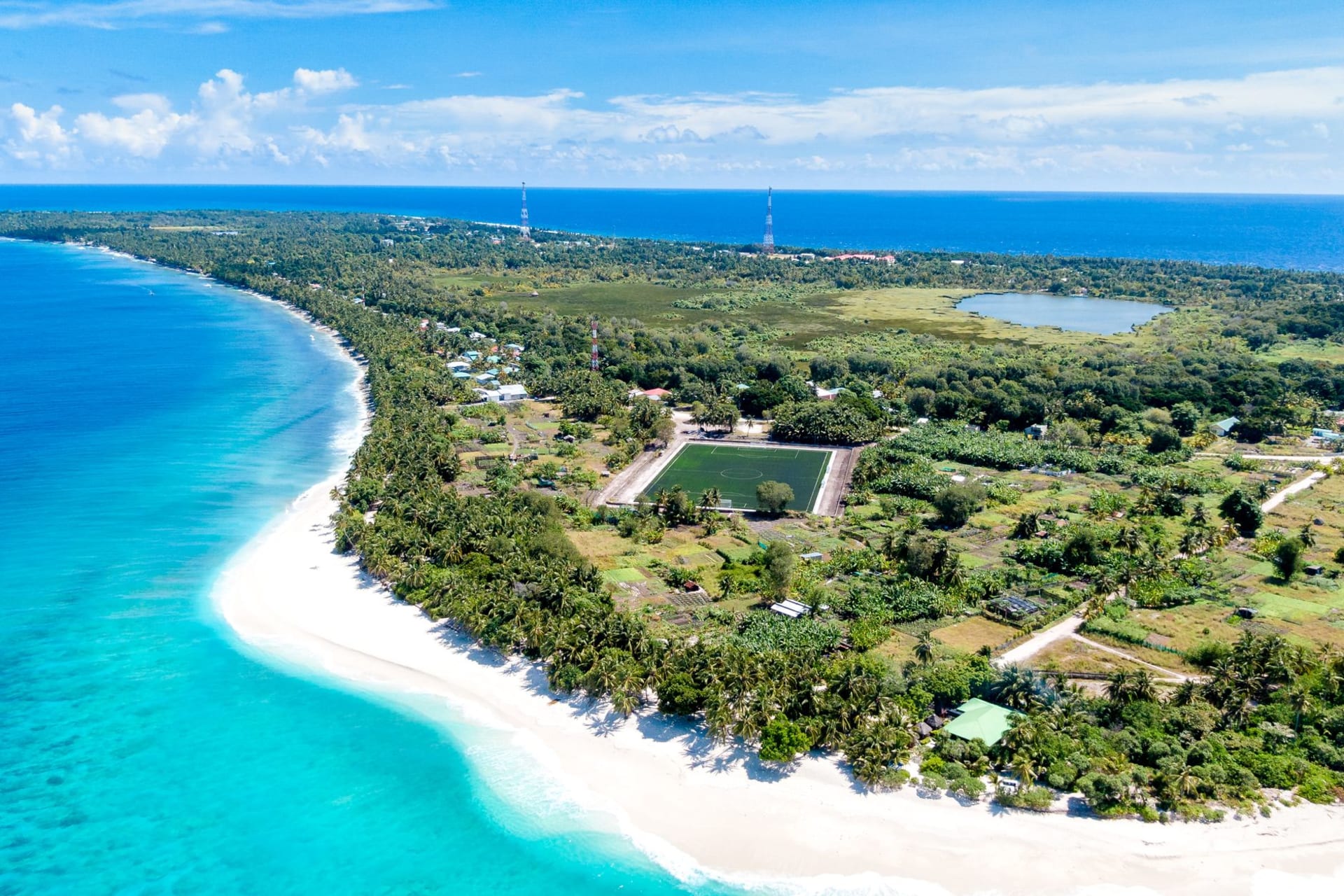
Nanumanga is the geological anomaly of the Tuvaluan archipelago. Where the other eight atolls follow the classic Pacific template — ring of coral, calm lagoon inside, breaking ocean outside — Nanumanga is a single island of raised coral limestone with no enclosed lagoon whatsoever. The ocean arrives directly on all sides. There is no calm interior. The whole island faces out.
An Island That Stands Up
The limestone formation gives Nanumanga a slight elevation advantage over its atoll siblings — several meters in places, which in Tuvaluan geography constitutes a cliff. The island feels marginally less precarious than Fongafale or Savave, though any geologist will tell you this is psychologically comforting rather than practically significant when the Pacific decides to organize itself into something serious.
The interior of the island is dense with vegetation: taro pits dug into the limestone, breadfruit and coconut groves, a tangled understory that makes the center of the island feel more like something from a larger island group than a 3-square-kilometer atoll. On my first morning I followed a track into this interior and emerged into a clearing where a family was pounding breadfruit in a stone mortar, a sound I would not have associated with the Pacific before I came here.
The Community and Its Fishing Grounds
Nanumanga’s roughly 400 residents live in two villages, Tonga in the south and Tokelau in the north, named by compass orientation in a characteristically practical taxonomy. The two communities maintain separate identity but share resources, intermarry, and both claim excellence in fishing — a dispute that seems to be settled by evidence on a case-by-case basis rather than through any official accounting.
The fishing off Nanumanga is done against open ocean from the start — no protected lagoon to ease into. Fishermen here work the outer reef and open water from early morning, using handlines and nets, returning by midday before the afternoon swell builds. I went out once with two brothers named Falani and Moke, not speaking much because we didn’t share a language, but communicating adequately through the shared grammar of watching where the birds were diving.
Caves in the Limestone
The raised limestone platform of Nanumanga contains a system of caves — accessible at low tide around the island’s perimeter — whose interiors are full of stalactites and accumulated sea debris: shells, coral fragments, the occasional fish trap that has washed in and become permanent. One cave has a pool at its center where the limestone walls glow with algae in a particular shade of yellow-green that has no name I know.
The community also maintains oral histories about the caves as refuges during typhoons and wartime, which gives them a weight beyond the geological. A place where people hid from danger does not stay merely scenic.
No Tourism Infrastructure, No Pretense
There are no facilities for visitors on Nanumanga. You arrange homestay through the island’s council and you accept what is offered with gratitude. I slept on a mat under mosquito netting in a family’s secondary room and ate what the family ate — taro, fish, coconut in various forms, occasional tinned protein — and the rhythms of island life simply incorporated a visitor as they had presumably incorporated other anomalies: by continuing.
The evenings were the best part. A single solar lamp, a deck of cards, a grandmother who beat me twice at a game I couldn’t identify and she didn’t bother to explain.
When to go: May through September in the dry season. Nanumanga’s exposed position makes it unsuitable for visiting during the wet season when swells can make approaching the jetty genuinely dangerous. Confirm the ship schedule from Funafuti and build in contingency days.