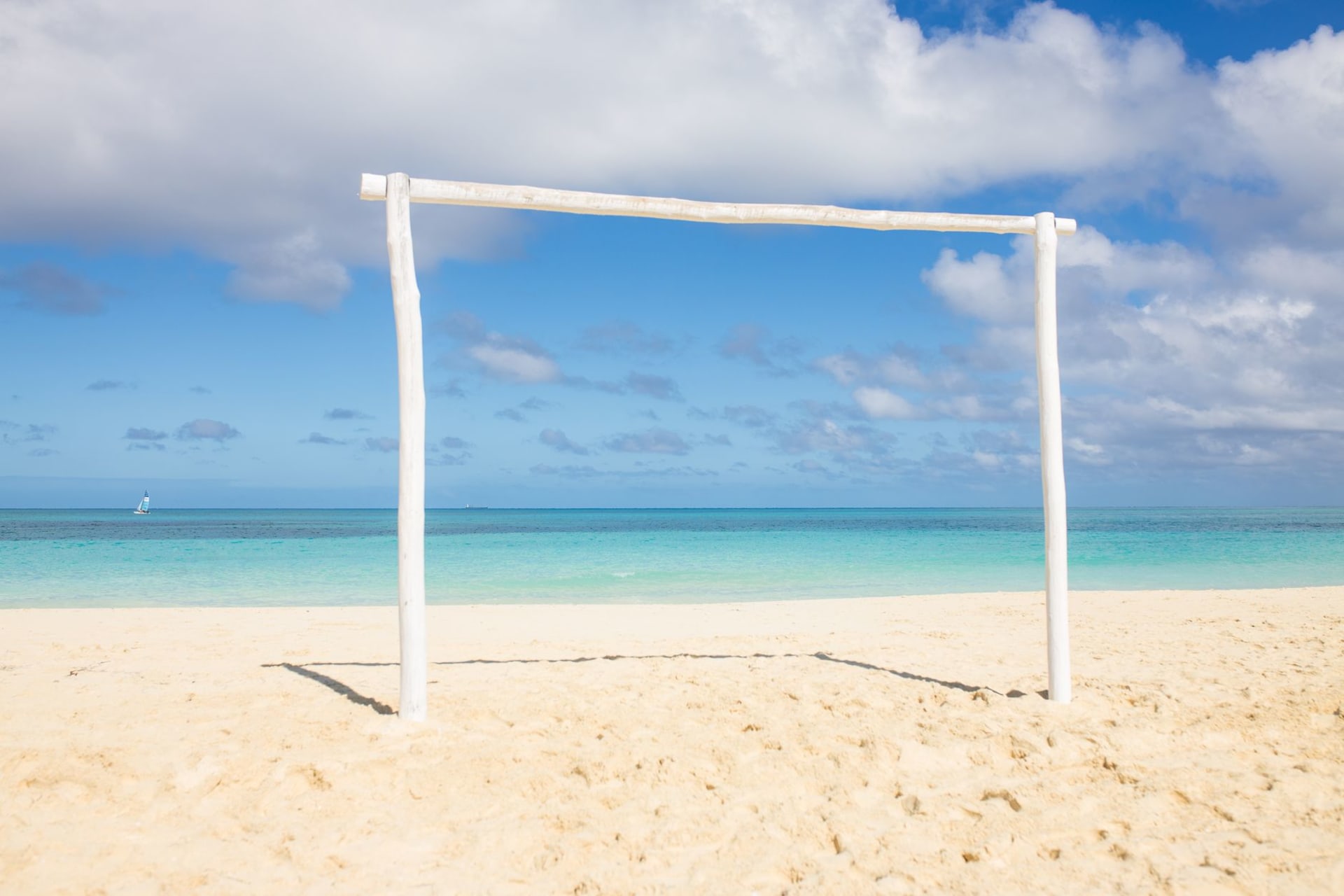
South Caicos
"South Caicos is where the conch on every restaurant menu in Provo actually comes from."
The flight from Providenciales to South Caicos takes fifteen minutes and lands on a runway that feels improvised in a way I appreciate. The island that greets you is flat, wind-blasted, and smells powerfully of the sea — not the genteel sea of resort brochures but the working sea, the one that involves boats and nets and ice and effort. South Caicos is where most of the conch and lobster harvested in TCI actually comes from, and you feel the logic of a working island the moment you step off the plane.
Cockburn Harbour
The main settlement wraps around a natural harbor that’s protected enough to shelter the island’s substantial fishing fleet. In the early morning, the boats go out in the dark; by mid-morning, some are already back, unloading at the dock with the brisk efficiency of people who have done the same thing every day for their entire lives. I spent an hour sitting on a dock wall watching this and felt pleasantly invisible.
The town itself — a few streets of low houses, a couple of shops, a rum bar that opens at a hour I found admirable — wears its remoteness honestly. There’s no tourist infrastructure to speak of, which means the people you encounter are not calibrated to make you feel welcome in the hospitality-industry sense. They’re just people going about their lives, which I find more interesting.
The waterfront has a particular quality of light in the late afternoon, when the harbor goes still and the boats cast long shadows and everything turns that particular shade of amber that makes even practical things look beautiful.
The Wall and the Reefs
South Caicos sits on the edge of the same oceanic wall system that makes Grand Turk’s diving famous, and the sites here are less visited and arguably more pristine. The Columbus Passage runs between South Caicos and Grand Turk — a deep-water channel that funnels nutrient-rich current up the wall, which means the marine life is dense and the coral is in excellent shape.
I dove the Long Cay wall with a small operator out of the harbor. The visibility was extraordinary — clear down past sixty feet, the wall face dropping away into blue-black. Eagle rays at depth. A school of horse-eye jacks so thick you swam through them like a tunnel. The guide pointed to a Caribbean reef shark working the current below us with the casual nonchalance of someone pointing out a bus. I counted three more before we surfaced.
The shallow reefs inside the harbor and around the adjacent cays are equally good for snorkeling, protected from swell by the islands themselves.
Conch and Lobster, Directly
Eating in South Caicos means eating what the island produces, which is a pleasure. Conch here arrives at the table in a condition that makes you reconsider every conch fritter you’ve eaten at a resort. Cracked conch at one of the local spots — pounded flat, battered, fried hard and served with coleslaw and hot sauce — costs a fraction of the same dish in Provo and tastes of the actual animal. Lobster season (August through March) means tails grilled simply over charcoal, without the butter and garlic performance that more tourist-oriented places feel obliged to add.
The Salinas
Like most islands in TCI, South Caicos has extensive salinas — former salt pans that now serve as flamingo habitat and bird-watching ground. The flamingo population here is significant and accessible: the birds feed in the shallows of the pans along the eastern edge of the island and can be approached relatively closely on foot if you move slowly and resist the urge to photograph dramatically.
When to go: November through May for the best diving and fishing conditions. Lobster season (August through March) is worth timing around if you want the full local-food experience. South Caicos has no resort infrastructure, so come prepared for basic accommodation and a slower pace than Provo.