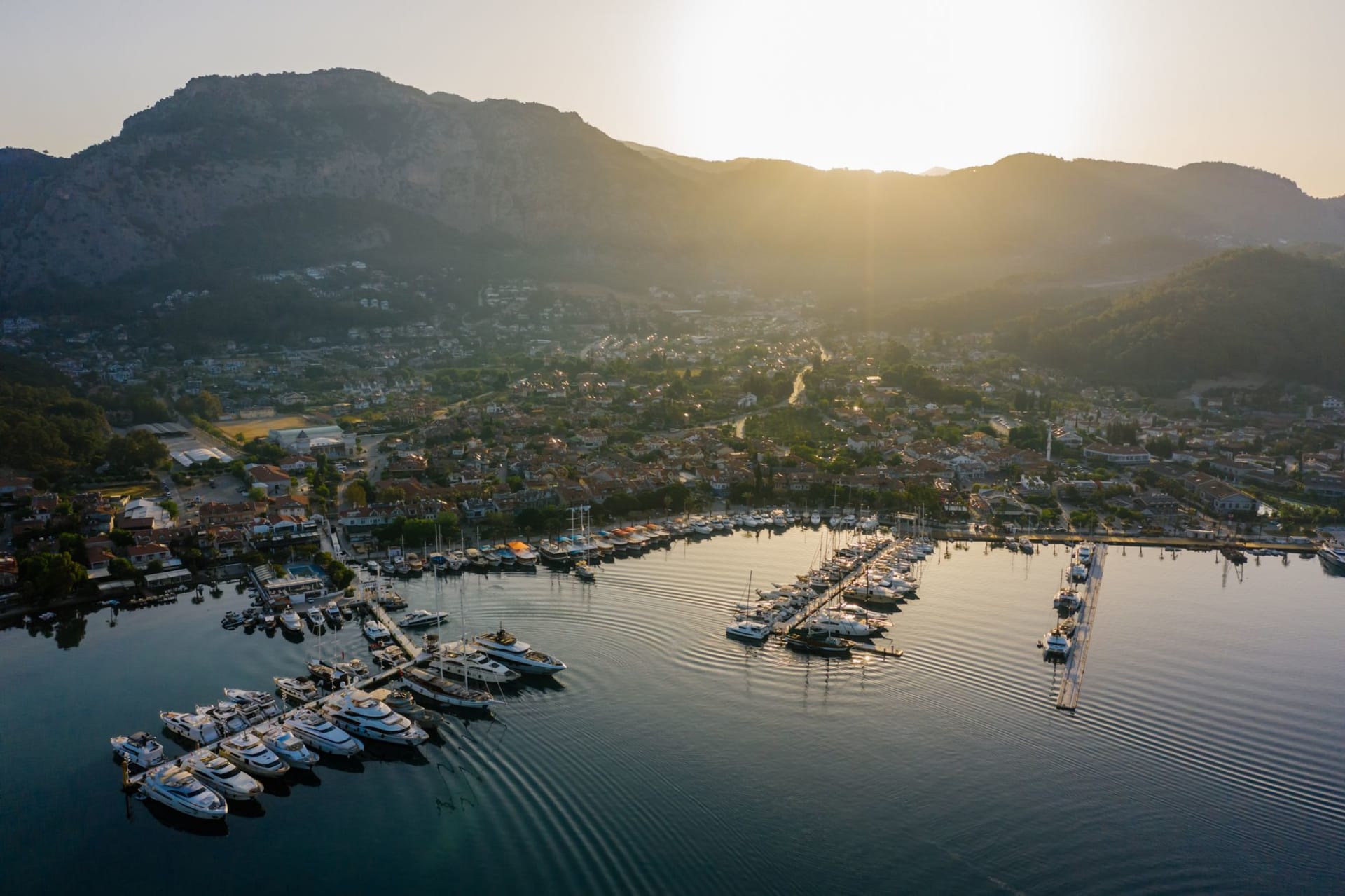
Göcek
"Göcek has about forty meters of public beach, three marinas, and some of the most beautiful anchorages I've ever swum in. I understand the priorities."
Göcek is a sailing town that doesn’t particularly need you to know it’s a sailing town. The marinas are full year-round. The dozen islands offshore are laid out like a geography lesson in cove anatomy. The village itself is orderly and unhurried in a way that feels earned rather than managed, and the main street offers the useful combination of a good bakery, a chandlery, and a restaurant run by a woman who has been making the same lamb stew for thirty years.
The Village and Its Marinas
The town has three marinas — D-Marin Göcek, Skopea Marina, and the municipal marina — holding between them several hundred boats at any given moment in summer. The waterfront is lined with provisioning shops, rigging suppliers, and repair yards alongside the cafes and restaurants, and the mixture creates an atmosphere that is neither purely tourist nor purely industrial but something more interesting than either: a place with a purpose.
Göcek’s main street, a five-minute walk from end to end, has what every small town should have and most don’t: a cheese shop, a pharmacy with a helpful proprietor, a bookshop with a rotating collection that includes English-language paperbacks left by sailors over the years, and a teahouse where the older men of the town play backgammon at a pace that suggests time is a resource available in good supply.
The Twelve Islands
The cluster of islands, peninsulas, and protected bays in the gulf north of Göcek — collectively marketed as the Twelve Islands though the count is loose — constitutes the reason this town matters. The anchorages are exceptional: Cleopatra Bay, Hamam Cove with its ruined Roman baths still accessible from the water, the twin coves of Tersane Island where Byzantine monastery walls run down to the sea.
I joined a day charter with six others on a wooden gulet that departed at nine and returned after sunset. The captain, a man named Serdar who had grown up on these waters, navigated between islands without checking anything except the wind direction. We swam in four coves, drank too much tea, ate lunch on board — fresh fish grilled over charcoal, tomato salad, bread, yogurt — and arrived back at the marina with the particular clean exhaustion that a day on the water produces when it goes right.
Kayaking and the Coves by Water
Several operators in Göcek offer sea kayaking in the gulf, which is a genuinely different experience from the boat tours. At water level, moving at three kilometers per hour through the passages between islands, the scale of things changes. The cliffs are taller. The underwater visibility is dizzying — you can see the bottom eight meters down while still paddling. Lia and I kayaked for three hours along the south coast of the nearest island and around the headland into Cleopatra Bay, which earns its name by being simply impractical in its beauty.
Fethiye Connection
Göcek sits fifteen minutes north of Fethiye by road and much less by water, which means it functions well as a base if Fethiye is your logistical center. The gulet Blue Voyage route — the famous “Blue Cruise” that runs along the Turkish coast — typically starts or ends in either Göcek or Fethiye, and the town’s infrastructure is calibrated for this. If you’re planning a multi-day sailing trip, Göcek is the more serious of the two departure points.
Quiet Evenings
The evenings in Göcek are quiet by this coast’s standards. Dinner at a harbor-front restaurant, the lights of the boats reflected in the water, someone playing something low on a speaker somewhere across the marina. It doesn’t ask anything of you except to sit and pay attention.
When to go: May through October for sailing season, with May and June the most comfortable for shore-based visiting. The village stays calmer than its neighbors all season because its main constituency is sailors rather than beach tourists. October is exceptional: the water stays warm, the charter crowd thins, and the islands feel like they belong to whoever happens to be there.