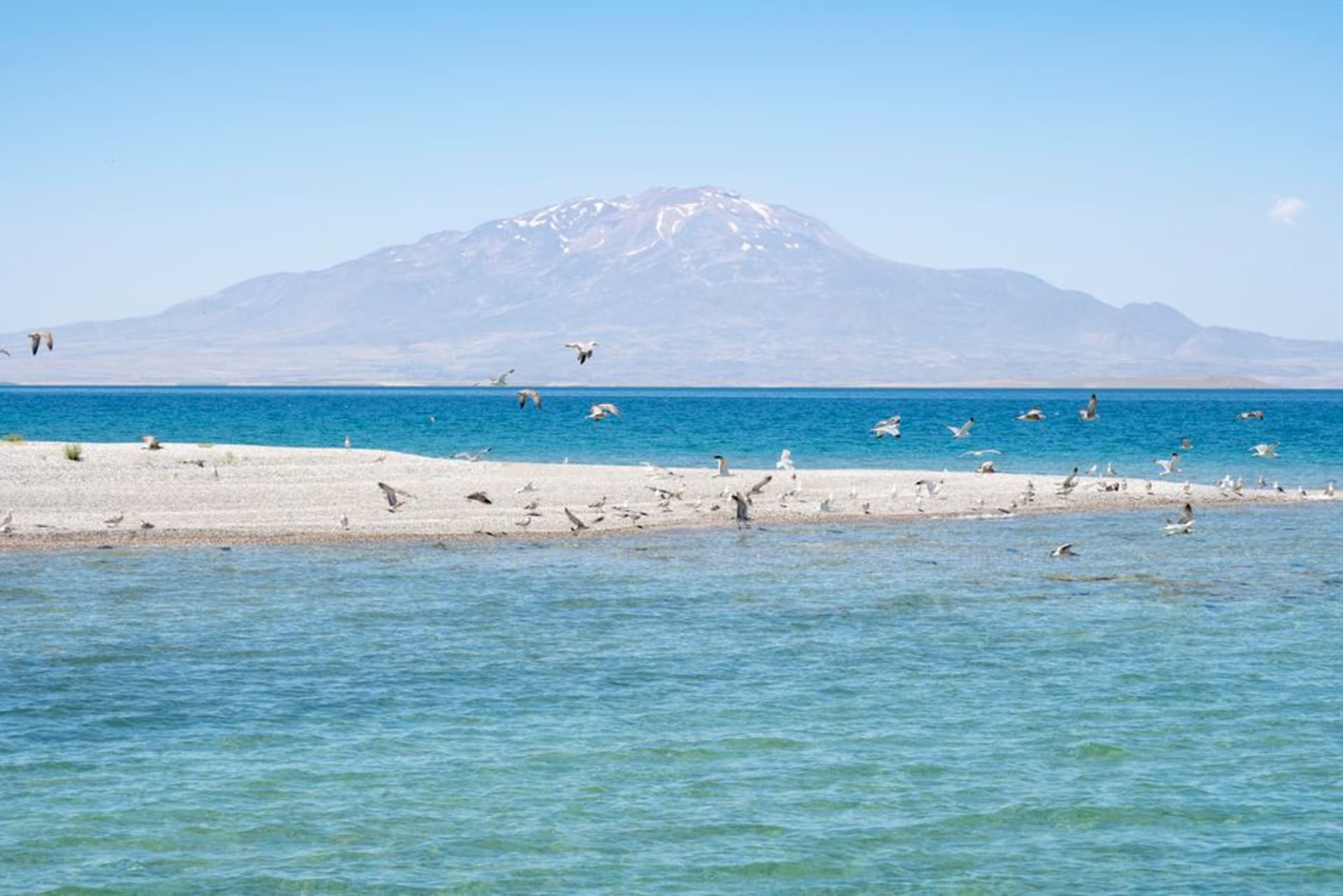
Van
"Van sits so far east that by the time I arrived, I'd stopped checking my phone for a signal from home and started checking it for the time in Tehran instead."
Turkey's easternmost major city sits on the shore of its largest lake, home to mismatched-eyed cats and an Armenian church stranded on its own island.
Van felt like the edge of something, and geographically it is — closer to Tabriz than to Ankara, the last major Turkish city before the Iranian border, sitting on the shore of a lake so large it functions more like an inland sea. I got off an overnight bus feeling the particular disorientation of having traveled a very long way within a country I thought I already understood, and Van reset that understanding almost immediately.
The cats of Van
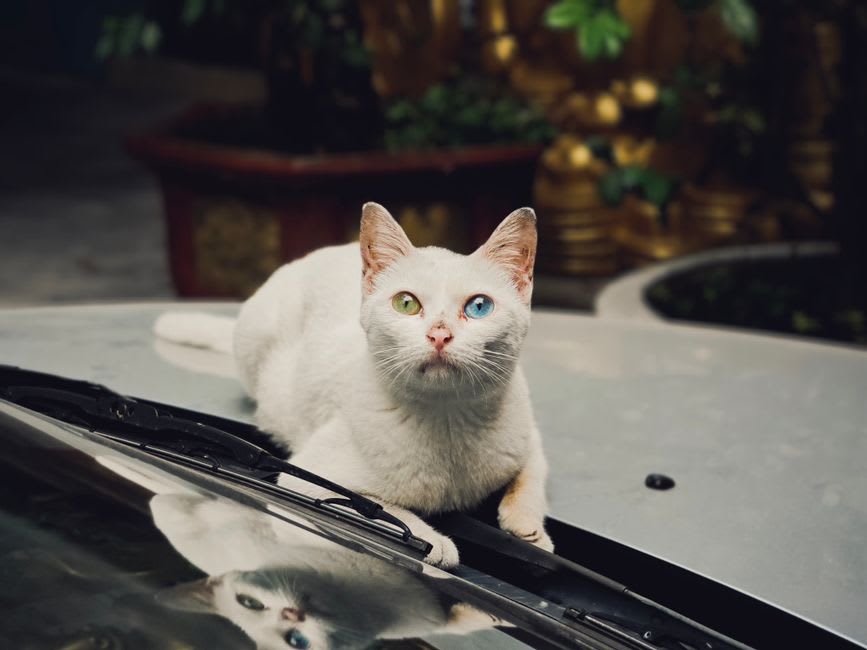
I’d read about the Van cat before arriving — a breed native to the region known for its pure white coat and, in a notable minority, heterochromia: one blue eye, one amber, a trait locals regard with genuine civic pride. I visited the Van Cat House, a research and breeding center attached to the local university, half-expecting a tourist trap and instead finding researchers who spoke about the cats with real scientific affection, plus about forty extremely relaxed animals sprawled across sunny windowsills. One looked at me with its mismatched eyes for a solid ten seconds before deciding I wasn’t interesting enough to keep looking at, which felt like an accurate summary of most cat encounters everywhere, just with better color contrast.
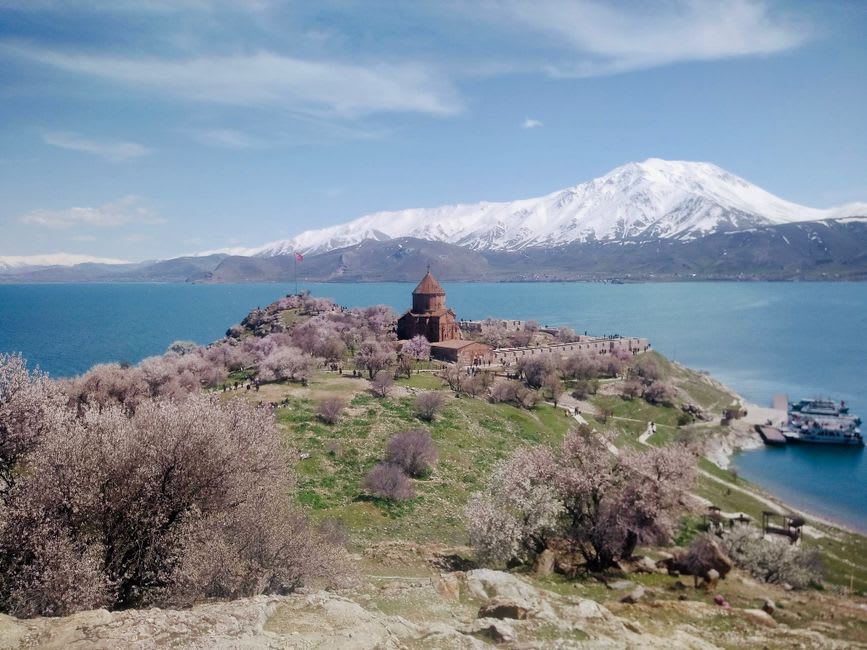
Akdamar Island
The real reason to come to Van, though, is the boat out to Akdamar Island, a small rocky outcrop in Lake Van crowned by the tenth-century Armenian Church of the Holy Cross. The lake itself is strange even before you reach the island — highly alkaline, soda-rich water that leaves a faint mineral smell on your skin, a striking turquoise-blue color against the bare volcanic mountains ringing the shore. The church’s exterior is covered in relief carvings — Adam and Eve, David and Goliath, Jonah and the whale — weathered but still legible after a thousand years, and stepping inside the empty, roofless nave with the lake wind coming through the windows, I had one of those quiet, unbothered moments of history that don’t require a guide or an explanation to land.
Van’s old city, largely destroyed and rebuilt after events of the early twentieth century, now sits mostly as a district of ruins beneath the Van Fortress, an Urartian citadel dating back nearly three thousand years, with the new city spreading out below it. I climbed the fortress at sunset and watched the lake turn the color of hammered pewter, the mountains of Iran a smudge on the horizon, and felt further from home than at any other point on the trip — which, after weeks in Turkey’s more touristed corners, was exactly what I’d come this far east to feel.
When to go: May to September. Van sits at high altitude and its winters are long and severe; the boat to Akdamar generally only runs reliably in the warmer months.