Side
"Every evening, an entire town stops to watch the sun go down between two columns that have outlasted every empire that built them."
A resort town built inside a Roman ruin, where the Temple of Apollo's columns silhouette against the sea at the exact hour everyone gathers to watch.
Side is the only place I’ve visited where the ancient ruins are not a separate attraction with its own gate and ticket booth — they are simply woven into the town, so that you walk past a Roman column to reach a gelato shop, and a Hellenistic wall forms one side of somebody’s guesthouse courtyard. I arrived expecting a beach resort with some ruins nearby and found instead a genuinely strange overlap: souvenir stalls operating in the shadow of a two-thousand-year-old amphitheater, sunbathers on a beach that borders a temple.
The Evening Everyone Shows Up For
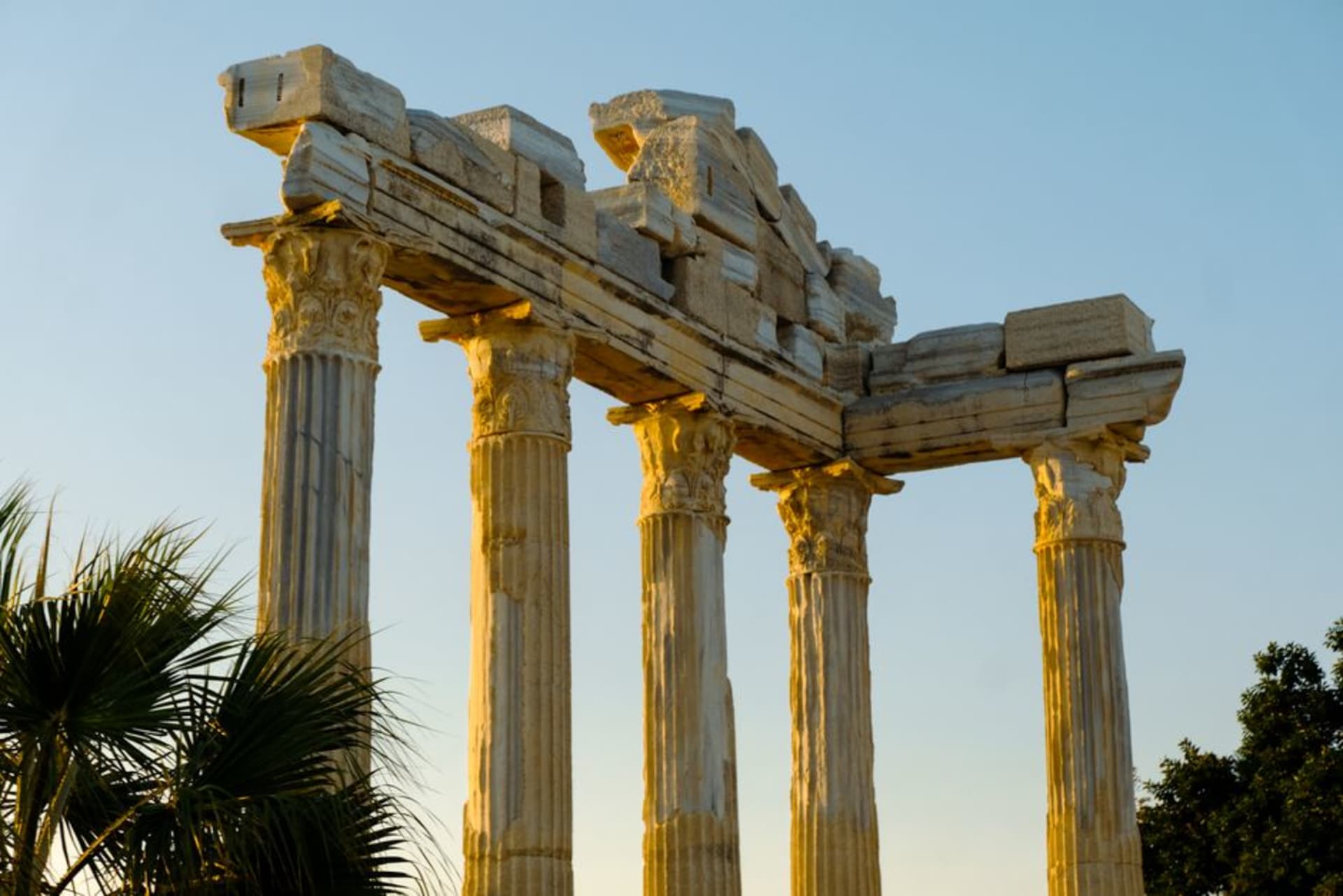
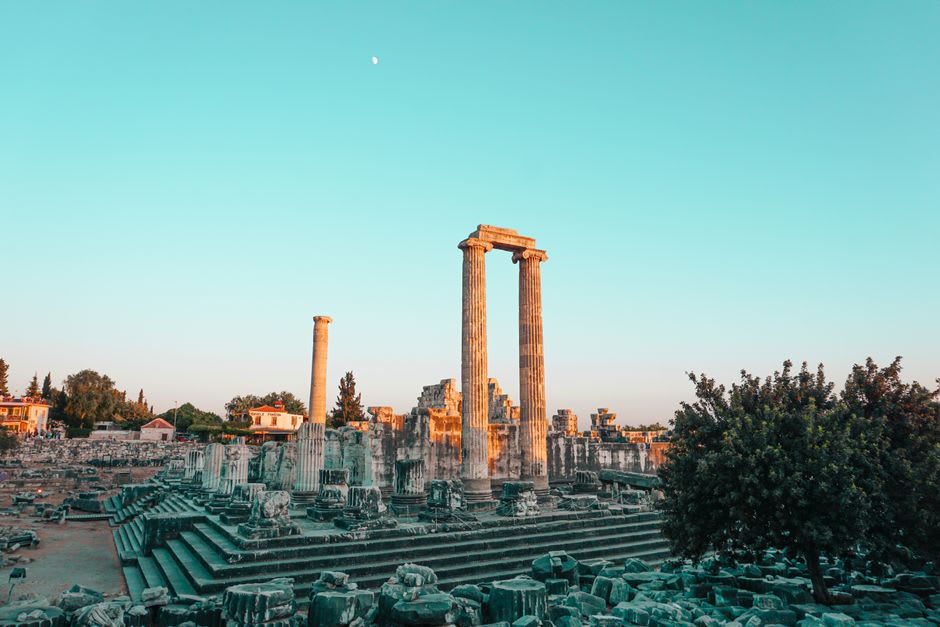
The Temple of Apollo sits directly on the water’s edge at the tip of the peninsula, five columns still standing, and at sunset the entire town seems to migrate toward it. I got there early enough to find a spot on the rocks and watched the crowd build — couples, families, a street vendor selling roasted corn who clearly knew this was his best hour of the day. When the sun finally dropped between the columns, the whole waterfront went quiet for about ninety seconds, phones up, nobody speaking. Then everyone exhaled at once and the vendor sold out of corn in about four minutes.
I asked a local café owner, Aylin, if this happened every night, and she laughed and said yes, every single clear evening, for as long as she could remember, and that she still came out from behind the counter to watch it herself even after twenty years of running the place.
A Port City That Never Stopped Being One
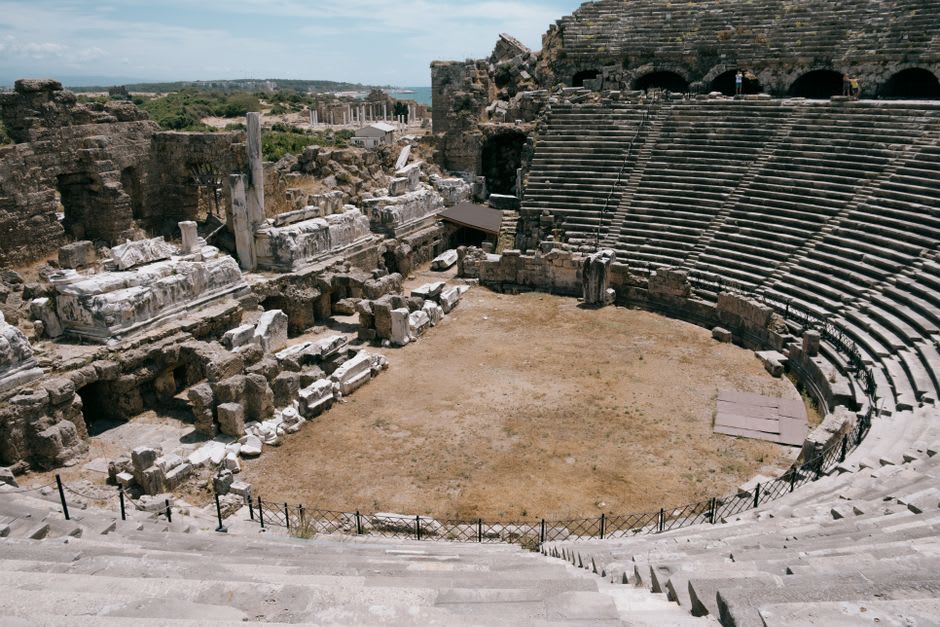
Beyond the temple, Side’s ancient theater seats around fifteen thousand and sits practically on top of the modern main street — I bought a bottle of water at a corner shop and the theater’s outer wall was the shop’s back wall. The old agora and the harbor baths, now partially a museum, tell you this was once a major port and trading center, not a minor outpost, and the scale of the ruins backs that up even with beach umbrellas visible in the background of half my photos.
The tension between resort and ruin can feel jarring — a gift shop selling inflatable unicorns fifty meters from a Roman gate — but after a day or two it stopped bothering me. Side has been continuously inhabited and repurposed for millennia; the beach umbrellas are just this century’s addition to a very long pattern.
When to go: Late May to June or September, when the sunset crowds are present but manageable and the heat hasn’t reached its August peak; arrive at the temple at least 45 minutes before sunset to get a spot on the rocks.