A hillside Ionian city laid out on a strict grid centuries before urban planning had a name, overlooking a valley where the sea used to be.
I almost didn’t stop in Priene. It was meant to be a quick detour on the way to Didyma, twenty minutes to say I’d seen it. I stayed two and a half hours and had the entire hillside to myself except for a French couple who left after ten minutes because, as the woman said on her way out, “there’s nothing here, just stones.” She wasn’t wrong about the stones. She was wrong about everything else.
What makes Priene different from every other ancient site I’d visited in Turkey is the grid. The city was rebuilt in the fourth century BC on a strict rectangular street plan, blocks stacked up the slope of Mount Mycale like a Hippodamian fever dream — this is, genuinely, one of the earliest and best-preserved examples of planned urban design anywhere in the ancient world. You can stand at one corner and see the logic of the whole city laid bare: residential blocks, agora, theater, all fitted to a grid that doesn’t care that the hill underneath it is steep. Walking those streets, stepping over thresholds worn smooth two and a half thousand years ago, I kept thinking about how much of modern city planning is just this idea, rediscovered.
The Temple That Still Stands Watch
The Temple of Athena Polias sits at the top of the site, five columns re-erected against a sky that was, the day I visited, an aggressive cloudless blue. It’s not reconstructed to its former scale — nothing close — but the columns that do stand give you the proportions, and from beside them the view opens out over what used to be the Aegean coastline and is now a flat green plain of cotton fields, threaded by the silted-up Menderes river. That’s the detail that got me: Priene was a port city. The sea came all the way to the base of the hill. Now it’s eight kilometers away, and the harbor is just… farmland. Standing where sailors once anchored their boats felt genuinely disorienting, in a way that beat any single monument.
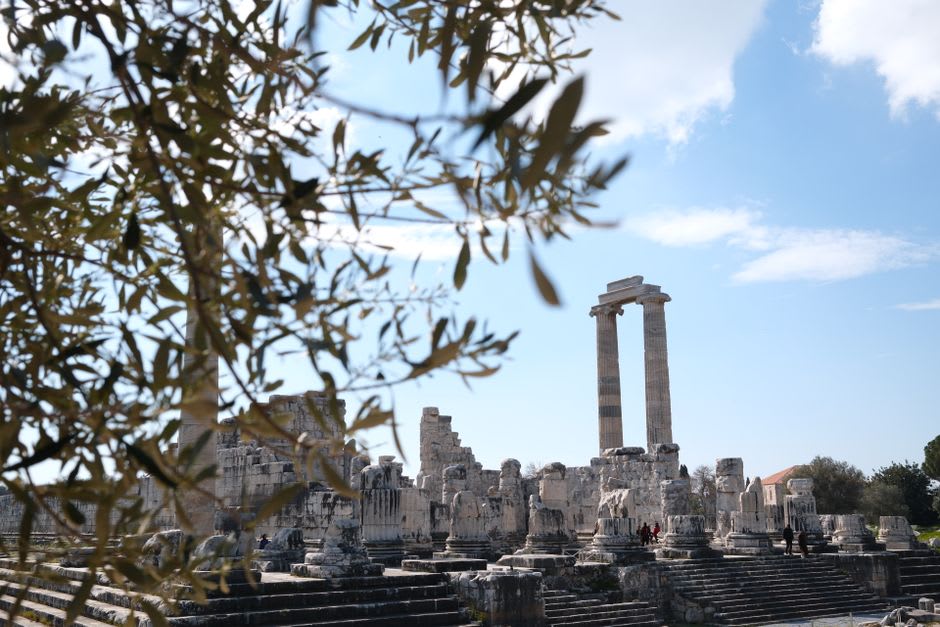
I ate lunch — bread, olives, a tomato I’d bought that morning in Söke — sitting in the stone seats of the small theater, low enough in the hillside that the cicadas were louder than my own chewing. No guide had told me to bring lunch here. I just didn’t want to leave.
Why Fewer People Come, and Why That’s the Point
Priene gets a fraction of Ephesus’s visitors, largely because it has no library facade to put on a postcard and the drive out from Kuşadası takes an extra half hour past Didyma and Miletus, which most day-tour operators bundle together and rush through. But the lack of crowds isn’t a compromise here — it’s the entire experience. You can trace the grid on foot without another human in your photos, sit in the theater in silence, and read the informational plaques without a tour group blocking them. Priene rewards people willing to drive a little further and expect a little less spectacle. What it gives back is space to actually look.
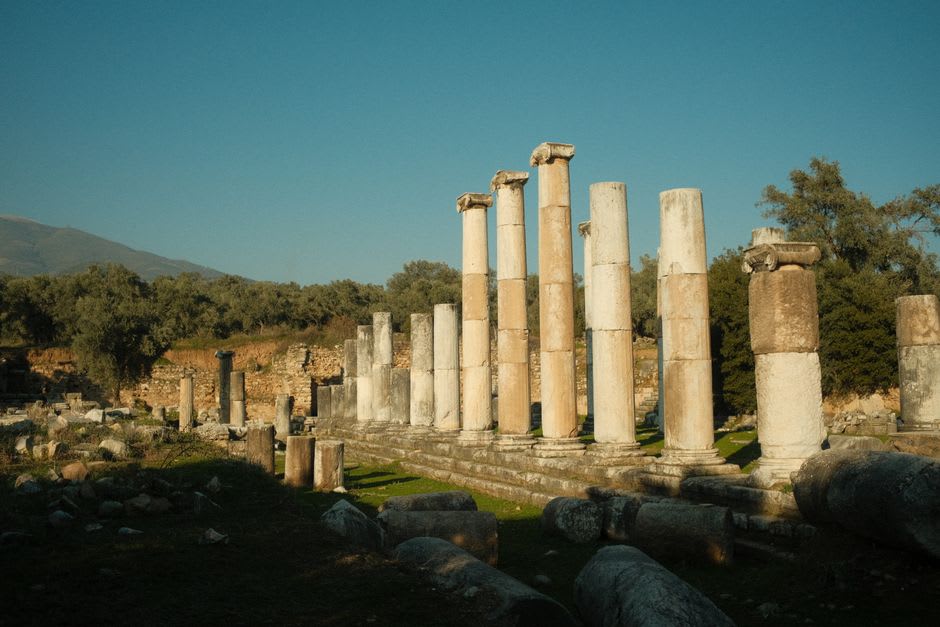
When to go: Spring (April–May) for wildflowers on the hillside and cool enough air to comfortably climb to the temple. Go in the morning before the site guards close the upper paths for the midday heat in summer.
Keep exploring
More from Turkey
 turkey
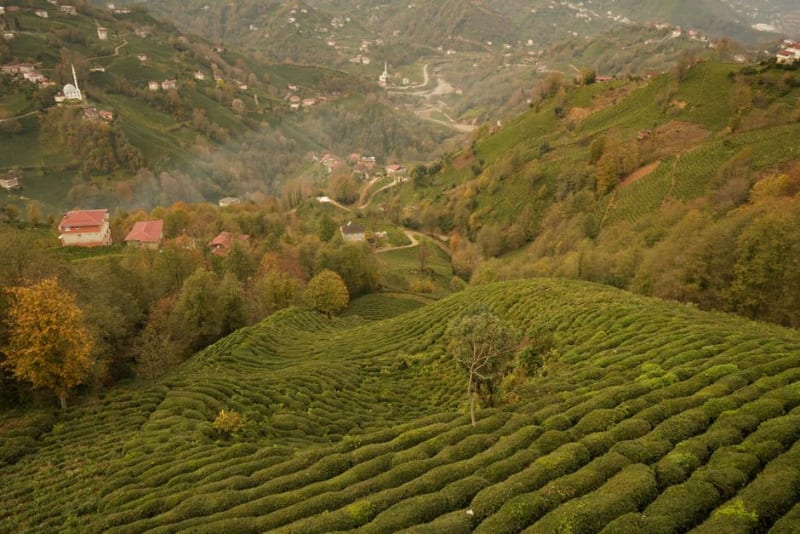
 Rize
Turkey's tea capital on the misty Black Sea coast, where terraced plantations climb impossibly green hills and every stranger offers you a glass.
Explore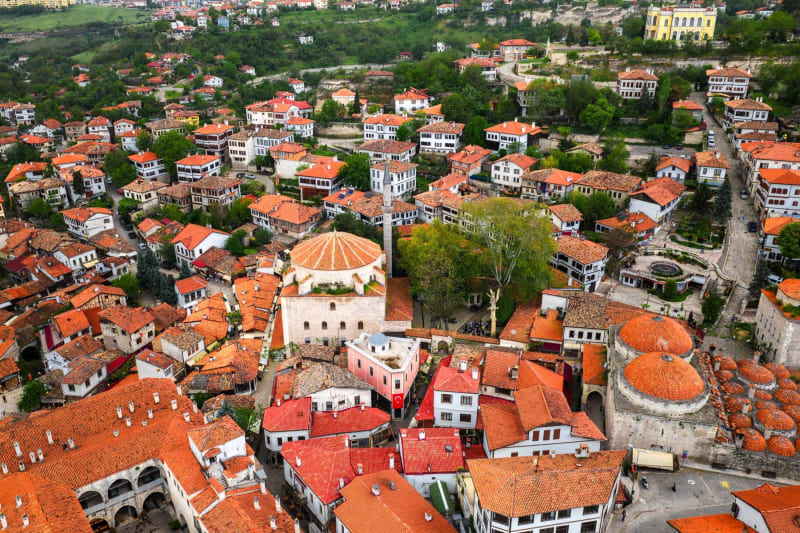 turkey
 Safranbolu
A UNESCO Ottoman trading town in northern Turkey with 1,000 preserved timber-framed houses and a saffron market.
Explore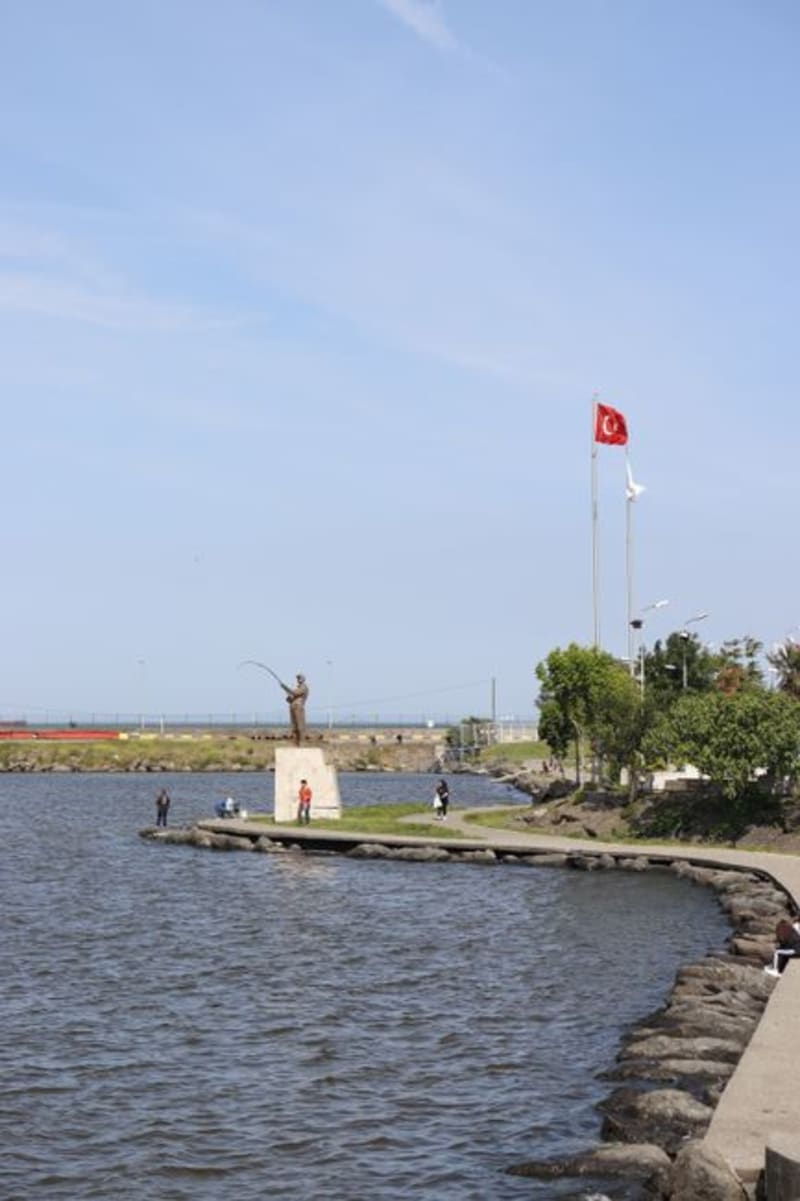 turkey
 Samsun
The Black Sea port city where Atatürk landed in May 1919 to launch the War of Independence, now a modern, tobacco-scented city that Turks visit like a pilgrimage.
Explore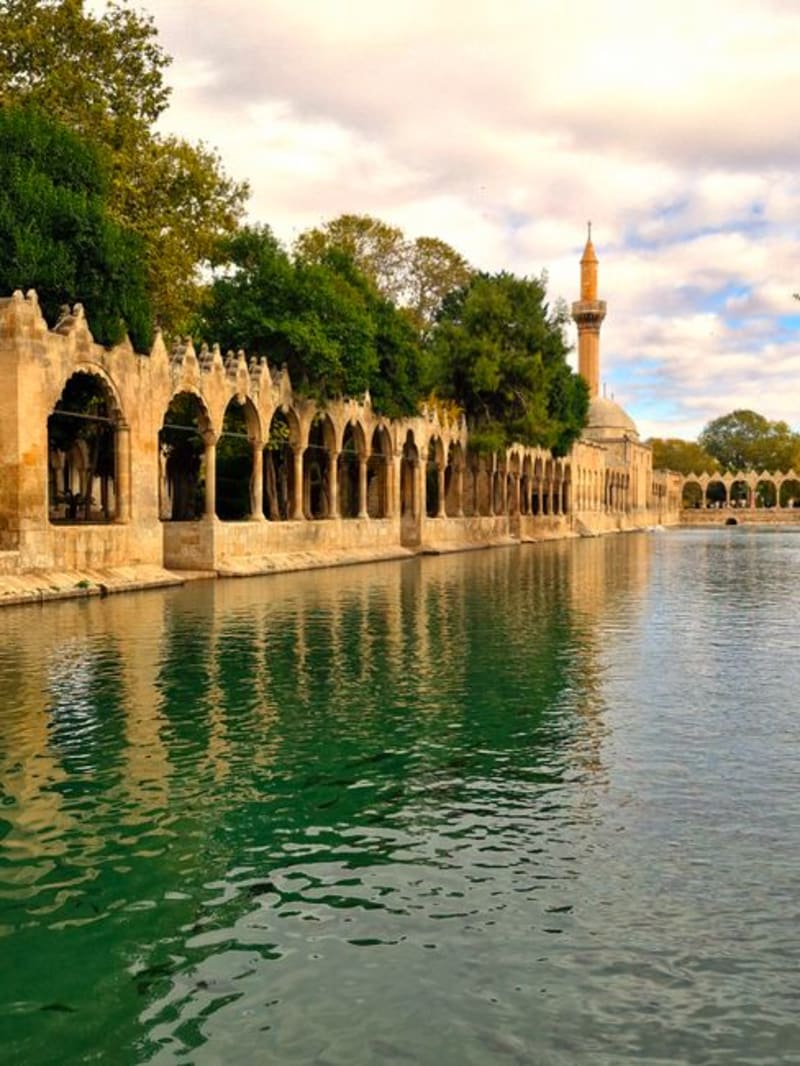 turkey
 Şanlıurfa
The legendary birthplace of Abraham, gateway to Göbekli Tepe, and a city so devoted to its own sacred carp that they've never once been eaten.
Explore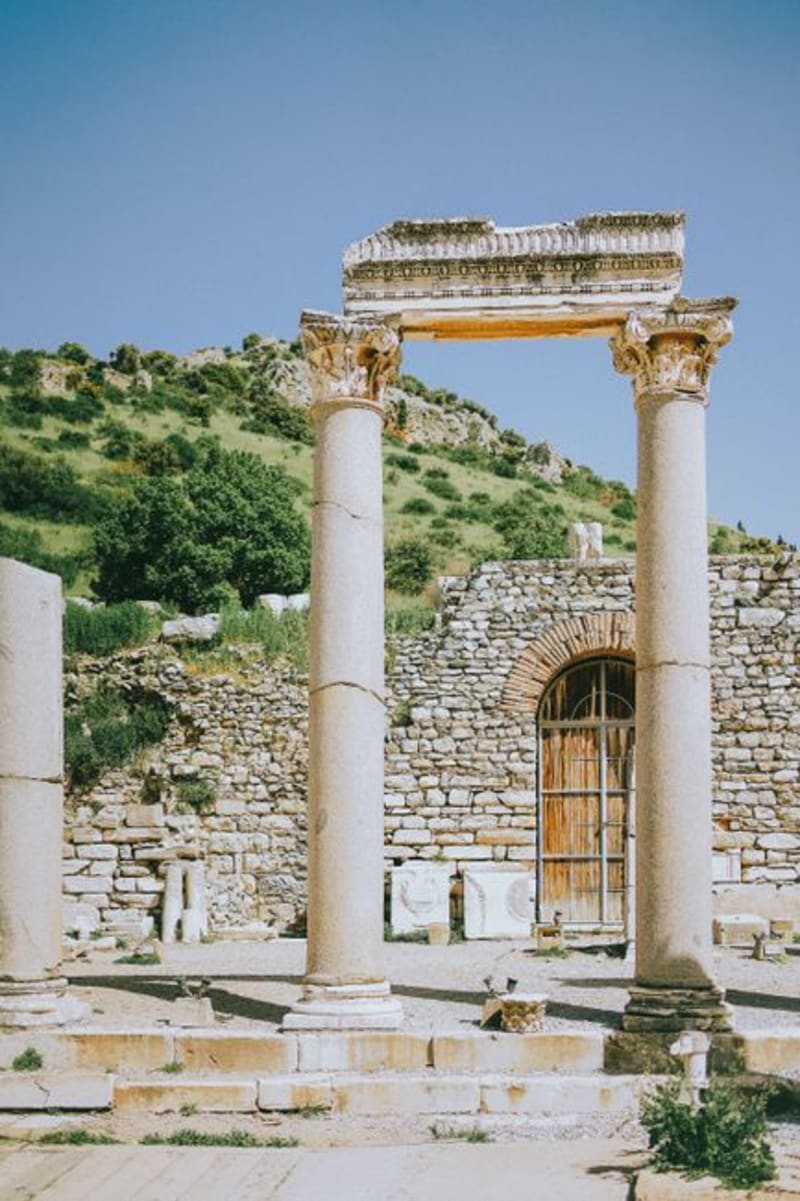 turkey
 Selcuk
The unpretentious base town for Ephesus, where storks nest on ancient columns and a single fallen pillar is all that remains of a Wonder of the World.
Explore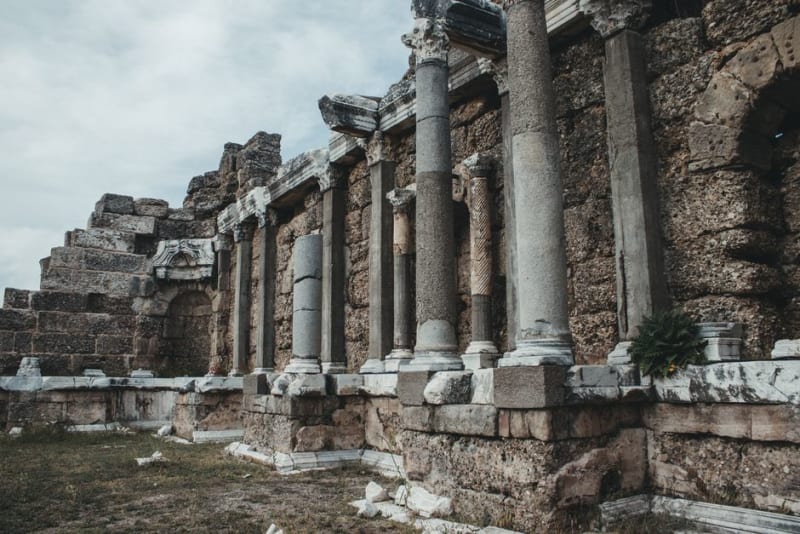 turkey
 Side
A resort town built inside a Roman ruin, where the Temple of Apollo's columns silhouette against the sea at the exact hour everyone gathers to watch.
Explore