Perge
"I had a Roman stadium to myself for forty minutes and no one else seemed to think that was strange."
A sprawling, half-empty Roman city near Antalya where a colonnaded street and a chariot-worn stadium sit under open sky, ignored by the crowds at Ephesus.
I drove out to Perge on a whim, mostly to fill an afternoon between beach days near Antalya, and ended up staying until a site guard came around gently suggesting it was closing time. I had, at various points, the colonnaded street entirely to myself. No tour groups, no queue at the gate, just cicadas and the occasional lizard skittering across sun-warmed marble. After the crush of Ephesus a few years back, this felt almost illicit — like I’d wandered somewhere I wasn’t supposed to find so easily.
Walking a City That Time Forgot to Crowd
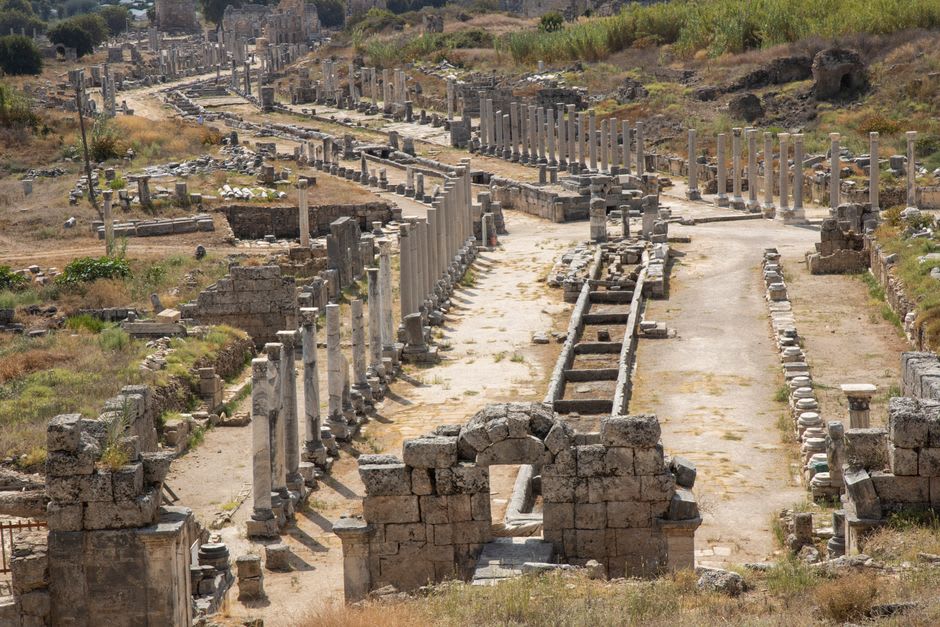
The main colonnaded street runs for hundreds of meters straight through the heart of the site, its original paving stones still grooved from cart wheels, and a channel down the center that once carried water to cool the street in summer. I walked its full length twice, once fast and once slow, and the second pass is the one that mattered — noticing the shop fronts still visible behind the columns, the base of a fountain, a stretch where the stone underfoot is worn smooth in a curved path that must have been the daily route of thousands of feet for centuries.
The Hellenistic city gate, flanked by two round towers, is older than the Roman additions around it and has a strange gravity to it — you can feel that this was the entrance, the threshold, in a way that’s harder to sense at more heavily restored sites. A guard named Orhan, who’d clearly worked there for years, pointed out a horseshoe-shaped courtyard just inside the gate and told me it was likely where visiting dignitaries were formally received, a detail that isn’t well signed and that I’d have missed entirely without him.
The Stadium Nobody Talks About
Perge’s stadium is the real surprise. Row upon row of stone seating, remarkably intact, capable of holding tens of thousands, and when I visited there were exactly four other people on the entire structure. I sat at the top and tried to picture it full — chariot races, the noise, the dust — and the emptiness made the exercise easier, not harder, because there was nothing modern competing for my attention.
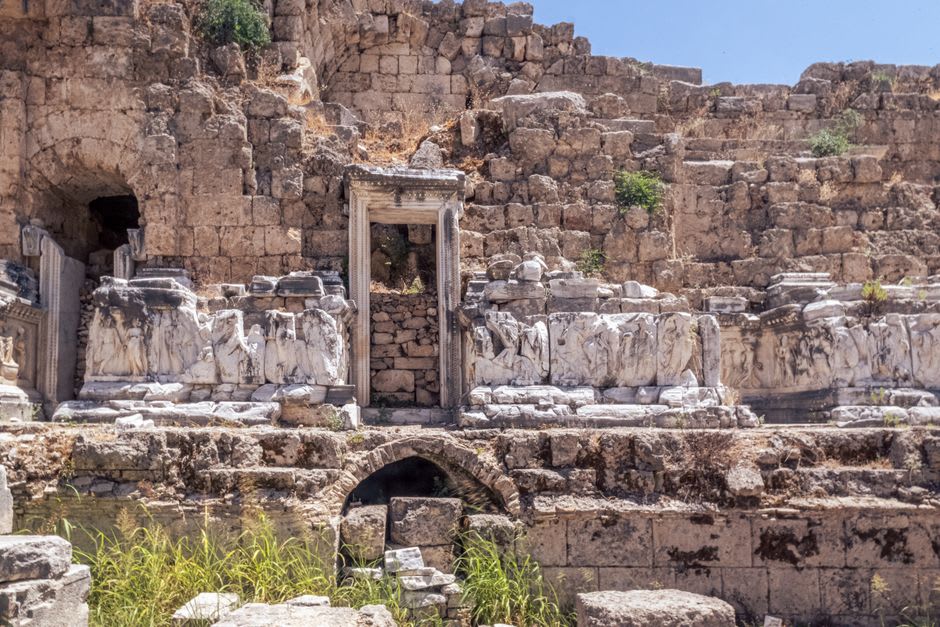
Perge doesn’t have Ephesus’s marble library facade or its cruise-ship crowds, and that trade feels entirely in its favor. Bring water, bring a hat — there is almost no shade — and give yourself at least two unhurried hours.
When to go: Early morning (site opens around 9am) in spring or autumn; the site has minimal shade and gets punishingly hot by midday in summer.
Keep exploring
More from Turkey
 turkey
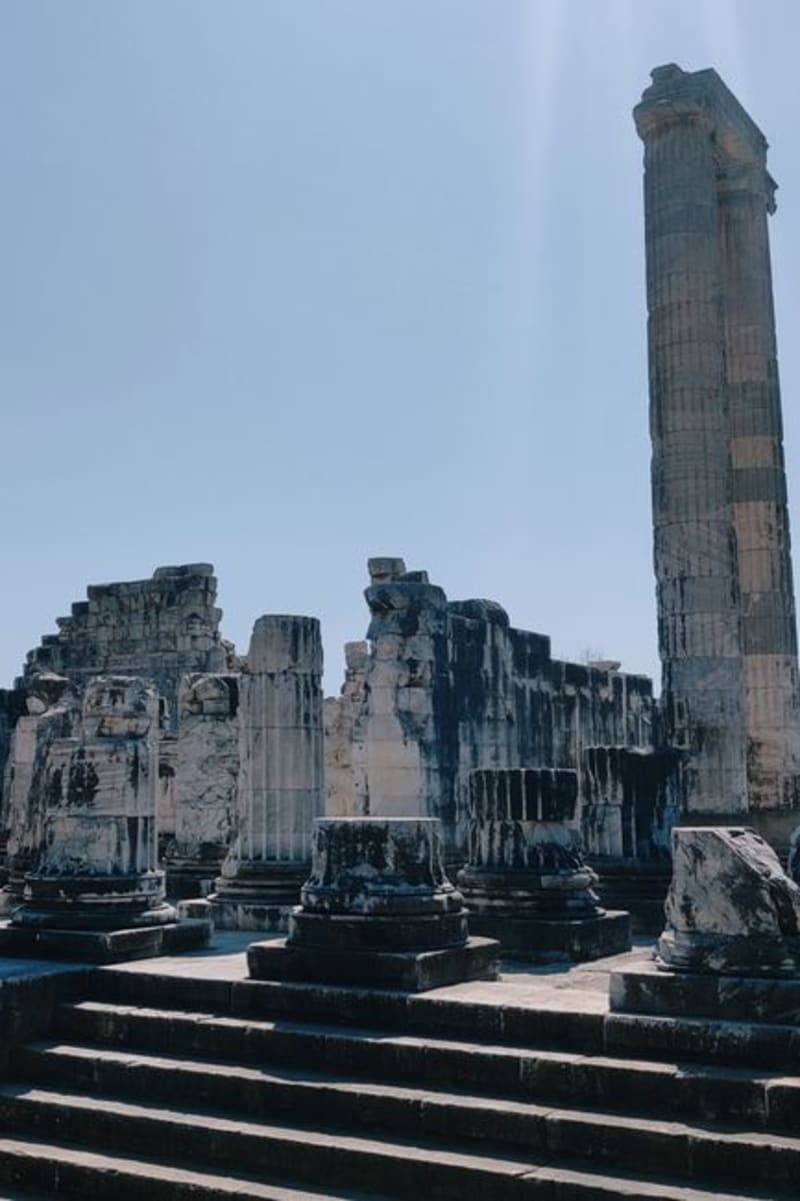
 Priene
A hillside Ionian city laid out on a strict grid centuries before urban planning had a name, overlooking a valley where the sea used to be.
Explore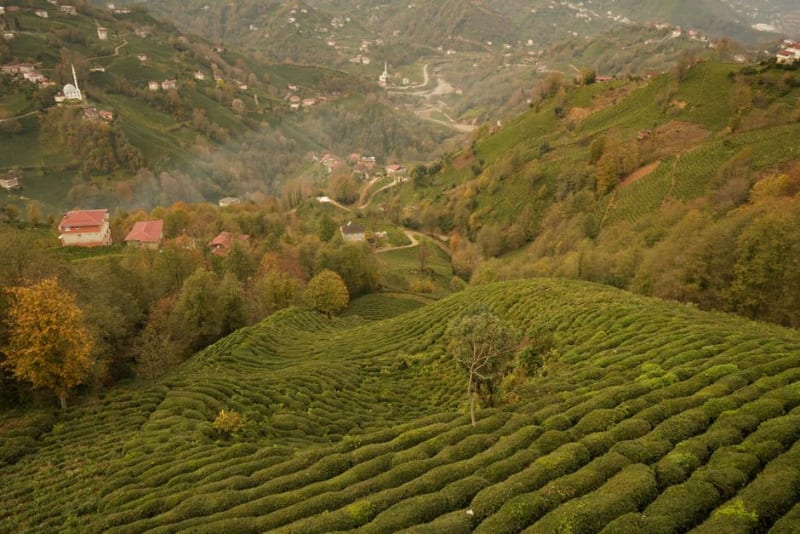 turkey
 Rize
Turkey's tea capital on the misty Black Sea coast, where terraced plantations climb impossibly green hills and every stranger offers you a glass.
Explore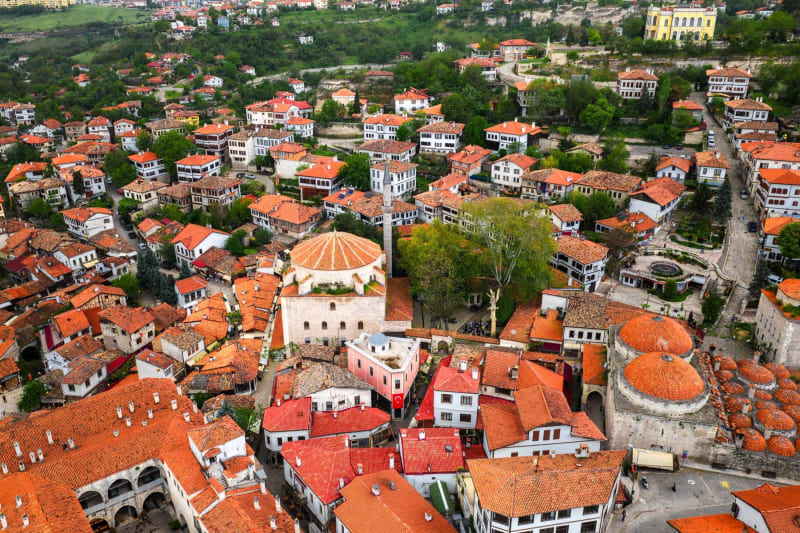 turkey
 Safranbolu
A UNESCO Ottoman trading town in northern Turkey with 1,000 preserved timber-framed houses and a saffron market.
Explore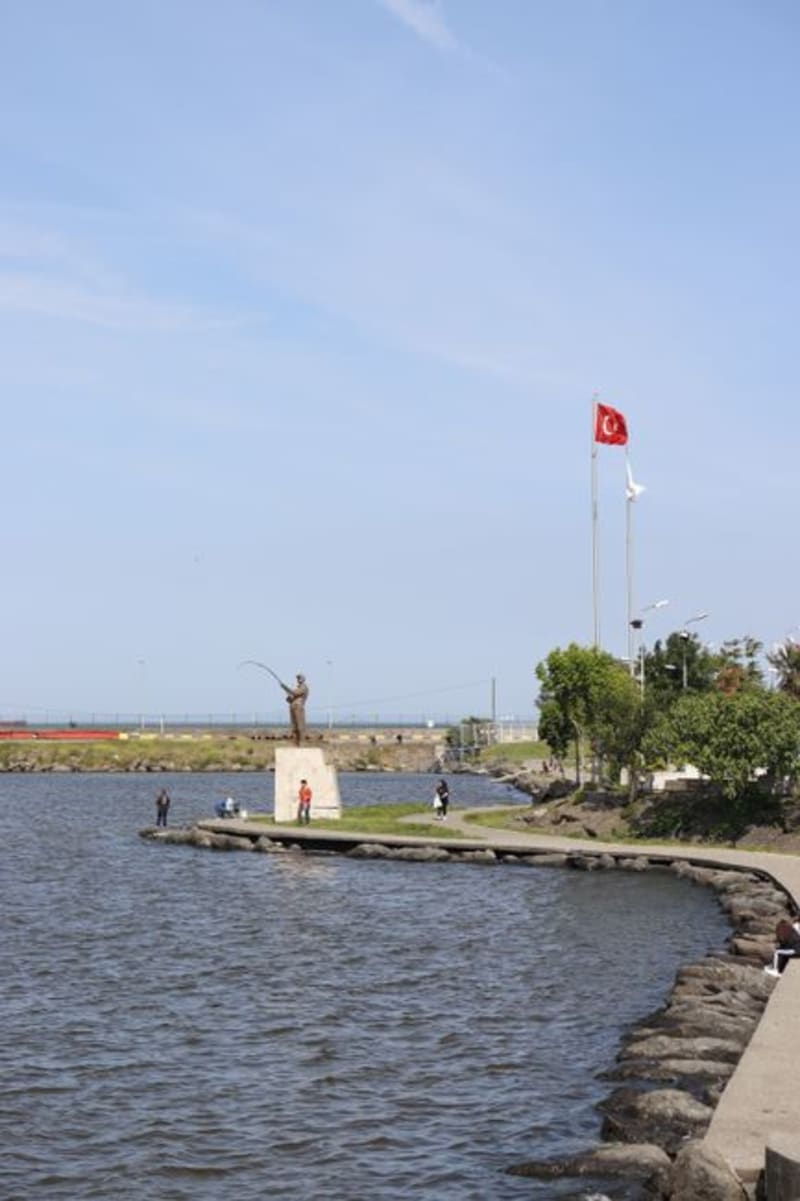 turkey
 Samsun
The Black Sea port city where Atatürk landed in May 1919 to launch the War of Independence, now a modern, tobacco-scented city that Turks visit like a pilgrimage.
Explore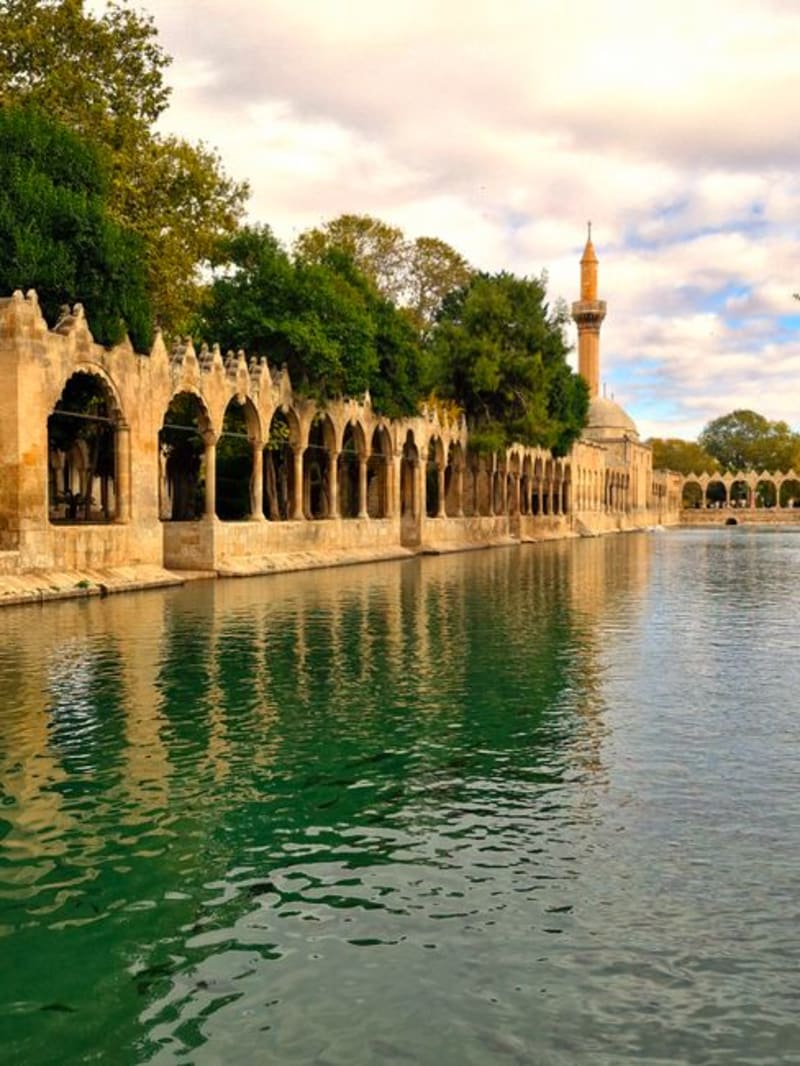 turkey
 Şanlıurfa
The legendary birthplace of Abraham, gateway to Göbekli Tepe, and a city so devoted to its own sacred carp that they've never once been eaten.
Explore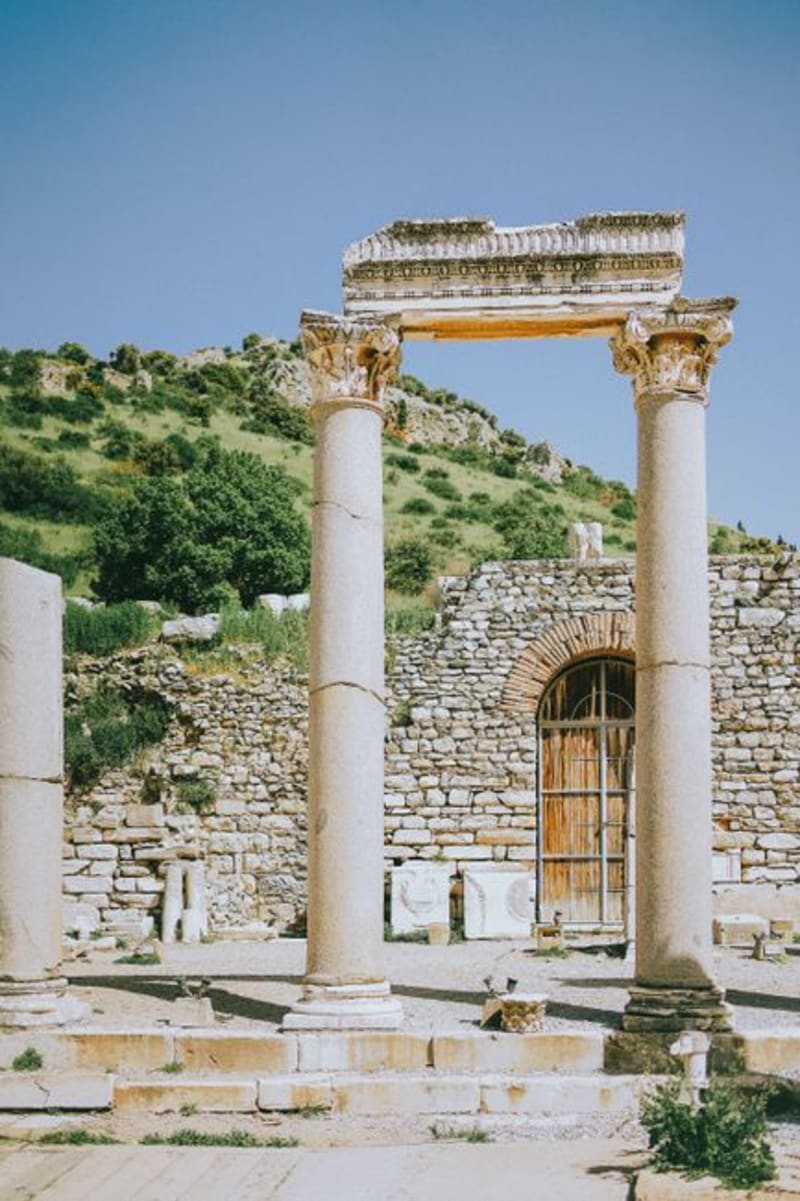 turkey
 Selcuk
The unpretentious base town for Ephesus, where storks nest on ancient columns and a single fallen pillar is all that remains of a Wonder of the World.
Explore