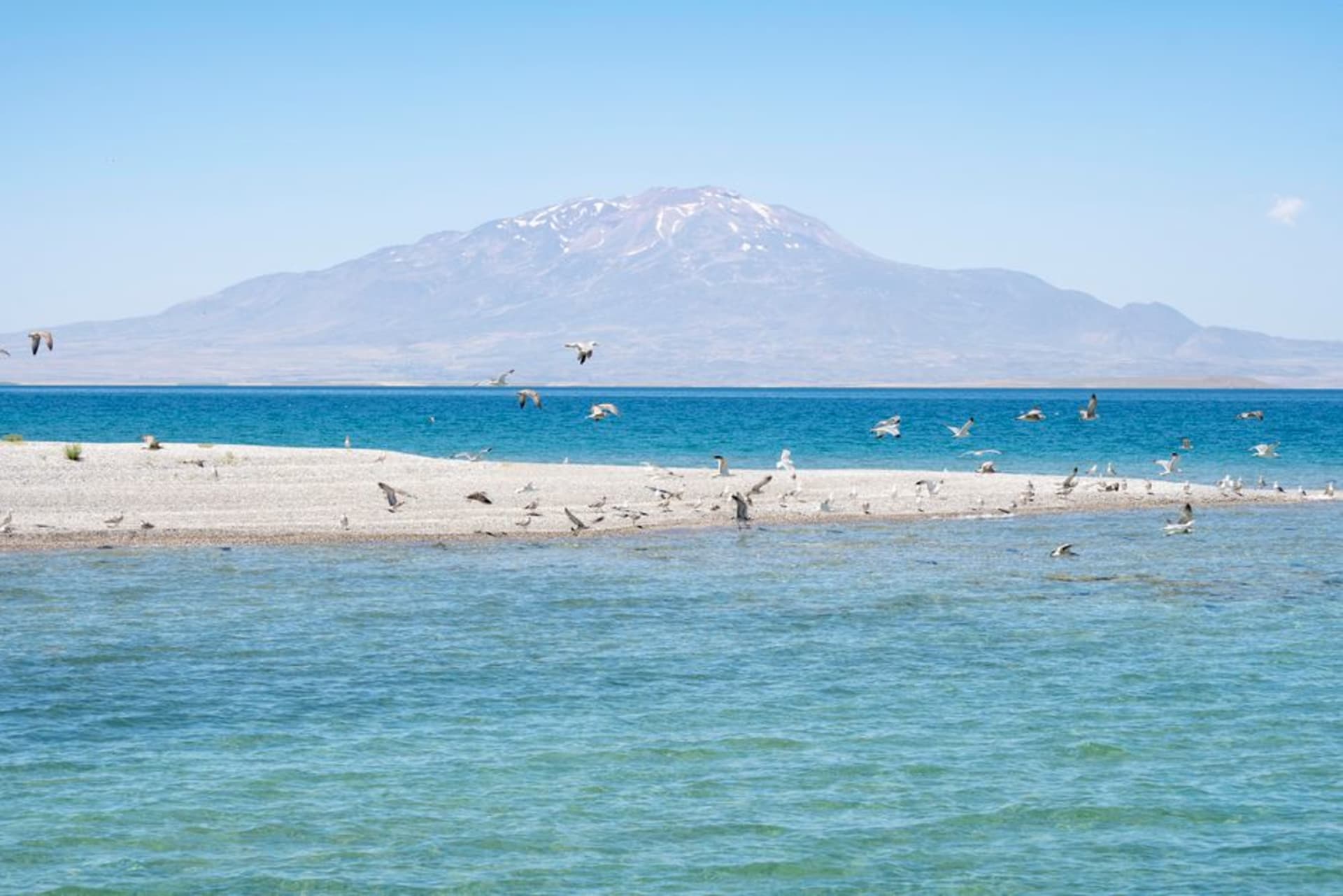
Lake Van
"I put my hand in Lake Van expecting an ordinary lake and pulled it out feeling like I'd touched something closer to a chemistry experiment."
Turkey's largest lake is a soda-alkaline sea ringed by volcanoes, its still water hiding a chemistry that keeps it perpetually, eerily blue.
Lake Van doesn’t behave like a normal lake, and you notice within the first few minutes of standing at its shore. It’s Turkey’s largest by far — big enough that the far shore disappears into haze — but what actually stops you is the water itself: a strange, saturated turquoise that holds its color even under flat grey skies, fed by no outlet and made intensely alkaline by the volcanic minerals dissolved in it over millennia. I’d been told locals use the water, mixed with a special local soap, to wash clothes without detergent, a claim I initially assumed was folklore until three separate people repeated it to me unprompted with complete sincerity.
A soda lake with no way out
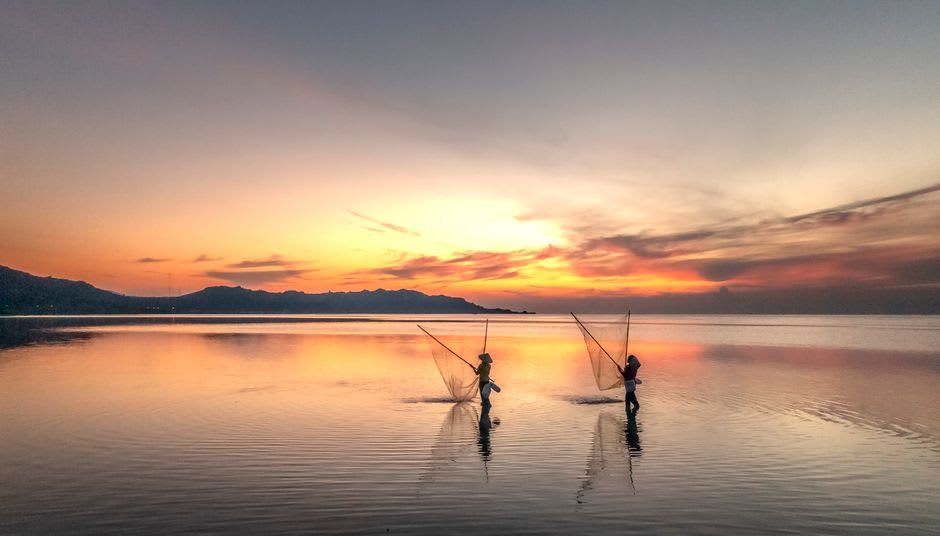
Lake Van formed when a lava flow from a nearby volcano dammed the valley’s original drainage, turning what had been a river system into a closed basin with no outlet to the sea. Water leaves only through evaporation, which over geological time has concentrated the minerals into a genuinely unusual chemistry — sodium carbonate and sodium sulfate levels high enough that almost no fish can survive here except one hardy, adapted species, the Van pearl mullet, called darekh locally, which migrates up freshwater rivers to spawn each spring in a run so productive that towns along the lake time entire local economies around it. I watched fishermen hauling in nets glittering with these small silver fish near the town of Erçek and understood that this apparent emptiness of the lake had simply concentrated all its abundance into one narrow, spectacular window each year.
Volcanoes and the island church
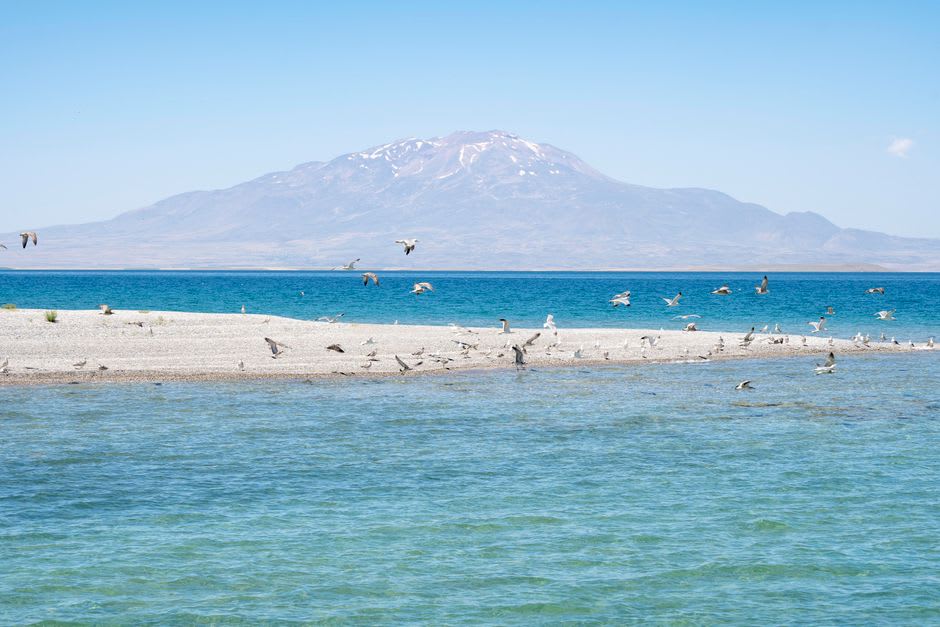
The lake sits in a dramatic bowl of volcanic peaks, with the cone of Mount Nemrut — a different mountain entirely from the famous Nemrut of the stone heads near Adıyaman, a coincidence of naming that confused me for a full day before a local patiently untangled it — rising on the western shore, its collapsed caldera holding its own crater lake within a lake. On a boat crossing to Akdamar Island, the water shifted from turquoise to a deep, almost ink-blue as the depth increased beneath us, and the tenth-century Armenian church on the island appeared first as a dark shape against the volcanic backdrop before resolving into its carved stone walls. Sitting on the rocky shore of the island afterward, eating bread and cheese I’d brought from Van, with the alkaline water lapping in a way that left a faint mineral film on my fingers, I had the specific sensation of being somewhere genuinely singular — a lake that looks like every other alpine lake in photographs and behaves like nothing else once you’re standing in front of it.
When to go: May to September, and specifically late April to May if you want a chance at seeing the pearl mullet spawning run, one of the most striking natural spectacles in eastern Turkey.