Konya
"I went to Konya skeptical of spiritual tourism and left having watched a room full of strangers stop breathing at the same moment."
The spiritual home of Rumi and the whirling dervishes is Turkey's most devout city, conservative and quiet, and profoundly moving in a way I did not expect.
Konya is the most conservative city I visited in Turkey, and I felt that shift within an hour of arriving — headscarves nearly universal, no alcohol served in most restaurants near the center, a stillness on the streets after dark that read as devotion rather than emptiness. It’s a strange, powerful thing to arrive in a city built almost entirely around the memory of one poet-mystic and feel, by the end of your stay, that you understand why.
The Mevlana Museum
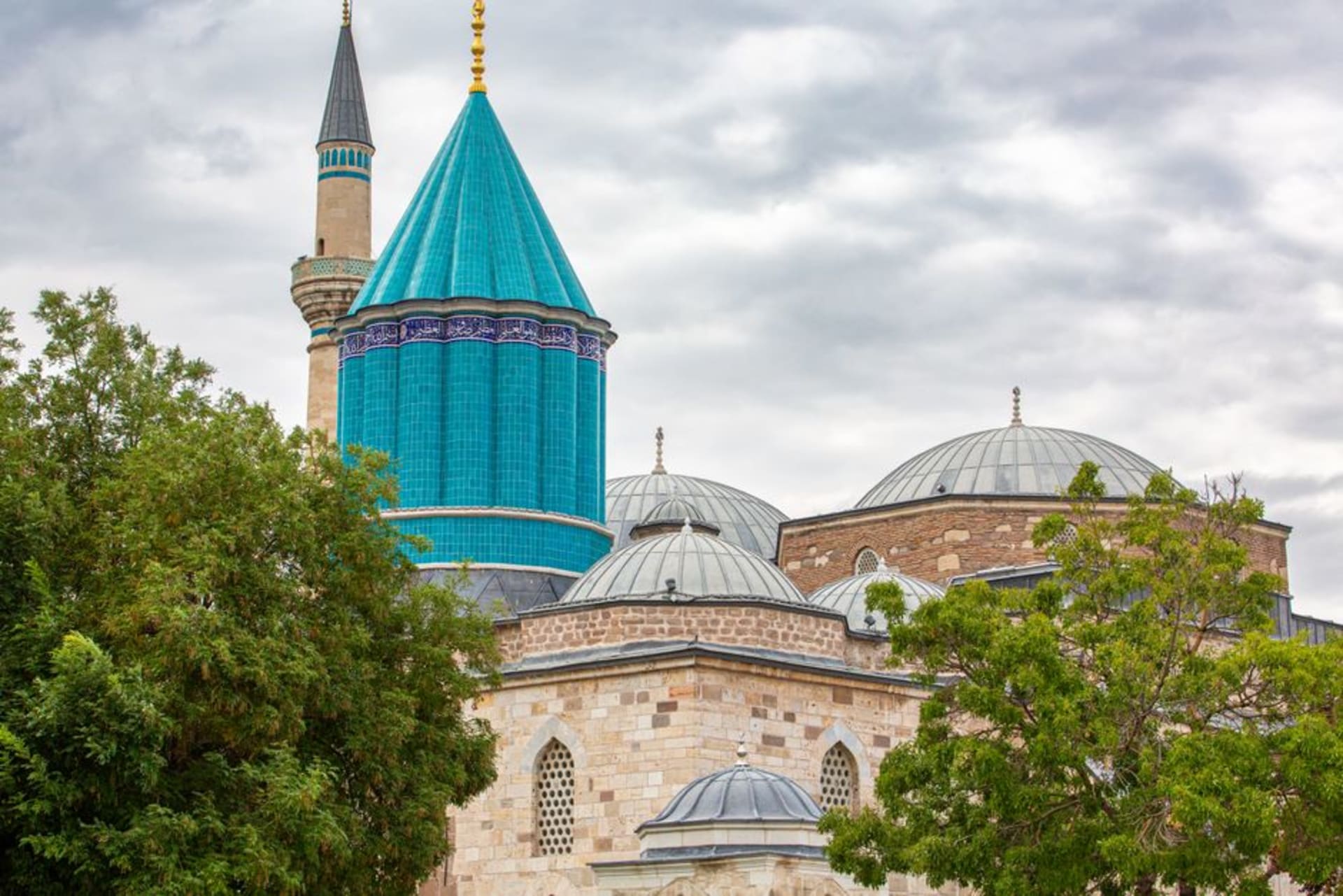
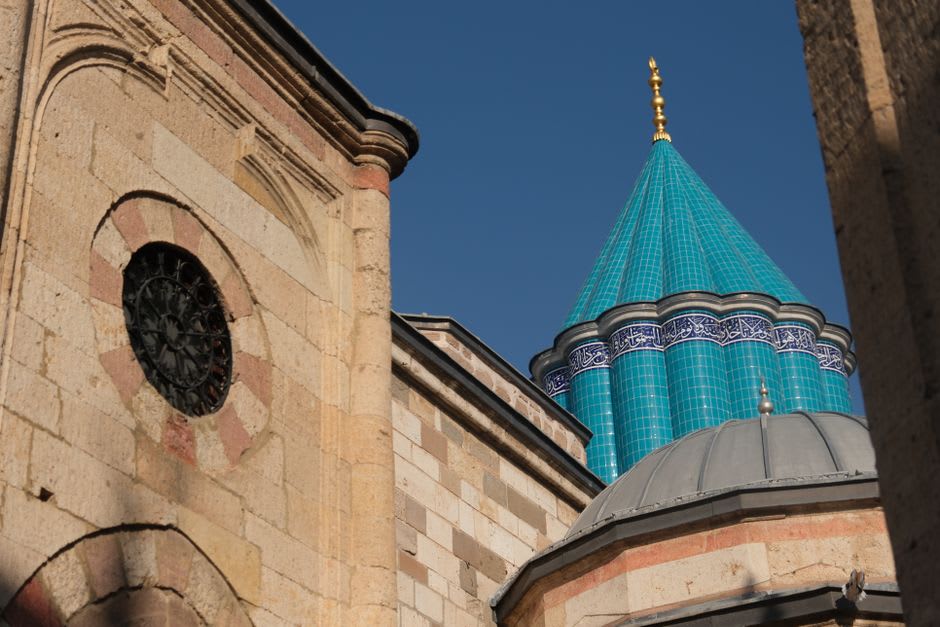
Jalal ad-Din Muhammad Rumi lived, taught, and died in Konya in the thirteenth century, and the Mevlana Museum — the former lodge of the Mevlevi Sufi order he inspired, its turquoise fluted dome visible from streets away — now holds his tomb along with those of his family and followers. I went in expecting a straightforward historical site and instead found myself unexpectedly affected: the tombs draped in green and gold cloth, ney flute recordings playing quietly through the halls, elderly Turkish visitors weeping openly by the sarcophagus in a way that had nothing performative about it. The adjoining halls display dervish robes, illuminated manuscripts of the Masnavi, and musical instruments used in the sema ceremony, and by the time I left I had a lump in my throat I hadn’t anticipated bringing to a museum.
Watching the whirling dervishes
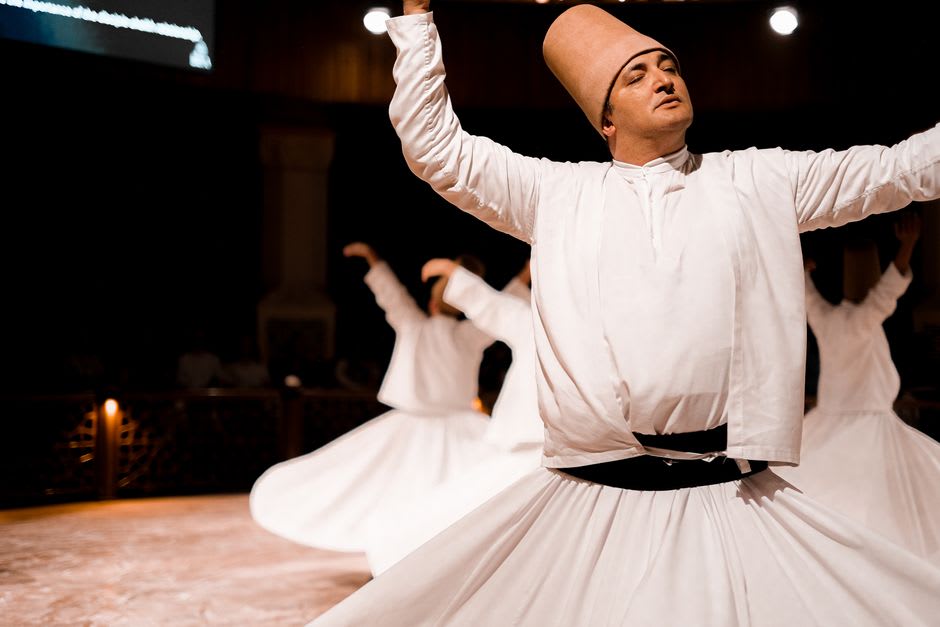
I timed my visit to catch a sema ceremony — the whirling dervish ritual — at the cultural center near the museum, performed on Saturday evenings for visitors, though the ritual’s original purpose is devotional, not theatrical. The dervishes enter in black cloaks that they shed to reveal white robes and tall camel-hair hats, then begin turning — arms raised, right palm to the sky, left to the earth, heads tilted, robes forming perfect circles — to live ney and drum music that starts slow and builds. It lasts perhaps forty minutes and by the end the room had gone completely silent except for the music; the man next to me, a Turkish visitor from Izmir, told me afterward he comes every year and it still undoes him. I believed him. There’s something in the repetition, the trance logic of it, that gets past your critical faculties whether you’re prepared for it or not.
Konya outside these two sites is a workaday Anatolian city, wide boulevards and tram lines and excellent, cheap etli ekmek — a thin, long flatbread with minced lamb that locals eat rolled up like a wrap. I found a bakery near the museum that had been making it the same way for three generations and ate two servings before admitting defeat.
When to go: December 7-17 for the Şeb-i Arus festival, marking the anniversary of Rumi’s death with the year’s most significant sema ceremonies, though book well ahead. April to June or September to October otherwise, avoiding the fierce summer heat of the Anatolian plateau.