Kekova
"Somewhere below the boat, a staircase still descends into a city that stopped needing stairs eighteen centuries ago."
A sunken Lycian city visible through turquoise water, shaken beneath the waves by an ancient earthquake and now drifted past by wooden boats at idle speed.
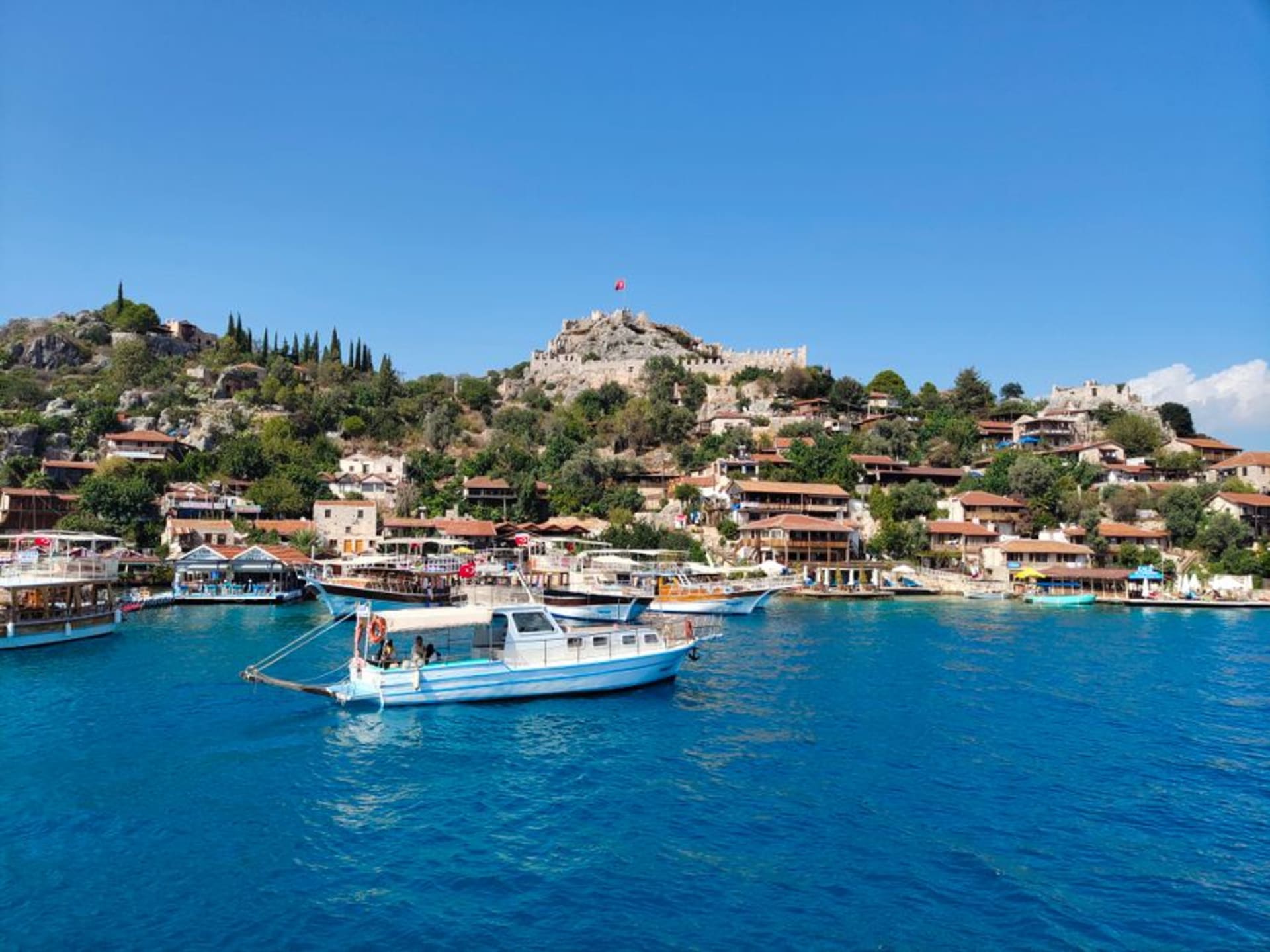
The boat captain cut the engine to a crawl the moment we reached the bay, and everyone on board understood why without being told: the water had gone from ordinary bright blue to something almost lit from within, clear enough that shapes on the seabed resolved into rectangles, then into walls, then unmistakably into the foundations of houses. Kekova is a sunken city, or rather a stretch of several ancient settlements that a series of earthquakes — the major one likely in the second century AD — dropped partially beneath the sea, and the boats that tour it are required to move slowly and never anchor, to avoid disturbing what’s left.
Drifting Over a City That Fell
From the boat, I could make out staircases descending straight into the water and stopping mid-step, the outline of what was probably a harbor wall, a scatter of amphora fragments the captain pointed out with a long pole rather than let anyone touch. Swimming is prohibited directly over the ruins, which felt right rather than restrictive — this isn’t a snorkeling attraction so much as a slow-motion viewing of something that used to be a functioning town, streets and all, now inhabited by nothing but fish moving between doorframes.
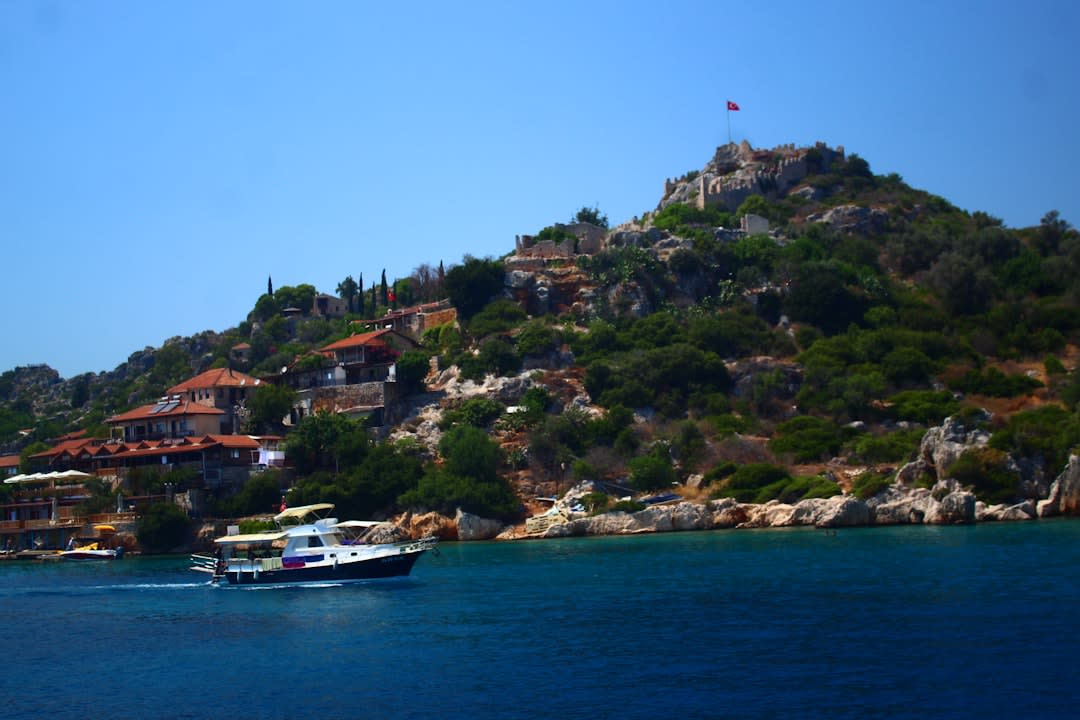
Our captain, whose family had run boat tours here for three generations, said his grandfather used to free-dive down to the deeper sections before regulations tightened, and that as a boy he’d been told which underwater walls were sarcophagi and which were simple house foundations, knowledge passed down the way other families pass down recipes.
Simena, Still Standing
The tour ends, usually, at the village of Kaleköy — ancient Simena — where a small Byzantine-Ottoman castle sits on a hilltop above a cluster of white houses, and scattered incongruously through the village and the shallows beside it are sarcophagi that never went under, standing where they always stood, waist-deep in seawater or half-buried in someone’s garden. I climbed to the castle in the early evening heat, past goats grazing between the ruins, and found a tiny amphitheater carved into the rock near the summit, easy to miss, overlooking the entire sunken bay below.
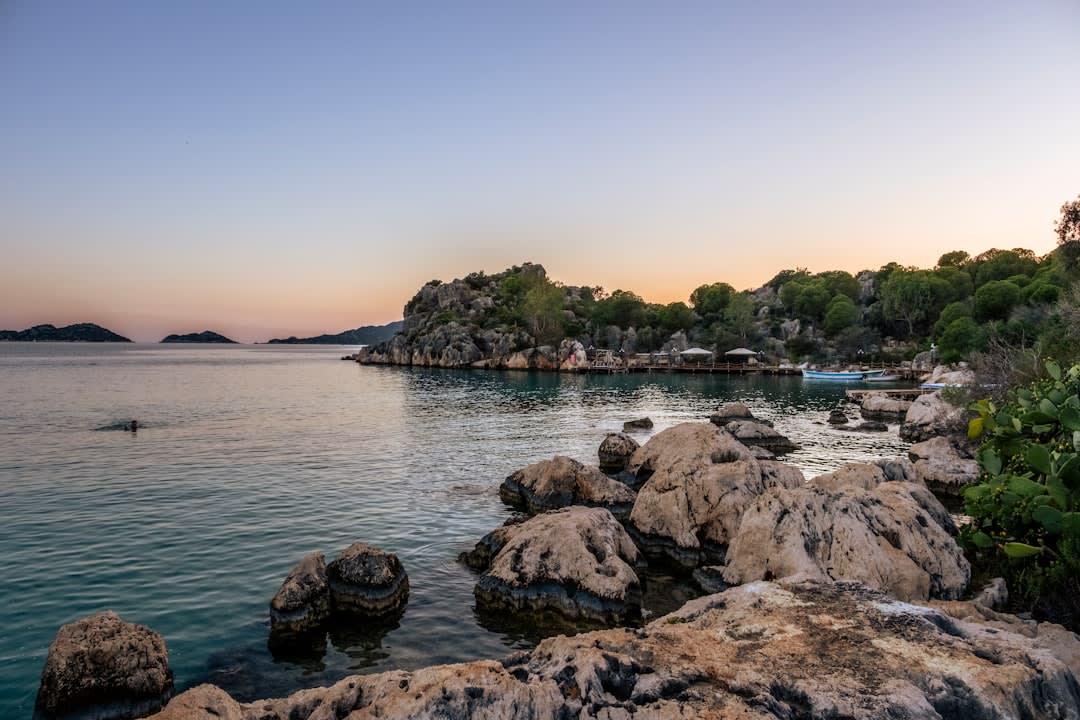
There’s no road to Kaleköy — everything, including the ice cream sold at the village’s one café, arrives by boat, which keeps the pace of the place set permanently to the speed of the sea.
When to go: May through October for calm water and good visibility; take an early or late-afternoon boat tour to avoid the midday heat and the busiest stretch of tourist boats out of Kaş.