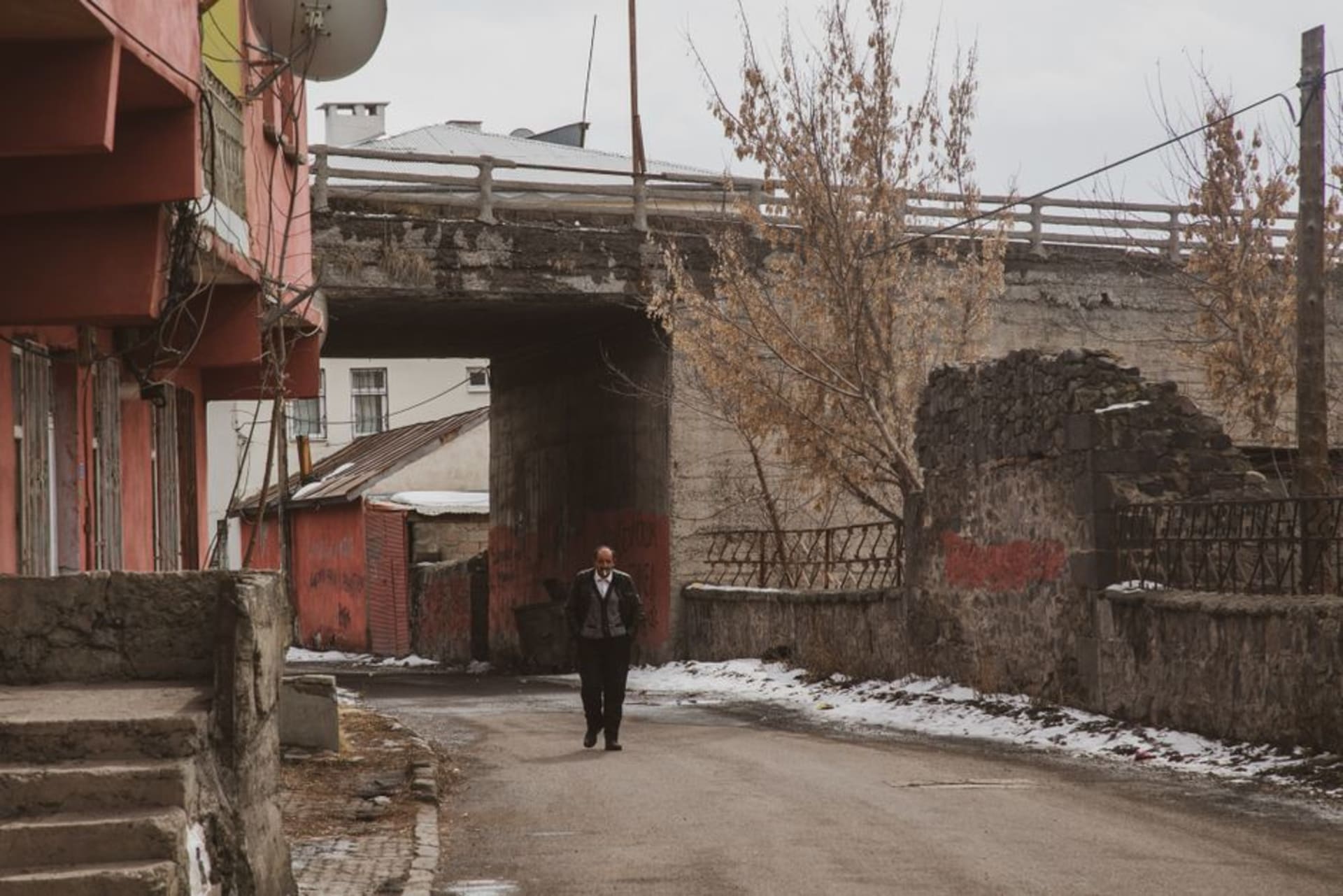
Kars
"I read Pamuk's Snow on the train to Kars and arrived to find the book had not exaggerated the loneliness of the place, only its plot."
A remote frontier city near the Armenian border where Russian and Ottoman architecture sit side by side, forever tinted by the melancholy of Orhan Pamuk's Snow.
I’ll admit the reason I went to Kars was Orhan Pamuk. His novel Snow is set here, in a remote, wind-battered frontier city near the Armenian border, and it paints Kars as a place suspended between empires and forgotten by the present. Reading it on the overnight train from Ankara felt like appropriate preparation. Arriving, I found the melancholy mood was accurate, though the city itself was warmer and more alive than the novel’s grey political fatalism suggested.
A city built by two empires
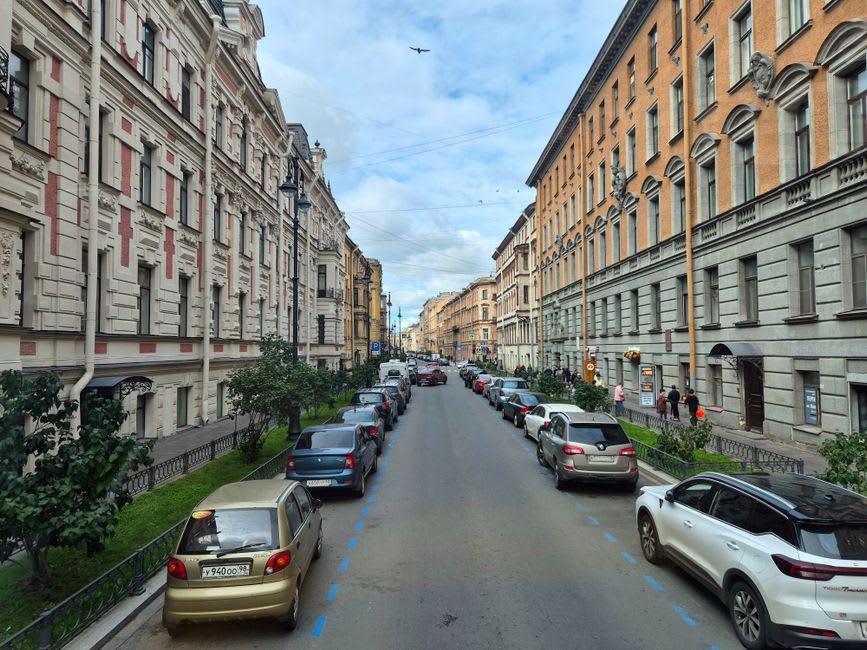
What struck me first was the architecture, which doesn’t read as Turkish at all. Kars spent decades under Russian imperial control in the late nineteenth century, and the Russians laid the city out on a rigid grid — unheard of elsewhere in Anatolia — and built it up in solid, symmetrical stone buildings with high ceilings and shuttered windows that would look entirely at home in a provincial Russian town. Walking down Kâzımpaşa Caddesi, the main avenue, past these buildings with the Seljuk-era Kars Castle visible on the hill above and the stork nests on the chimneys, I felt like I was moving through three different centuries of contested ownership simultaneously — Russian facades, Ottoman minarets, Seljuk stonework, all stacked on top of each other without much interest in reconciling.
Honey, kaşar, and a very cold wind
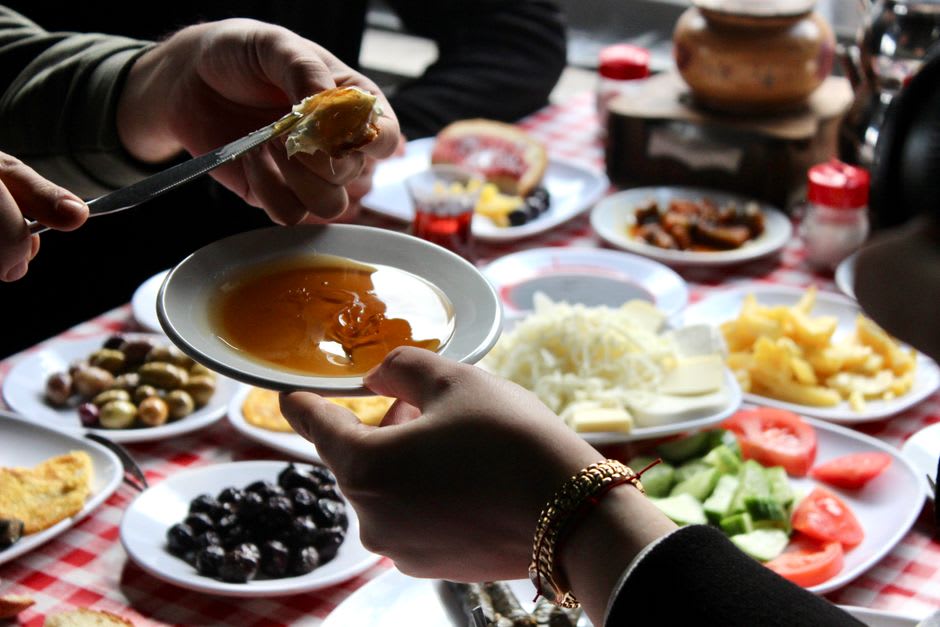
Kars sits at altitude on a high, treeless plateau, and the climate shapes everything about local life, including the food — this is one of Turkey’s great dairy and honey regions, the harsh winters somehow producing extraordinary kaşar cheese, aged and semi-hard, and a wildflower honey I bought a jar of from a roadside stand and rationed for the rest of my trip like it was contraband. I ate a breakfast at a lokanta near the castle that consisted almost entirely of local cheeses, honey, butter churned that morning, and glass after glass of black tea, served by a waiter in a heavy wool sweater who told me, without much prompting, that Kars winters regularly drop below minus twenty and that he wouldn’t trade the place for Istanbul if you paid him double.
Kars is also, practically speaking, the jumping-off point for the Ani ruins, thirty kilometers east on the closed Armenian border, and most visitors treat the city as a one-night stop before or after. I’d argue it deserves more than that — there’s a genuine, specific atmosphere here, part frontier town, part imperial leftover, that I haven’t found matched anywhere else in the country.
When to go: June to September, when the plateau climate is mild enough to be comfortable. Winters are genuinely severe and best left to those chasing the novelty of it rather than practical sightseeing.