Didyma
"Didyma's oracle never finished her temple, and somehow that's the most honest ruin in Turkey."
Home to one of antiquity's great oracle sanctuaries, where unfinished marble columns still tower over a temple that was never quite completed.
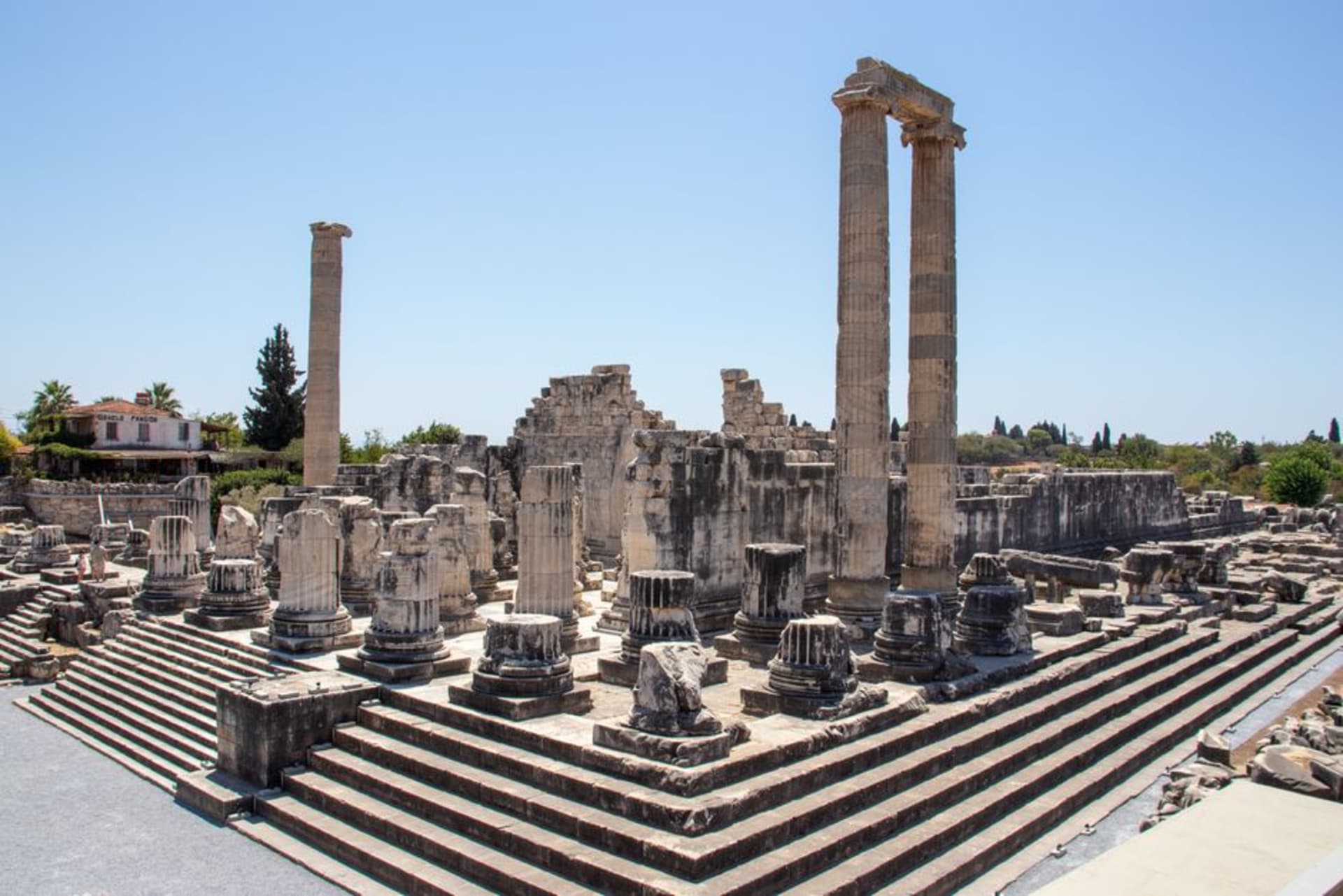
You see the columns before you see the town. Didyma today is a small, sleepy village called Didim built almost directly around the ruins of the Temple of Apollo, and the scale of the thing is disorienting when it appears suddenly between two-story apartment buildings and a kebab shop with plastic chairs out front. I parked, walked half a block, and there it was: columns nearly twenty meters tall, thicker than I could get my arms around, standing in a pit sunk below the modern street level like the town had grown up around a hole it didn’t quite know what to do with.
This wasn’t a city — it was a sanctuary, one of the most important oracle sites in the ancient Greek world, rivaled only by Delphi. Pilgrims came from across the Mediterranean to consult a priestess who delivered the god Apollo’s answers from a spring-fed inner chamber, and the temple built to house that oracle was designed to be almost absurdly enormous: originally planned with 122 columns, a scale so ambitious construction never actually finished, even across centuries of intermittent work. I found that detail more moving than almost anything else on the trip. This wasn’t a ruin of something completed and then destroyed. It’s a ruin of ambition that simply outran the ability to finish it.
Standing Inside the Oracle’s Chamber
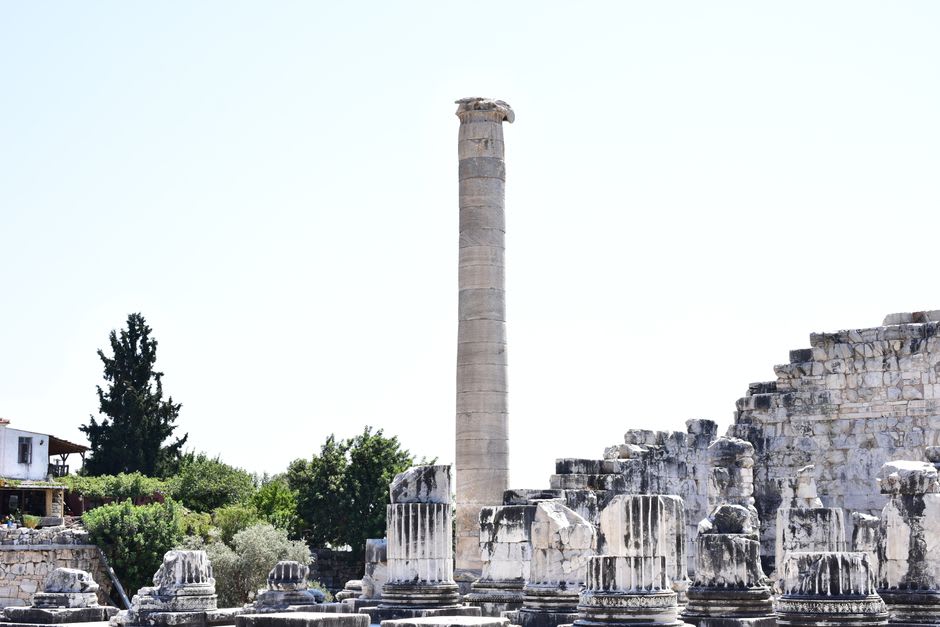
You can walk down into the temple’s interior, past column drums lying where earthquakes dropped them, into the space that once held the adyton — the sacred inner sanctuary where the priestess, the Pythia’s Anatolian counterpart, would deliver prophecies induced, historians think, by the spring water and possibly gases rising from below. Standing in that recessed chamber, walls of dressed stone rising well above head height on either side, I had one of those rare moments where two and a half thousand years compressed into something almost touchable. Kings and generals stood roughly where I was standing, waiting to be told whether to go to war.
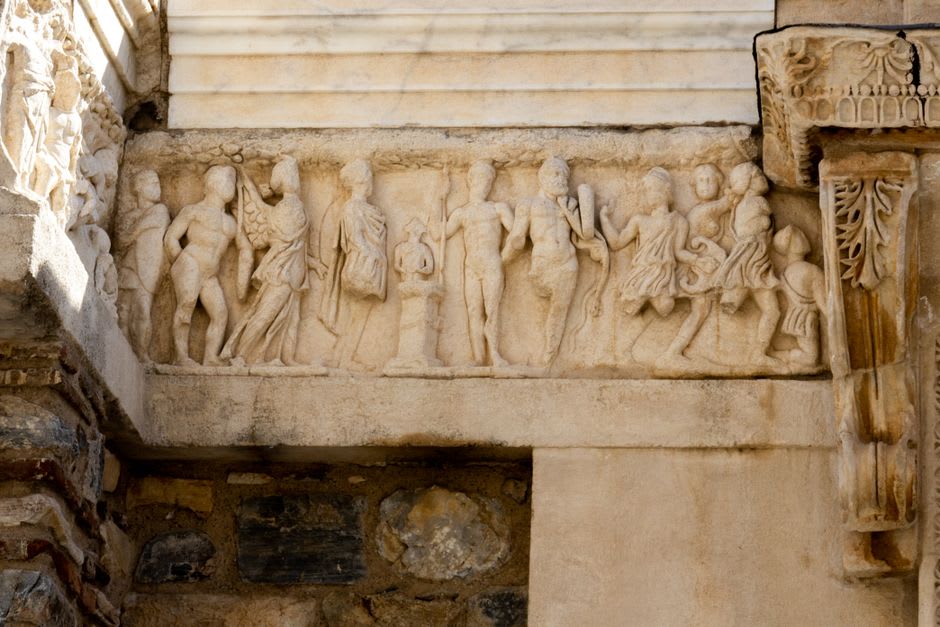
An elderly site caretaker, noticing I’d been standing still for a while, wandered over and — in fragmented English mixed with pointing — showed me a carved Medusa head relief on a fallen block near the temple’s edge, worn nearly smooth by time and touch, and mimed something like “everyone touches it, for luck.” I did too. I’m not proud of how much I believed it might matter.
When to go: Late afternoon, an hour or two before sunset — the low light turns the marble amber and the day-trip buses from Kuşadası have usually already left. Combine it with Priene and Miletus for a single unforgettable day tracing the Ionian coast’s silted-up harbors.