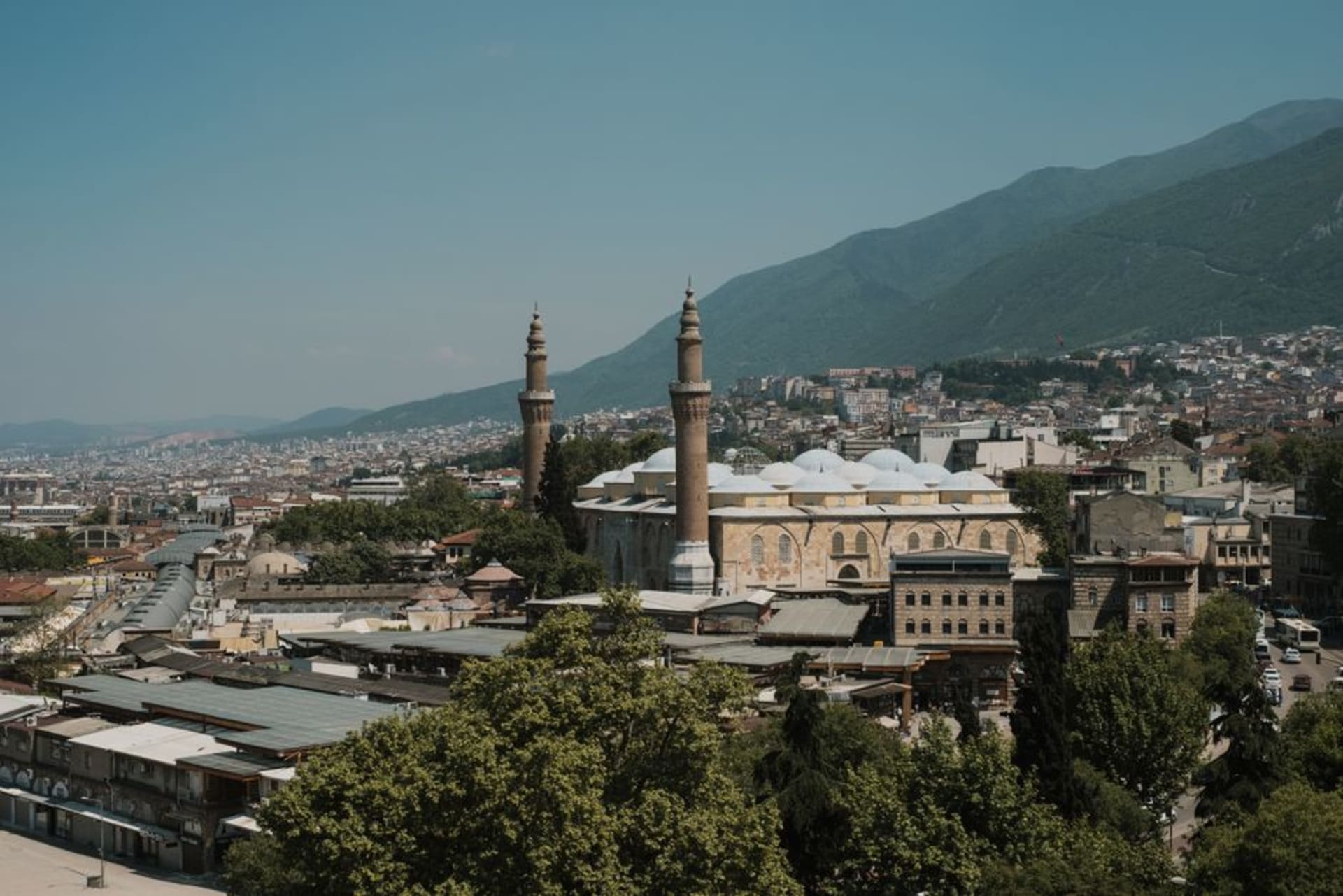
The Ottoman Empire's first capital sits on the slopes of Uludağ, thick with silk history, mosque courtyards, and a kebab so good it named itself after the city's most famous cook.
Bursa announces itself with green — the Turks even call it Yeşil Bursa, Green Bursa — and after the beige sprawl of the Anatolian plateau I’d crossed to get there, the mulberry trees and the snow-streaked shoulder of Uludağ looming behind the rooftops felt like an actual relief. This was the Ottoman Empire’s first real capital, before Edirne and long before Istanbul, and it wears that history without Istanbul’s need to monetize every corner of it.
Ulu Camii and the old silk trade
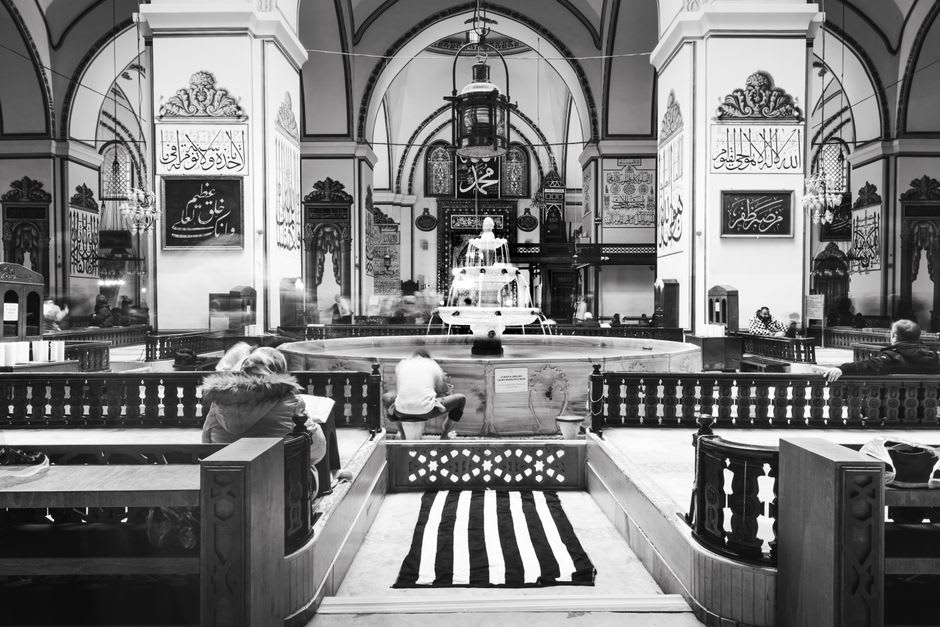
The Ulu Camii, the Grand Mosque, is the building I came for. Built in 1399, it’s a single vast rectangular hall with twenty domes held up by twelve columns, and instead of one traditional courtyard it has a şadırvan — an ablution fountain — sitting indoors, open to the sky through an oculus, so that rain occasionally falls straight into the prayer hall. I sat on the carpet against a column for half an hour watching the light shift through that opening while men came and went for prayer, and it was the most peaceful I’d felt in a mosque in Turkey, partly because Bursa gets a fraction of Istanbul’s mosque tourism. The walls carry over four hundred calligraphic inscriptions by different Ottoman calligraphers, a competitive showcase that apparently doubled as an art exhibition in its day.
Bursa built its wealth on silk, and the old Koza Han, a caravanserai from 1491 still functioning as a silk market, is where that history is most alive — courtyard cafés under mulberry trees, shops selling scarves and pestemal towels, cocoons still occasionally on display as a nod to the trade that funded half the mosques in the city.
İskender kebab and Cumalıkızık
Bursa is also, unshakeably, the birthplace of the İskender kebab — thin-sliced döner over cubed pide bread, drowned in tomato sauce, melted butter, and yogurt. I ate it at İskender restaurant itself, the place run by the descendants of the man who invented the dish in the 1860s, and it arrived sizzling, the butter still audibly bubbling on the plate. It’s heavier than anything you’d order for lunch in France, and I understood immediately why. A day in these mountains demands it.
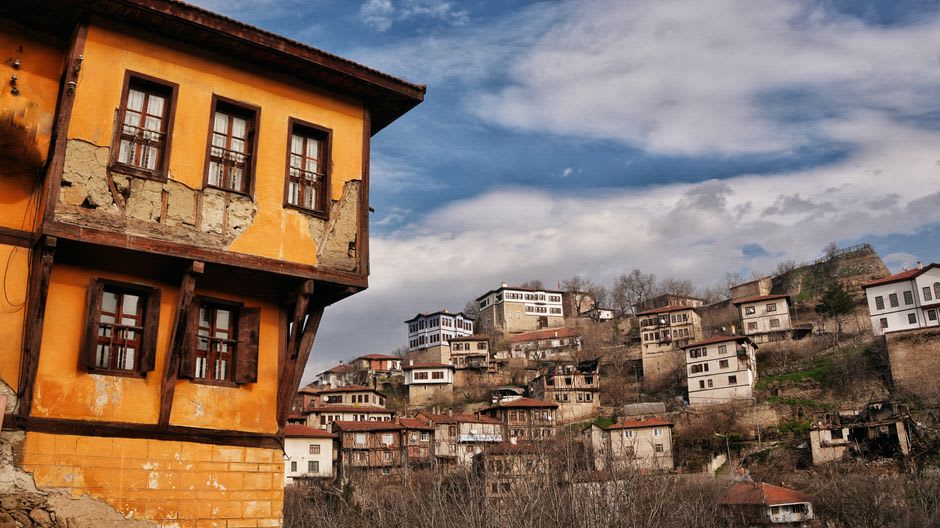
A short drive out of the center, the Ottoman village of Cumalıkızık — one of the best-preserved of its kind, with timber-framed houses on cobbled lanes — sits at the foot of Uludağ like a living museum that nobody bothered to stage. I bought dried figs and walnuts from an elderly woman selling them from her doorstep, and she insisted I try the local kaymak, a clotted cream so rich it should probably require a permit.
When to go: April to June or September to October for mild weather in the city; December to March if you want to combine Bursa with skiing on Uludağ, one of Turkey’s main winter sports resorts, reachable by cable car straight from town.