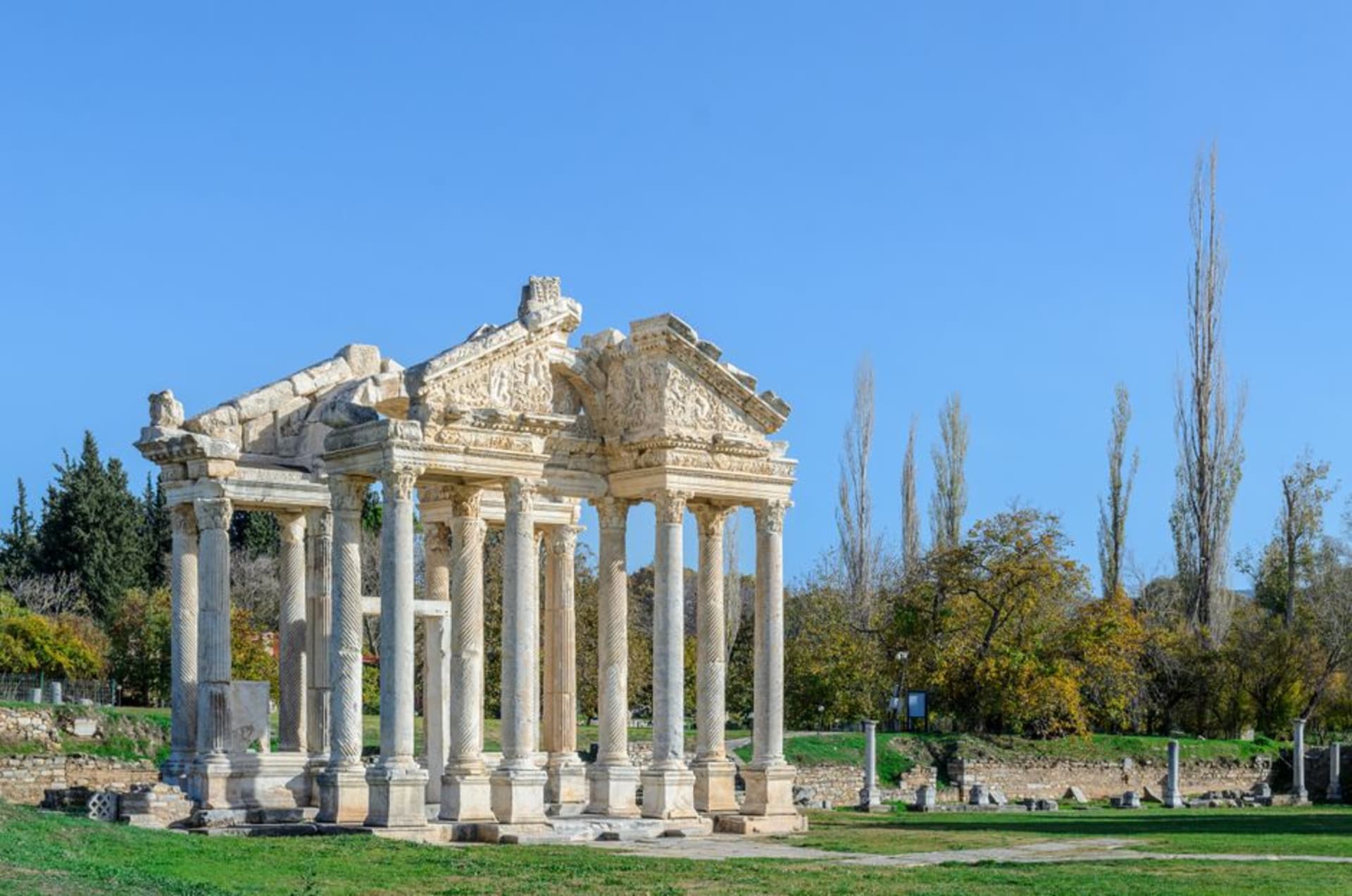
Aphrodisias
"Aphrodisias gets a fraction of the visitors Ephesus does, and every marble block I saw made that feel like an accident of geography, not merit."
A Roman city devoted to the goddess of love, where a marble-sculpture school shaped an empire's art and a stadium survives almost intact.
I nearly didn’t make the detour to Aphrodisias — it sits inland, off the coastal tourist circuit, and reaching it meant a slow drive through cotton fields and small farming towns that gave no hint of what was waiting at the end of the road. Then I walked through the site gate and stood in front of the stadium, and understood immediately why the small crowd of visitors around me had all gone quiet in roughly the same way.
A Stadium Frozen in Time
The stadium at Aphrodisias is, by most archaeologists’ reckoning, one of the best-preserved structures of its kind anywhere in the ancient world — thirty tiers of seating still standing nearly intact around an oval track that once held something like 30,000 spectators for athletic contests and gladiatorial games. Walking up into the stone seating rows, worn smooth in places by two thousand years of use, I sat down roughly where an ordinary Roman spectator might have sat and tried to picture the noise that would have filled this bowl on a competition day. It’s rare to get a genuinely intact sense of scale at an ancient site rather than reconstructing it from foundations and imagination, and the stadium delivers that scale without needing any interpretation at all.
The City That Carved an Empire’s Statues
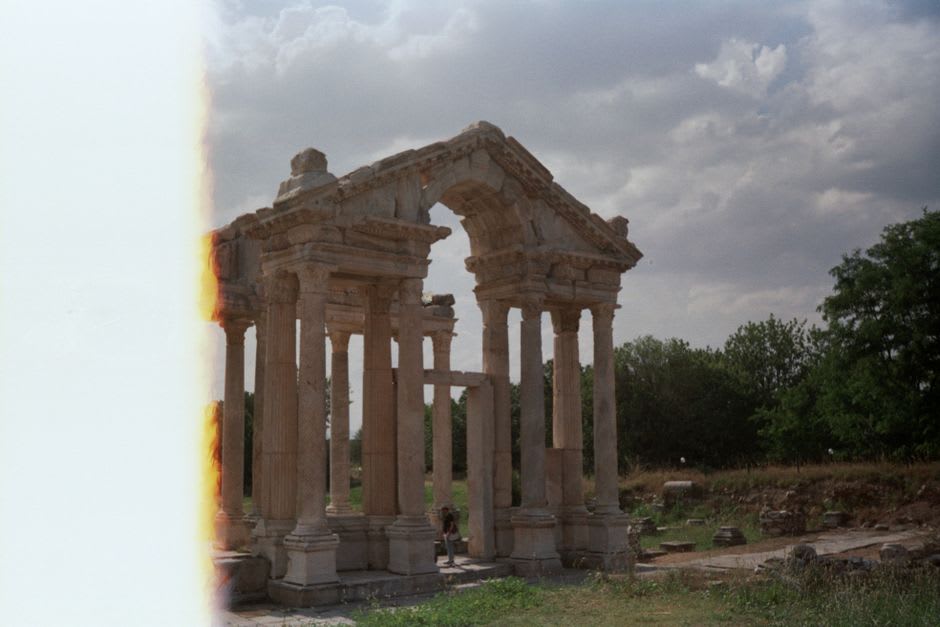
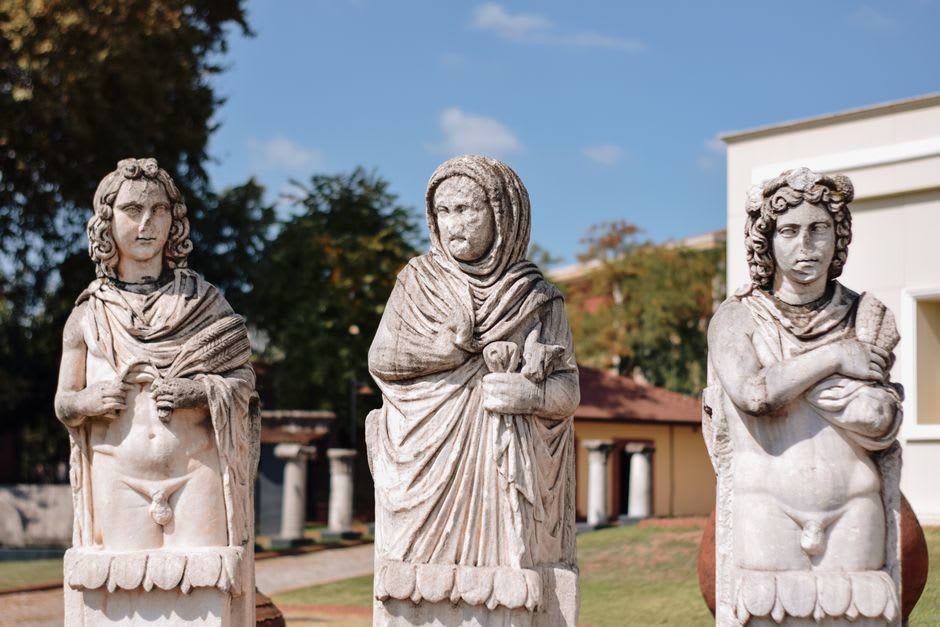
The city takes its name from Aphrodite, goddess of love, whose temple here — later converted into a Christian basilica, its columns still standing in elegant disarray — was one of the most important cult sites in the ancient Mediterranean. But what struck me more than the temple was the site museum, packed with marble sculpture of a quality and quantity that made clear Aphrodisias wasn’t just a place that worshipped beauty, it manufactured it: the city was home to a renowned school of sculptors whose work, carved from the fine local marble quarried nearby, was shipped throughout the Roman world and whose techniques influenced imperial portraiture for generations. Standing in front of a series of togate statues with faces still startlingly individual and expressive, I found myself thinking less about gods and more about the specific, skilled human hands that had made this stone look like it was breathing.
A site guard near the exit, noticing I’d lingered far longer than my tour group, told me flatly that he thought Aphrodisias was finer than Ephesus and simply less lucky in its marketing. Having now seen both, I’m not sure he was wrong.
When to go: April through June or September through October, when the inland heat is manageable and the relative lack of crowds lets you sit in the stadium in near silence.