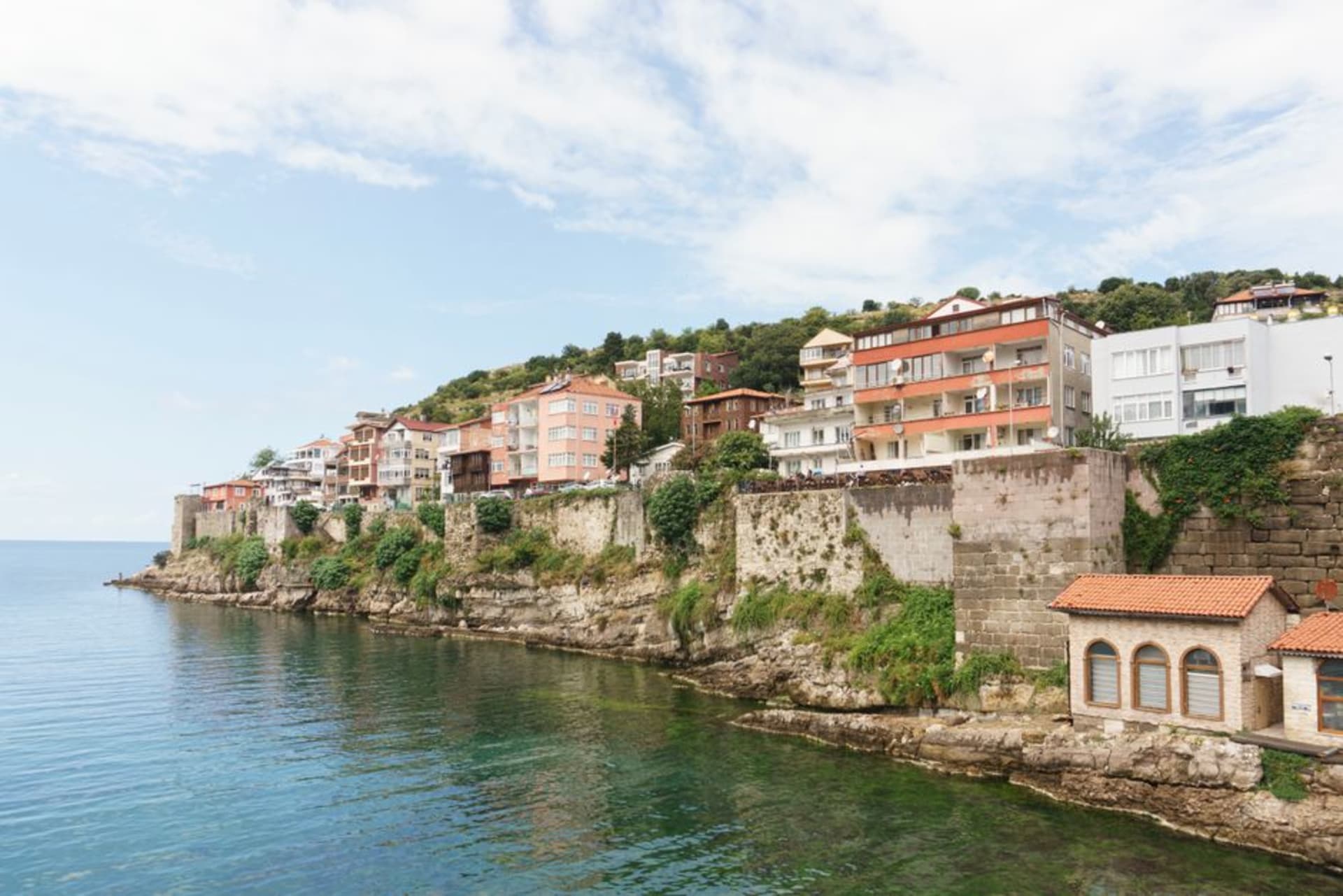
Amasra
"Turkey's other coast, where the water is colder, the crowds are thinner, and nobody is trying to sell you a boat trip."
A twin-harbored Black Sea peninsula town wrapped in Byzantine and Genoese walls, where fishing boats still outnumber tourists by a wide margin.
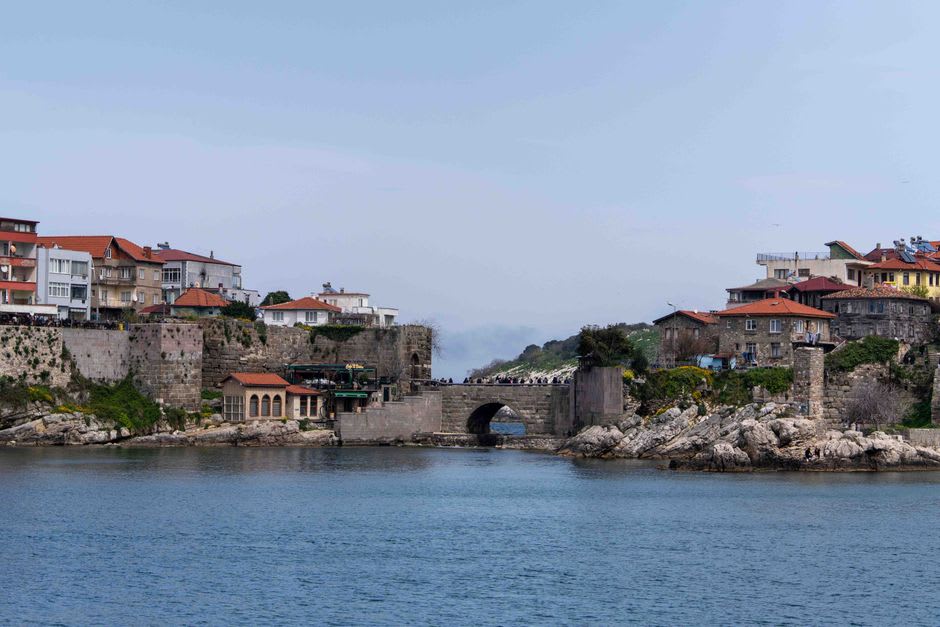
I got to Amasra by a series of dolmuş minibuses out of Bartın, the road twisting through hazelnut groves before dropping suddenly to a peninsula pinched between two harbors, with a fortified old town sitting on the neck of land between them like a cork in a bottle. It was raining lightly when I arrived, the kind of soft Black Sea drizzle that the locals don’t even acknowledge, and I remember standing on the old stone bridge connecting the peninsula to Boztepe island, looking down at fishing boats bobbing in Büyük Liman on one side and Küçük Liman on the other, and thinking that I had accidentally found the one Turkish coastal town that has not yet decided to become a resort.
The castle walls are the town’s spine — a patchwork of Roman foundations, Byzantine rebuilding, and a Genoese layer added when the Italians ran the Black Sea trade in medieval times. You can walk almost the entire circuit, ducking through stone gates worn smooth by centuries of cart traffic, with the sea appearing and disappearing between the houses. I climbed up near sunset and had the whole rampart to myself except for two boys fishing off the wall with hand lines, who insisted on showing me the small mackerel they’d caught before running off laughing.
A Town That Cooks for Itself, Not for Tourists
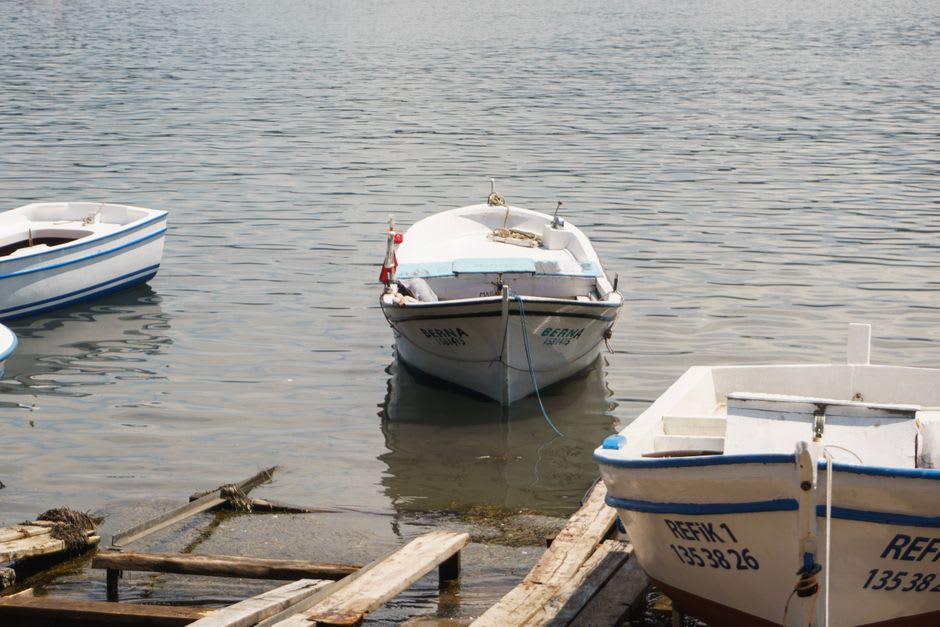
What struck me most was the ordinariness of it, in the best sense. The restaurants along the harbor serve hamsi — Black Sea anchovies — fried whole and eaten by the fistful, plus a local specialty of anchovy bread that I had never encountered anywhere else in Turkey. I sat at a plastic table with a view of the smaller harbor, ordered a plate of hamsi and a glass of ayran, and watched an old man mend a net with the unhurried precision of someone who has done it every day for fifty years. Nobody approached me with a menu translated into six languages. Nobody tried to upsell me a Blue Cruise. It was just a fishing town, going about its evening.
The hazelnut orchards climbing the hills behind town supply a good portion of Turkey’s famously enormous hazelnut export, and in autumn the smell of drying nuts drifts down into the streets. I bought a bag from a roadside stand for almost nothing and ate them on the bus back, still faintly smoky from the roasting.
When to go: June through September for swimming and mild weather, though the Black Sea stays cool even in high summer. Early autumn brings the hazelnut harvest and a quieter, mistier version of the town that I found even more appealing than the summer crowds — which, by any other Turkish coastal standard, are barely crowds at all.