
Scarborough
"Most people change boats in Scarborough and leave. I think that is a mistake, and I have the sunburn to prove I stayed."
Scarborough is the capital of Tobago, which sounds grander than it is, and that gap between the title and the reality is exactly why I liked it. The ferry from Trinidad arrives into a harbour ringed by hills, and most arrivals pile straight into taxis bound for the beaches at Crown Point. Lia and I, contrarian as ever, dropped our bags at a guesthouse on the slope and decided to actually look at the town for a couple of days. It rewarded the attention.
Fort King George on the Hill
The thing to do first is climb to Fort King George, the eighteenth-century British fortification that crowns the ridge above town. The walk up is steep and sweaty and lined with old colonial buildings — a former barracks, a powder magazine, a lighthouse — most of them now repurposed into a small museum and an art gallery. The cannons still point out to sea at an enemy that stopped coming two centuries ago.
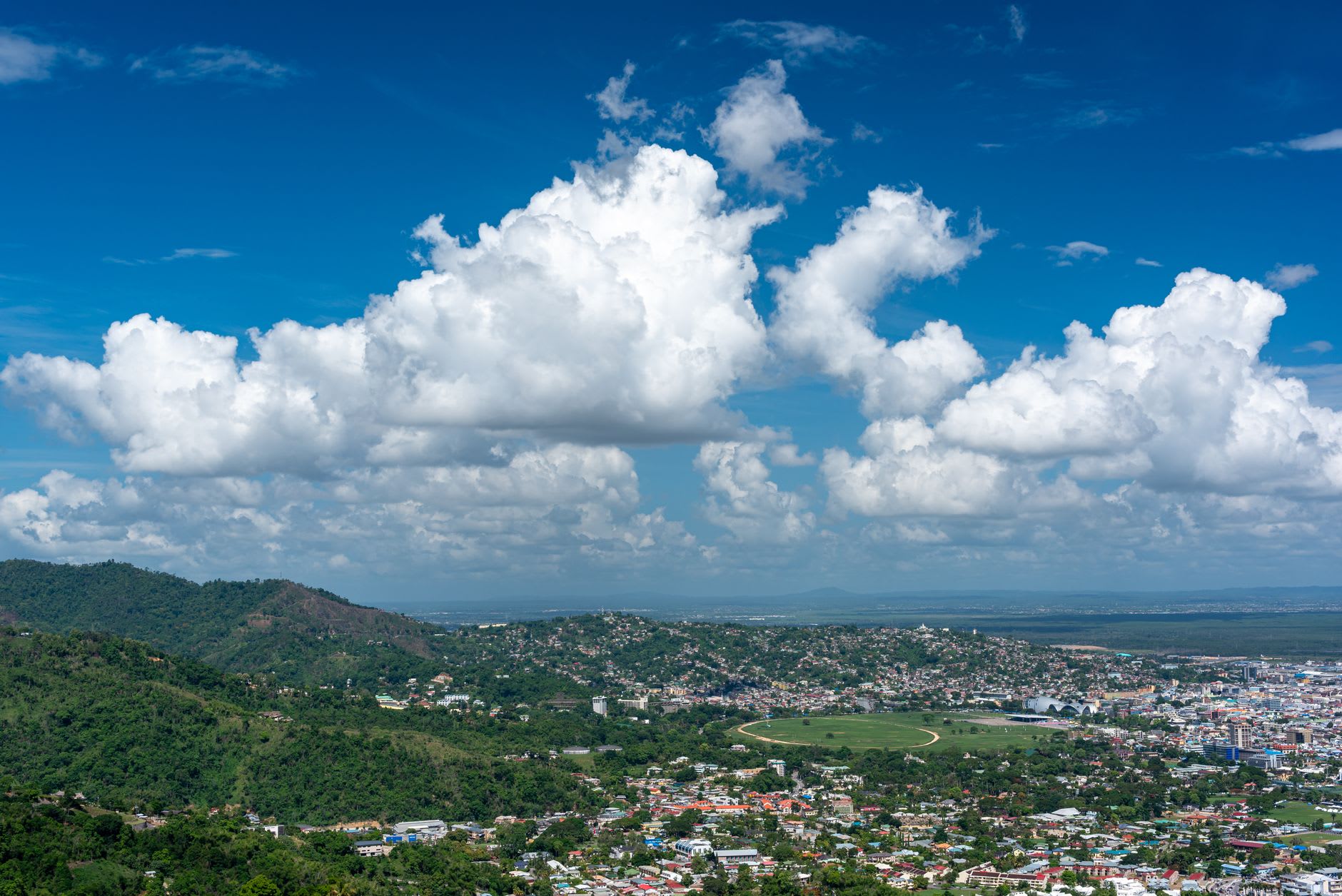
What you go for is the view. From the top the whole of Scarborough lays itself out below — the red and rust roofs, the harbour with its ferry and fishing pirogues, the sweep of coast in both directions, and the impossible layered blues of the water. I stood up there in the late afternoon while the heat finally broke, and a groundskeeper told me, unprompted and at length, about which colonial power had held the fort at which point — Tobago changed hands more than thirty times, a fact he delivered with evident pride in the island’s stubbornness.
The Market and the Town Below
Back down the hill, the real Scarborough is in its market, busiest on Friday and Saturday mornings. It is a concrete, no-nonsense affair, and I mean that as the highest compliment. Stalls of breadfruit, dasheen, scotch bonnets in violent colours, mounds of fresh thyme and chadon beni, and a woman selling the best doubles I ate on the whole trip — curried chickpeas folded into soft fried bara, slapped together in seconds and handed over in a twist of paper, eaten standing up while everyone watches to see if the foreigner can handle the pepper. I could. Barely.
The lower town runs along the bay in a tangle of shops, rum bars, and a botanic garden that has clearly seen grander days but provides shade and a bench and a profusion of flowering trees. Nobody hurries here. The pace is the point, and after the manic energy of Port of Spain across the water, Scarborough felt like exhaling.
A Working Town, Not a Resort
I will be honest: Scarborough is not pretty in the postcard sense, and if you have come to Tobago purely for beaches you will pass through it without a second glance. But it is a real Caribbean town doing its actual business, with a fort and a view and food that is worth crossing the island for, and that combination is rarer than it should be.
When to go: January to May is the dry season and the most reliable. The Friday market is the highlight, so plan your days around it. Avoid the September–November wettest stretch unless you don’t mind your fort views arriving through a curtain of rain.