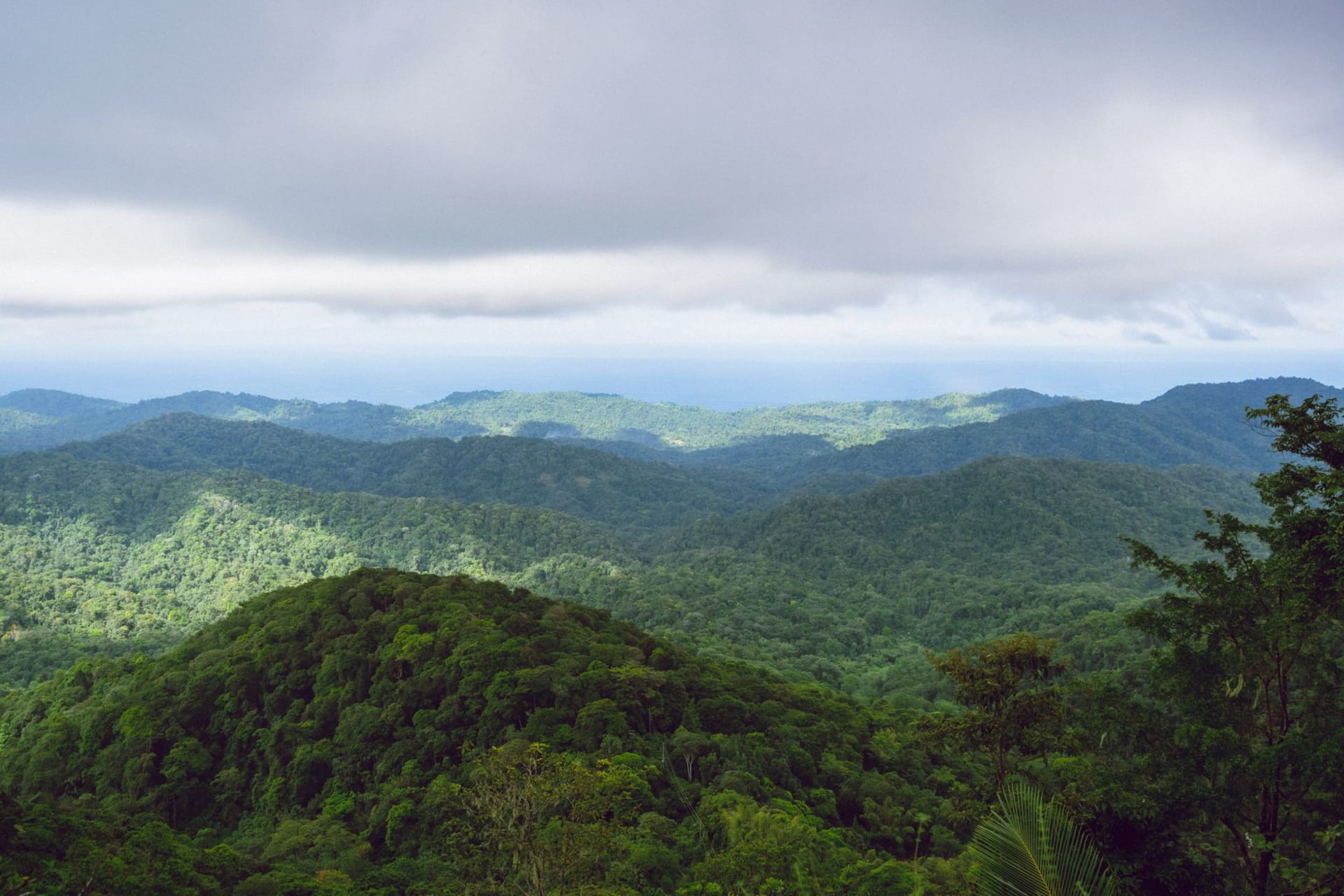
The road to Maracas Bay is half the experience. It climbs north out of Port of Spain through the Northern Range in a series of hairpin curves that feel genuinely alarming for about fifteen minutes, then suddenly crests a ridge and delivers the Caribbean beneath you like a reward — a long crescent of pale gold sand ringed by hills so densely green they look painted. The descent is equally dramatic, and by the time I parked and walked through the coconut palms toward the water, I felt like I’d earned whatever I was about to eat.
Bake and Shark: The Only Agenda
Richard’s Bake and Shark is the famous one, and it deserves the fame. The setup is simple: fried shark fillet tucked into a fried bake (a kind of puffy fried bread), then you work your way down a condiment bar of breathtaking length — tamarind sauce, mango chutney, pineapple, shadow beni, garlic sauce, coleslaw, pepper sauce, chadon beni. I put everything on mine and immediately regretted not putting more. The shark itself is mild, almost sweet, and disappears into the combination of textures and heat. I ate a second one. I had intended to eat only one.
The vendor competition among the stalls is politely fierce — each one advertises itself as the original, the best, the one the president prefers. I tried three different stalls across two visits and honestly they’re all excellent. Go to whichever has a shorter line.
The Water
Maracas Bay faces the Atlantic rather than the calmer Caribbean, which means the surf has real energy. On my first visit the waves were chest-high and persistent, and a group of teenage boys were doing what teenage boys everywhere do with waves — hurling themselves into the largest ones and emerging triumphant or coughing, both outcomes apparently equally satisfying. I swam for an hour and came out with sand in places I won’t enumerate. The lifeguard station operates on weekends and holidays; on a quiet Tuesday I shared the water with maybe twenty other people.
The water is warm in the way that makes you forget temperature entirely. I floated on my back and watched frigate birds orbit the tree line and thought about nothing useful.
The Hills Behind
One thing visitors skip: the short hiking trails that push up into the Northern Range from either end of the beach. They’re not marked particularly well, but the one on the eastern end takes you up through secondary forest in about twenty minutes to a viewpoint where you can see the whole bay laid out below you. The forest smells aggressively green — wet leaves, soil, something fungal and alive. I flushed a pair of motmots from a branch; they flew off with that distinctive slow wing-beat, their tail rackets swinging.
The Crowd on Weekends
Come on a weekday if you can. On Sunday afternoons, Maracas transforms into Trinidad’s collective living room — families with full coolers and portable speakers and children running everywhere, groups of friends who’ve clearly done this every Sunday for years. It’s joyful and it’s also extremely crowded. The vibe is genuinely different from a tourist beach: this is Trinis at the beach, which is a specific and wonderful thing, but parking becomes a forty-minute proposition and the bake-and-shark lines stretch.
When to go: Maracas is good year-round but best in the dry season (January–May). Surf picks up during the Atlantic swell season (July–September), which is fine if you’re a competent swimmer and not ideal if you’re bringing small children. Weekday mornings before noon are the sweet spot for parking and crowd levels.