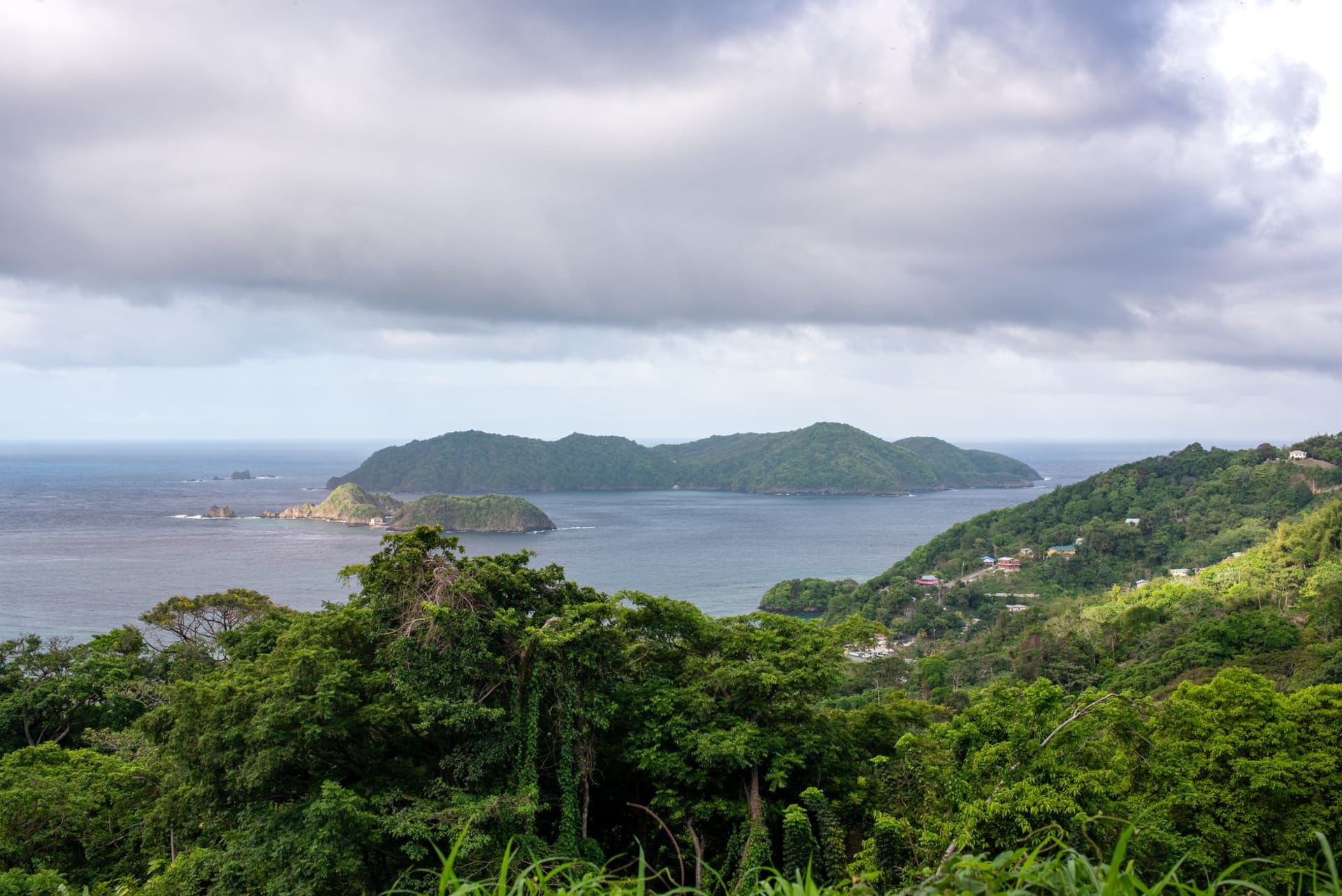
Main Ridge Forest Reserve
"The forest here has been protected since before the United States existed. Let that settle."
The ordinance protecting the Main Ridge Forest Reserve was passed in 1776 by the British colonial government of Tobago, making it the oldest piece of legislation protecting a tropical rainforest anywhere in the Americas. The stated rationale was practical: the colonial administrators had noticed that where forests were cleared, rainfall decreased and the rivers ran unreliable. This was ecological thinking two hundred years before the word ecology existed. The forest has been there since before all of it, and it remains.
The Reserve in Context
The Main Ridge runs along Tobago’s central spine, covering around 9,400 acres from the island’s northeast to its southwest. It is primary rainforest — not secondary growth, not plantations gone feral, but continuous forest that has never been commercially cleared. The trees at the ridge’s highest points include silk-cotton trees of extraordinary girth, buttressed roots spreading across three meters at the base. Walking through the interior sections in the morning, when mist is still caught in the canopy and the light is green and diffuse, is genuinely affecting. The forest sounds are constant and complex: the metallic click of a bearded bellbird, the liquid repetition of a rufous-vented chachalaca, insects in frequencies I couldn’t consciously hear but felt.
The Gilpin Trail
The most accessible forest experience is the Gilpin Trace, a trail that descends the ridge from the main road into primary forest, passing through several distinct vegetation zones. It takes about two hours out and back at a moderate pace. I went with a local guide — Marvin, who runs guided walks out of Roxborough — because without one I would have walked past the motmot nest, the tarantula in its burrow entrance, the orchid tucked under a fern frond, and the three-toed sloth moving with agonizing slowness along a cecropia branch twenty feet overhead.
The sloth is the one I keep thinking about. It moved about thirty centimeters in the twelve minutes we watched it, pausing periodically to look at us with the calm expression of something that has made a philosophical peace with being what it is. Its fur was so pale green with the algae that grows in it that it nearly disappeared against the leaves.
Waterfalls and Rivers
Several rivers drain off the Main Ridge, and the trails to Argyle Waterfall — Tobago’s tallest, dropping about fifty-four meters in stages through forest — begin from the southeast side of the reserve. The trail is maintained well enough and takes about twenty minutes on foot. In the dry season the falls are thinner but still impressive; in the wet season they’re a roaring column visible from a hundred meters away. The pools at the base are deep enough to swim in and cold enough to startle after the hike in.
The river systems throughout the reserve are also where freshwater fish unique to Tobago live — several species of killifish and guppies found nowhere else on earth, a fact that I found surprisingly interesting when Marvin explained it.
The Birds
The Main Ridge is where Tobago’s serious forest birding happens. The Trinidad motmot, which Lia had specifically wanted to see, was found within forty minutes of entering the forest — a gorgeous bird, cobalt and rufous, with that distinctive racket-tipped tail that it swings like a pendulum when alert. We also found a white-tailed sabrewing hummingbird (endemic to Tobago and nearby Venezuela), a rufous-tailed jacamar gleaming copper-green on a branch, and a pair of channel-billed toucans working a fruiting tree with their preposterous bills.
The reserve has over 200 bird species recorded, and serious birders spend multiple days working the different trail systems across it.
When to go: The Main Ridge is accessible year-round, but trails are significantly muddier in the wet season (June–November). The dry season (January–May) is most comfortable for hiking. Birding is exceptional year-round, but breeding season activity peaks February through May. Start early — forest bird activity drops dramatically after 9am.