Asa Wright Nature Centre
"The veranda at Asa Wright is proof that doing nothing can be a serious pursuit."
I am not, by any strict definition, a birder. I don’t own binoculars with a Danish lens system. I can’t rattle off Latin species names without thinking. But I spent two days at Asa Wright Nature Centre in the Northern Range and by the end I was leaning over the veranda railing with my phone camera pressed to the eyepiece of a borrowed scope, trying to get a clean shot of a channel-billed toucan who was taking his time with a palm fruit, and I understood completely why people fly across the world for this.
The Veranda as Observatory
The famous thing about Asa Wright is that you don’t have to go anywhere. The veranda of the main house overlooks a series of feeders and a garden of impossible lushness, and what comes to you is extraordinary. On my first morning I counted — without moving from a wicker chair with a coffee — a purple honeycreeper, two male tufted coquette hummingbirds (they have the most absurd feather crests, like miniature punkrockers), a blue-crowned motmot, and a pair of white-bearded manakins doing their snapping display routine. The motmot stayed for twenty minutes. The hummingbirds never stopped moving.
The other guests at the veranda are international in the way that only birding tourism seems to produce: a retired Dutch couple with optics worth more than my car, a group of Americans from Ohio with matching khakis, a quiet Frenchman who turned out to be a professor of ornithology from Toulouse. We had almost nothing in common and spent three very pleasant hours together.
The Dunstan Cave Trail
The centre runs guided walks daily, and the best of the ones I took descended to the Dunstan Cave, where oilbirds roost in the darkness. Oilbirds are extraordinary — nocturnal, frugivorous, and they navigate in pitch dark by echolocation, like bats, emitting an unsettling series of clicks and shrieks. When the guide turned off his torch inside the cave, the sound from a hundred birds overhead was something between a horror film and a cathedral choir. I am not making this sound appealing but it genuinely was.
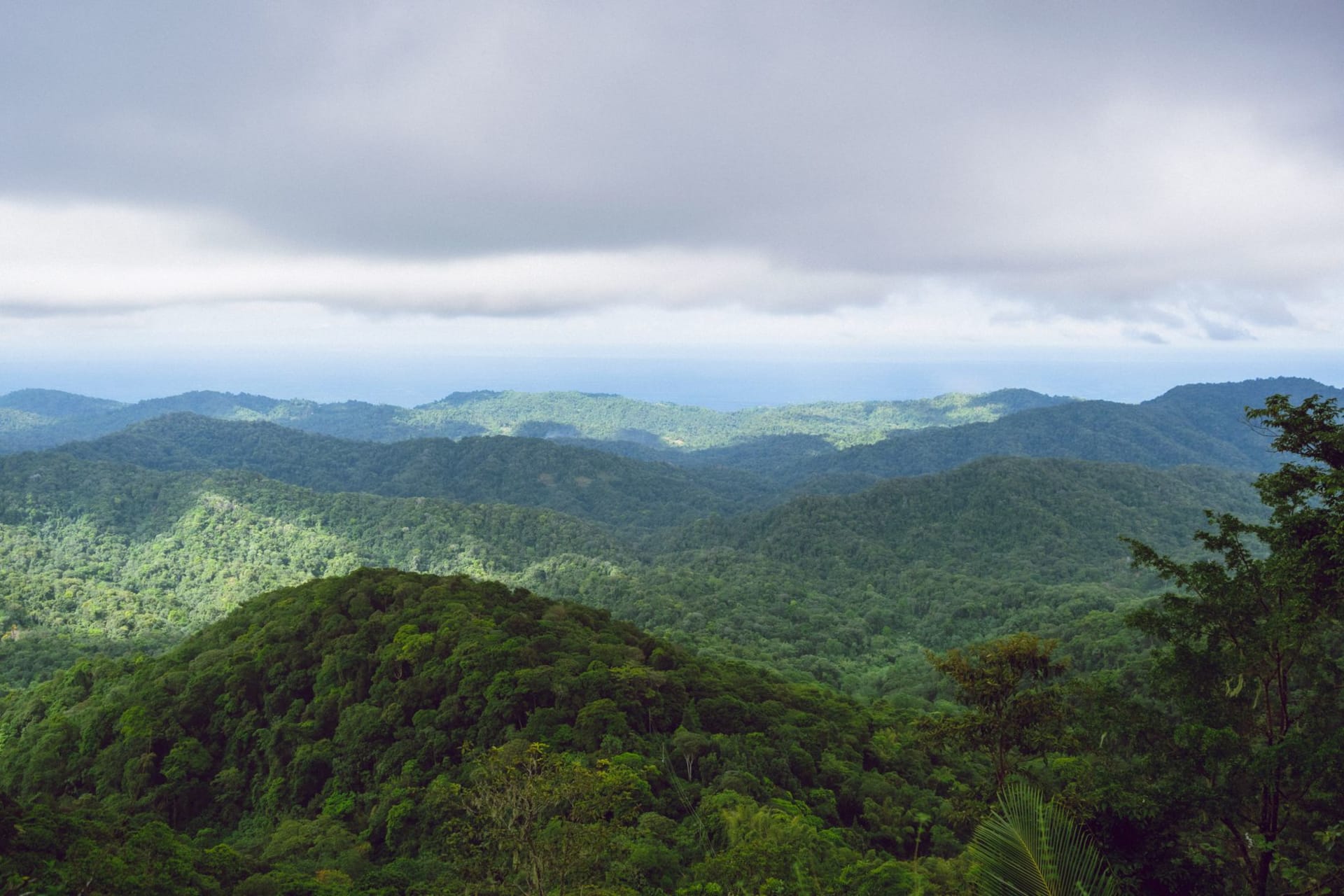
The forest around the cave trails is cloud-forest wet even in the dry season — everything draped in moss, ferns pushing out of every horizontal surface, the air thick with the smell of decomposing leaves and wet earth. The density of plant life here feels personal, like it’s growing specifically toward you.
Staying In
The lodge accommodation is old-fashioned colonial: creaking floorboards, ceiling fans, jalousie windows that let in the night sounds of the forest. Those sounds are not subtle. Tree frogs operate at a volume disproportionate to their size, and at some point around 3am a kiskadee started up in the tree outside my window with the confidence of someone who has never been told to be quiet.
Breakfast is communal and generous — local tropical fruits, bake, eggs, coffee strong enough to account for the 5am wake-up that serious birders demand. I managed 5:45am. Everyone else was already on the trail.
The Numbers
Trinidad has over 470 recorded bird species, and Asa Wright sits at the center of the richest birding terrain on the island. Guides here know every trail, every fruiting tree, every reliable spot for the species visitors most want to see. The Trinidad motmot. The bearded bellbird. The golden-headed manakin. Even a casual morning walk with a good guide will produce twenty or thirty species.
When to go: The dry season (January–May) is peak birding season and when trails are most accessible. The breeding season (March–June) brings the most display behavior. The centre is open year-round, and even the wet season has active birding — just muddier trails. Book well in advance; rooms fill quickly during the January–April high season.