Pangai and the Art of Doing Very Little
Lifuka is the administrative center of the Ha’apai group, which means it has an airport, a small hospital, a market, and a main town called Pangai that takes approximately ten minutes to walk across. This is not a criticism. Pangai operates with a focused lack of urgency that becomes, once you stop fighting it, genuinely restful. The central square has a few shops and a church on the corner that rings its bell with enough authority to vibrate your teeth, and a small waterfront where outrigger canoes and small motorboats are tied up next to each other without much apparent hierarchy.
I arrived by the morning flight from Nuku’alofa, a twenty-five minute trip that deposits you at an airstrip surrounded by flat land and the sound of nothing in particular. The guesthouse I’d booked was run by a woman named Lote who communicated primarily by pointing and by leaving food outside my door at times that seemed to have no relation to stated meal hours but were always exactly when I was hungry.
The William Mariner Connection
Ha’apai has an unlikely claim to historical significance: this is where William Mariner, a sixteen-year-old British sailor, was captured in 1806 after his ship was seized and most of his crew killed, and where he subsequently spent four years living as an adopted son of the local chief Finau ‘Ulukalala. His eventual account of Tongan society and customs — dictated after his return to England and published in 1817 — remains one of the more extraordinary documents of early Pacific anthropology, the more so because he was a teenager when it happened.
The historical markers around Lifuka referencing this episode are modest and easily missed, but knowing the story changes how you read the landscape: the fort site, the harbour, the coastline where the original ships anchored. History leaves different marks in different places. Here it leaves traces you have to look for.
Hitching to the Beaches
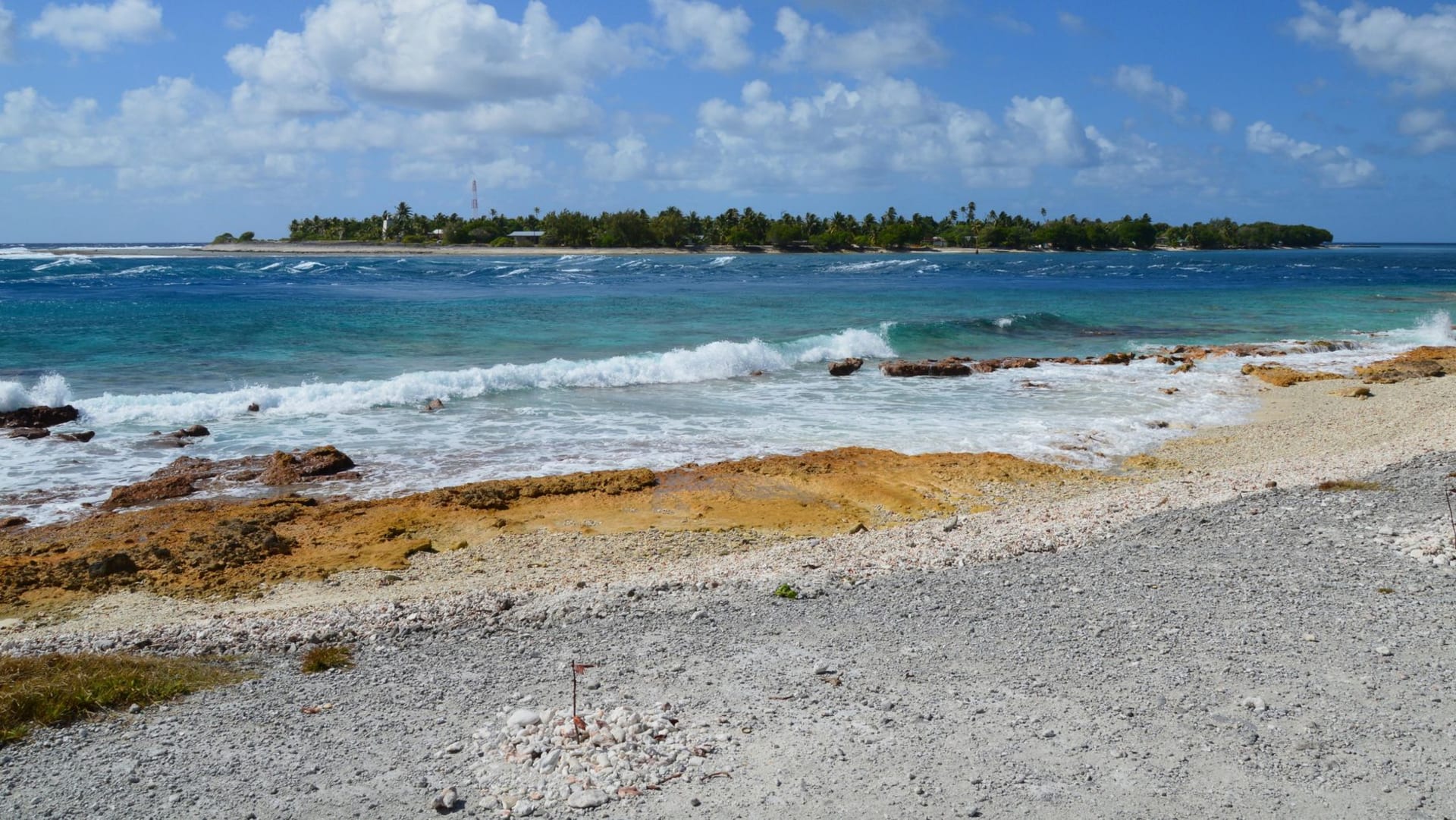
Lifuka is connected to Foa Island by a causeway and to Nukunamo by a sand spit walkable at low tide. These connections give you access to beaches that are, by any reasonable standard, spectacular — long arcs of fine white sand with water in the improbable Ha’apai palette, often completely empty. I hitched a ride on the back of a truck going north to Foa, jumped off at a stretch of beach that had no visible development in either direction, and spent three hours snorkeling above a coral shelf that ran parallel to the shore about thirty meters out.
The reef here is alive in the way healthy reefs feel — there’s activity and density at every depth, fish species I recognized and many I didn’t, and at one point a juvenile sea turtle that surfaced beside me with what I can only describe as confident disinterest before diving back under. I chased it briefly, felt immediately embarrassed, and stopped.
Fried Fish at the Stall by the Market
Lia found it first: a woman with a gas burner and a pan of oil set up just outside the market entrance, frying reef fish with a batter that was thin and crisp and seasoned with something I never successfully identified. We ate standing up at a folding table with a bottle of hot sauce that had no label and paid around two pa’anga each. We went back the next morning and the morning after that, and on the last morning the woman added extra hot sauce without being asked, which felt like recognition.
When to go: June through October for dry conditions and whale season overlap. Ha’apai’s flat terrain means flooding is a genuine concern during heavy rain — the December to April cyclone window is worth taking seriously. The small airstrip on Lifuka makes it easy to visit independently without committing to the ferry schedule.