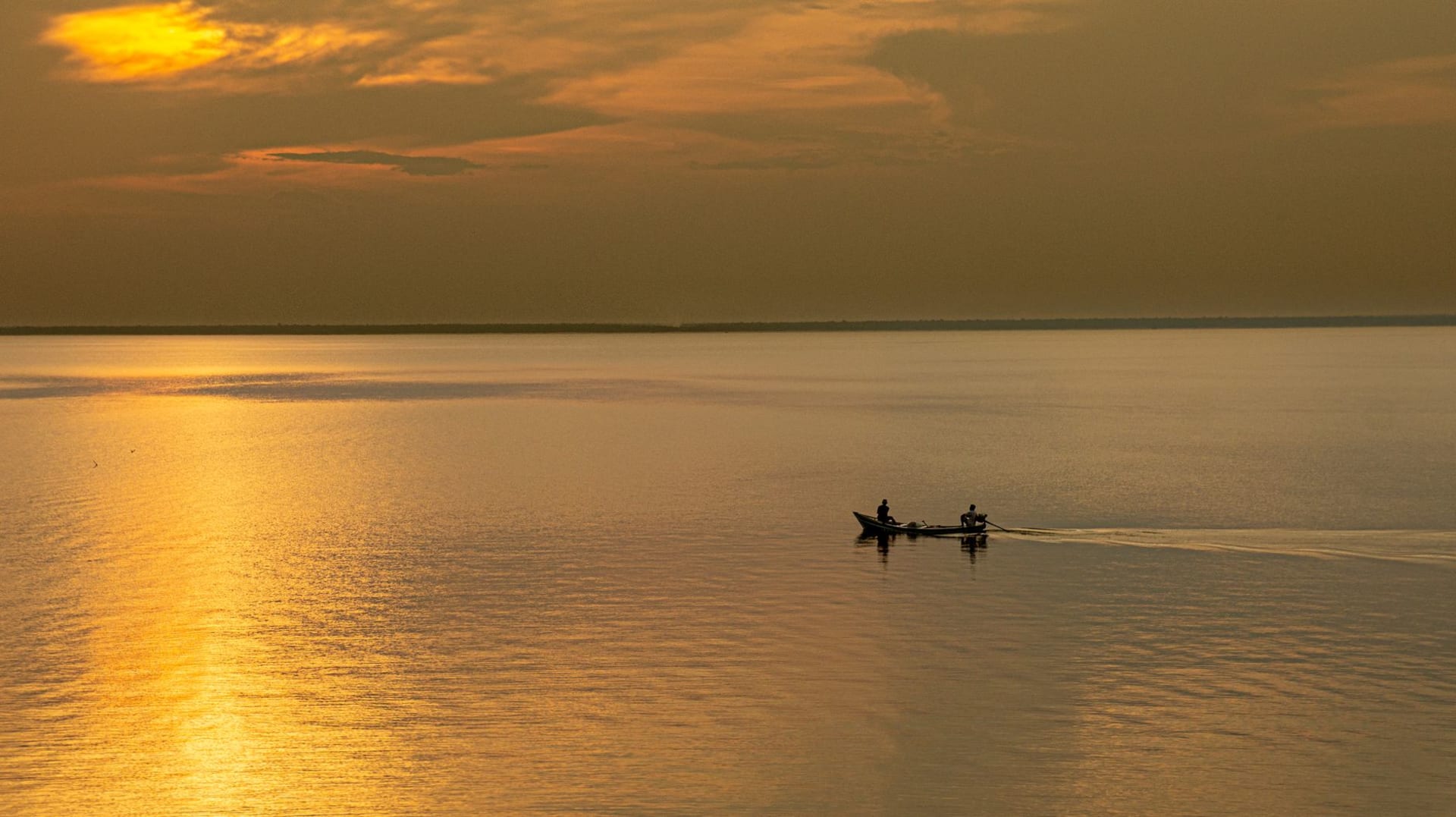
Lake Togo
"The lake doesn't look like much from the road. You have to get out on the water to understand what it is."
The Lagoon Between Two Worlds
Lake Togo is not technically a lake. It’s a coastal lagoon — separated from the Atlantic by a narrow sandy strip of land, connected to the sea through a channel near Aného, affected by both tidal and rainfall patterns in ways that make its behavior slightly unpredictable. On my first morning, the water was glass-still and copper-colored in the early light. By afternoon, a wind had come up from the Atlantic and the surface was choppy and grey and looked like something from a Nordic country.
The lake runs east-west for about fifty kilometers, and the coastal road from Lomé to the Beninese border skirts its northern edge. Most travelers see it at sixty kilometers an hour through a bus window and move on. I stopped for three days, which turned out to be the right decision.
The Stilted Villages
Several communities on Lake Togo are built on wooden platforms over the water — a West African architectural adaptation to flooding and fishing access that goes back centuries. The largest and most visited is Agbodrafo, where wooden walkways connect a grid of houses raised on stilts, with fishing nets hung between them to dry and pirogues moored below like cars in a driveway.
I arrived by motorcycle taxi from the main road and was met at the landing by a young man named Théophile who runs informal tours of the village. He is seventeen, speaks French, English, and Ewe, and has the easy confidence of someone who has decided to be useful to the world rather than waiting for opportunities. He showed me the fish-smoking rooms where tilapia and capitaine are cured over wood fires, and the part of the village where traditional fishing traps — intricate woven bamboo structures — are still made by hand. The smell of woodsmoke and lake water and fish in various states of freshness is intense and specific and not unpleasant once you’ve been in it for ten minutes.
Pirogue Life and the Logic of the Lake
The best way to understand Lake Togo is to get into a pirogue early in the morning before the fishermen have gone home. Théophile arranged this for me — his uncle is a fisherman — and we went out at six in the morning in a narrow dugout that felt about three centimeters of freeboard from disaster. His uncle hadn’t slept; he’d been out since midnight working nets in the deeper center of the lake, where capitaine congregate near the bottom.
The catch was modest. His uncle seemed neither disappointed nor satisfied — just matter-of-fact about outcomes that vary from day to day in ways that are mostly beyond control. He sold the fish to a woman at the landing before we had even properly docked. The whole transaction took thirty seconds. Then he went to sleep on the platform outside his house.
Lia stayed in the pirogue while I talked with Théophile on the dock. She said afterward that watching the lake from the water while people did ordinary things around her was the best hour of the whole trip. I believe her. There are days when you don’t need to be doing anything in particular to feel the full weight of being somewhere genuinely different.
Aného and the Eastern End
At the lake’s eastern end, where the lagoon narrows toward the Beninese border, the town of Aného carries the remnants of its colonial-era importance — it was the capital under German and later French administration — in the form of faded villas and a slightly melancholy elegance. The town is quieter now than its architecture suggests it once deserved to be. The best thing in Aného is the Sunday market and the fish shacks along the waterfront that serve grilled barracuda, which comes with a chili sauce so aggressively spiced that I stopped being able to feel my upper lip somewhere around the third bite.
When to go: November through February for calm waters and clear skies. The lake is most beautiful and most easily navigated during the dry season. Avoid June through August when the heavy rains swell the lagoon and the current between the Atlantic and the lake makes pirogue crossings genuinely risky.