Lago Fagnano
"The lake is so long you can't see the end of it. That's not a metaphor. It just keeps going."
Lago Fagnano — called Kami by the Selknam and Yaghan peoples who lived around it — sits in the center of the main island of Tierra del Fuego, occupying a tectonic trough carved along the same fault system that creates earthquakes in this region. It is roughly one hundred kilometers long and up to twelve kilometers wide. Its eastern third is in Argentina; its western two-thirds are in Chile. The international border runs through open water somewhere in the middle, which means fishing regulations, navigation rules, and Chilean naval authority are all simultaneously relevant to anyone who ventures far from the Argentine shore.
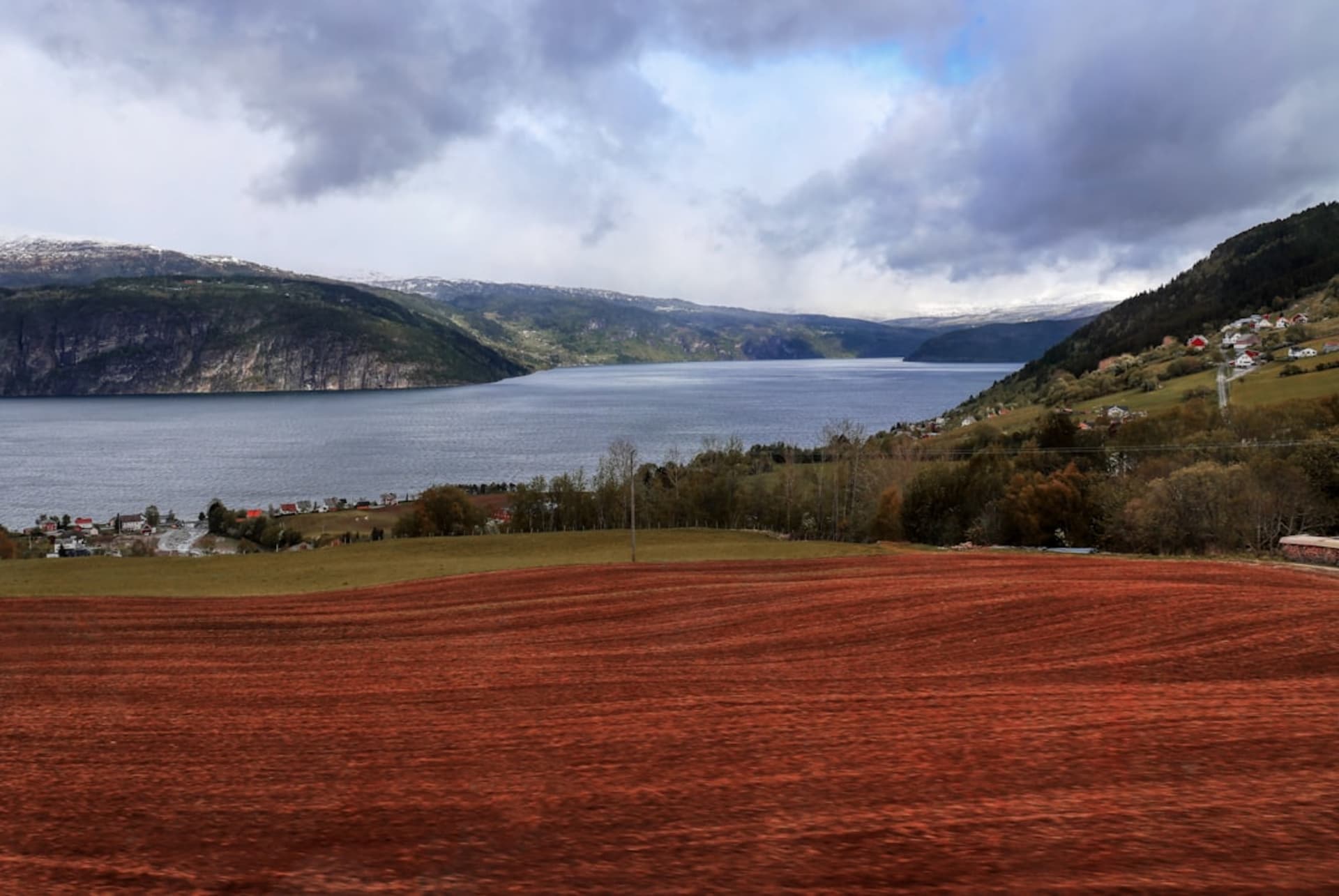
I drove to Fagnano along Ruta 3 — the same highway that ends at Lapataia, here running north through the interior of the island. The road crests a pass and the lake appears suddenly: enormous, gray-blue in morning cloud, the far shore barely visible and fading into haze. It looks like a sea.
The Shore at Tolhuin
The small village of Tolhuin sits on Fagnano’s eastern bay, and it holds an institution worth going out of your way for: La Unión, a bakery open at hours that suggest the owners have made peace with the impossibility of sleep. It opens before dawn and closes after midnight, and the bread is serious — dark, dense loaves with good crust, facturas (Argentine pastries) that arrive warm from the oven, the kind of place that becomes a reference point long after you’ve left.
I ate medialunas at a table looking out at the lake’s eastern bay at seven AM, the water silvered and still, a black-necked swan working the reeds at the shore. The bakery was half-full with truck drivers and locals, the smell of coffee and fresh dough overriding the cold outside. Tolhuin is otherwise a small working town with a gas station and a hardware store; the bakery is what people actually drive for.
The Fault Beneath the Water
Lago Fagnano occupies the Magallanes-Fagnano Fault Zone, where the South American and Scotia tectonic plates meet. The lake is essentially a rift depression — a valley created by the land pulling apart. This produces the lake’s characteristic shape: long and narrow and straight, like a crack that filled with snowmelt. It also produces occasional earthquakes; the 1949 event was felt throughout the region.
Knowing this gave the lake a different quality. The stillness felt temporary in a geological sense — borrowed calm above active geology. The mountains on the lake’s southern shore are being uplifted by the same forces that carved the basin. Everything here is moving, just slowly.
Wind and Fishing
In the afternoon, when the wind comes up from the west — as it almost always does — Fagnano becomes rough quickly. The western end, in Chilean territory, can run whitecaps within an hour of calm mornings. Trout fishing here is exceptional; the lake holds large brown and rainbow trout introduced decades ago, and guided fishing from the Argentine shore requires permits available in Tolhuin and Ushuaia. I am not a fisherman, but I watched a guide bring a brown trout to the net near the western margin of the bay with the particular ceremony that serious fishing requires, and I understood why people organize their lives around it.
The lake in the afternoon light, when the wind has roughened the surface and the clouds have lowered toward the Chilean hills, is one of the more genuinely wild landscapes I have encountered. Nothing on the far shore but forest and mountains. No other boats. The sound of wind in lenga beech and water against the gravel beach.
When to go: Tolhuin and the Argentine shore of Fagnano are accessible year-round. Summer (December through February) offers stable conditions for boating and fishing. Trout fishing peaks November through April; the best brown trout fishing is typically March and April as the fish fatten before winter. The bakery — and this is important — operates year-round.