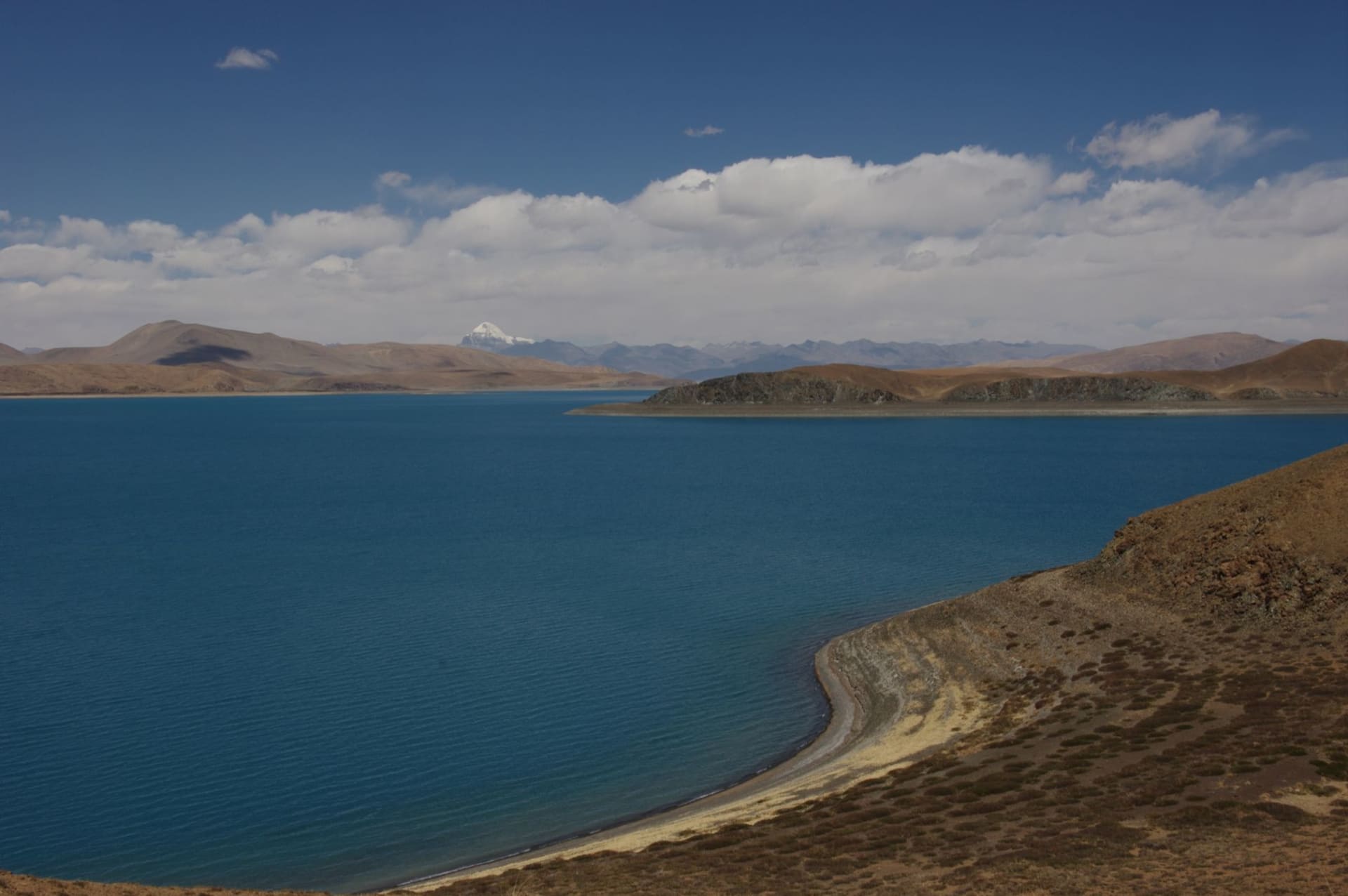
Yamdrok Lake
"I have never trusted a colour less than the first turquoise of Yamdrok, and never been more glad to be wrong."
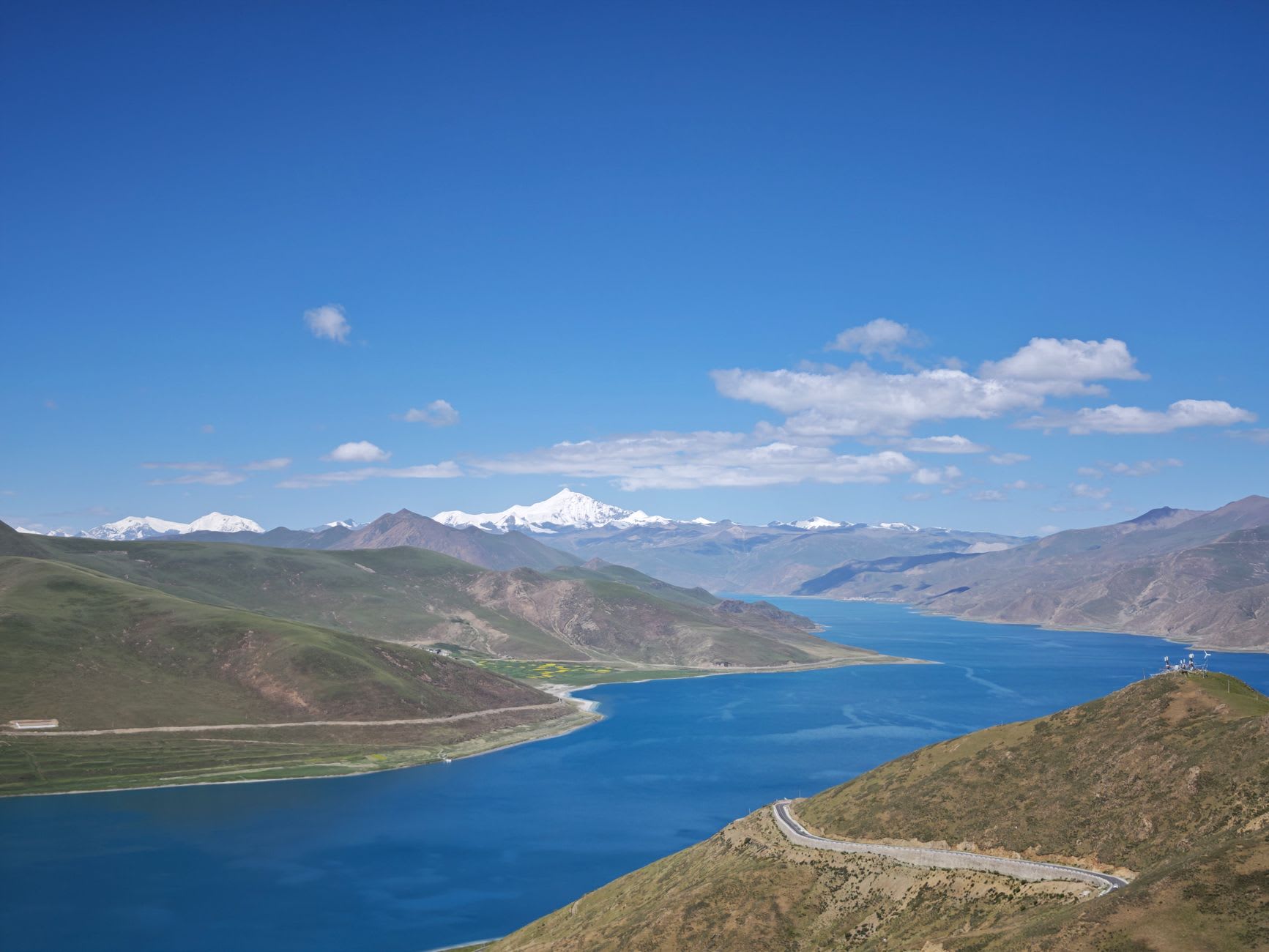
There is a colour Yamdrok Lake makes that I would have called impossible if I hadn’t been standing in front of it, slightly out of breath, at over four thousand four hundred metres above the sea. It is a turquoise so saturated it looks like someone has been at the photograph with a slider, and the disorienting thing is that the camera actually undersells it. We came over the Kamba La pass from the Lhasa side, the road switchbacking up a brown flank of mountain, and then the lake simply appeared below us, coiled like a dropped ribbon between bare ridges, and Lia said a word I won’t reproduce here but which captured the moment precisely.
Yamdrok — Yamdrok Tso in Tibetan — is one of the three holiest lakes in Tibet, the others being Namtso and Lhamo La-tso. Pilgrims walk its full shoreline, a circuit that takes days, and Tibetans believe the lake is the earthly transformation of a goddess. Looking at it, you understand the impulse to make it sacred. A thing that colour, sitting in that emptiness, asks to be explained by something larger than geology.
The pass and the first sight
The classic encounter is from the Kamba La pass, at around 4,800 metres, where the road tops out and the whole western arm of the lake is laid out beneath you. It’s a working viewpoint, which means it comes with the full Tibetan plateau ensemble: prayer flags strung in their hundreds, a man with a decorated yak charging tourists for photographs, vendors selling turquoise of dubious origin. I usually find this kind of scene faintly depressing. Here it didn’t matter at all. The lake overwhelms the commerce.

We didn’t linger long at the top — the altitude makes lingering an active decision rather than a passive one, and I could feel my heartbeat in my ears. We drove down to the shoreline instead, where the scale recalibrates. From above, the lake is a colour. From the water’s edge, it’s a vast, cold, very real body of water, the wind coming off it hard enough to make your eyes stream, the far shore a thin brown line under enormous sky.
Down at the water
The road follows the northern shore for a long stretch, and we stopped repeatedly, because every bend reframed the same lake into a new composition. At one quiet pull-off, far from the pass crowds, we walked down to the stony edge. The water was clear and bitterly cold and the colour, up close, broke into bands — pale green in the shallows over white stones, deepening to that impossible turquoise where it dropped away. A few black-necked cranes were working the marshy ground at the inlet, indifferent to us.
A Tibetan family had stopped at the same spot. The grandmother was murmuring a circuit of mani prayers, working her beads, looking out at the water with an expression of complete familiarity — this was not a view to her, it was a relative. Their young son, meanwhile, was throwing flat stones at the lake with the same disrespect children show sacred things everywhere. Both responses seemed correct.
A note on getting there
You don’t visit Yamdrok casually. Tibet requires permits, an organised tour, and a guide, and the altitude demands genuine acclimatisation in Lhasa first — do not skip this; the headache of going too high too fast is not a souvenir worth having. Most travellers see Yamdrok as a day trip from Lhasa or as the first leg of the overland route toward Gyantse and Shigatse, which is how we did it. It made the perfect opening act: the moment the plateau stopped being an idea and became a colour I’ll be chasing in my memory for years.
When to go: May through October, when the passes are reliably open and the lake’s colour is at its most outrageous under clear skies. Winter closes much of the route and brings brutal cold to the exposed shoreline.