Shigatse
"Tashilhunpo is a city within a city — once you're inside, the outside world becomes a rumour."
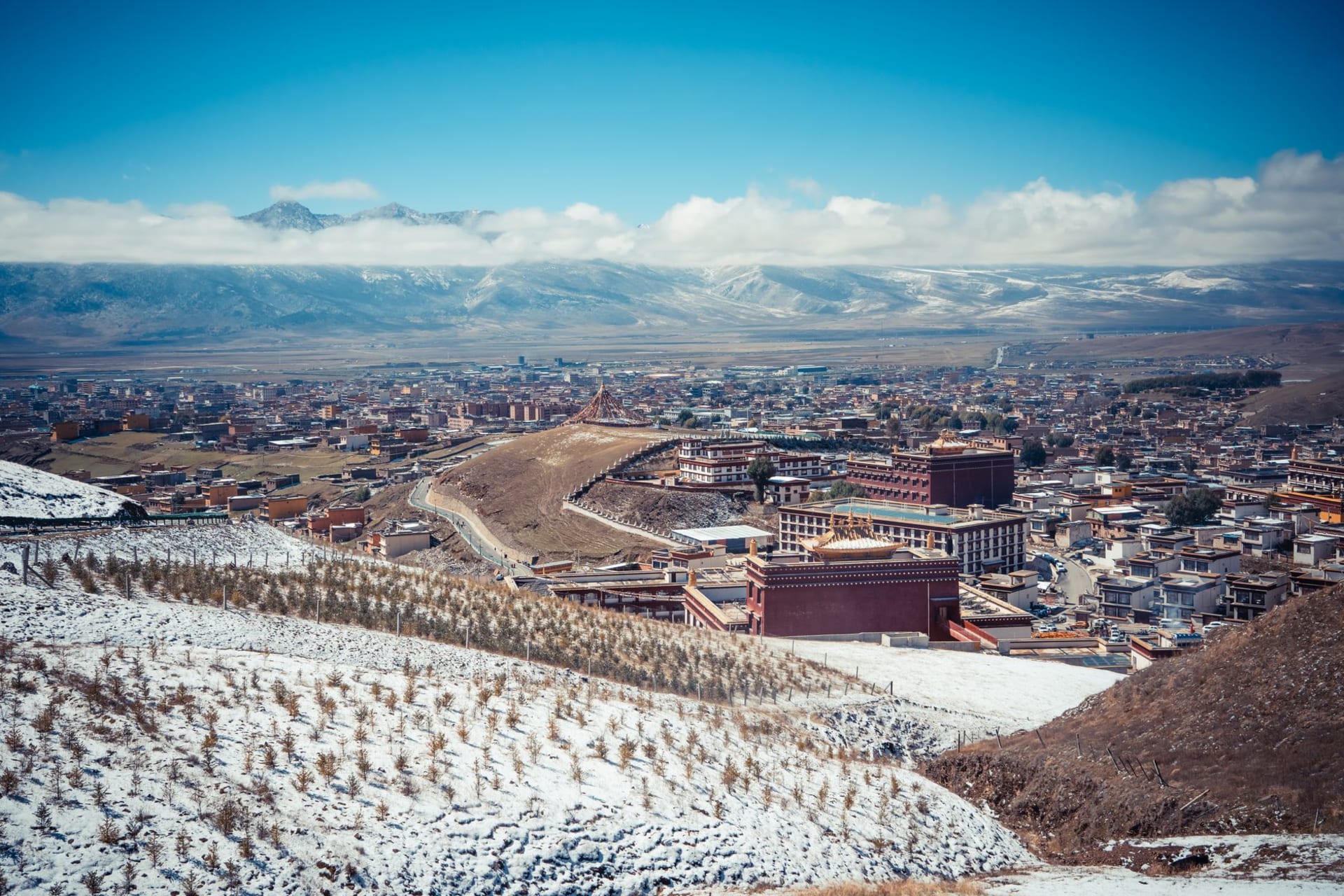
Shigatse announces itself from a distance: the white walls and golden roofs of Tashilhunpo Monastery spread across the hillside like a small city that happened to dedicate itself entirely to one purpose. The drive from Lhasa along the Friendship Highway takes four hours across plateau landscape — wide valleys, braided rivers, brown mountains — and drops you into Tibet’s second-largest urban centre at 3,840 metres, low enough that breathing feels almost normal again.
Most travellers pass through Shigatse on their way to Everest Base Camp or Nepal. That’s a mistake worth correcting. The monastery alone deserves a full day, and the market quarter around it offers something Lhasa’s tourist-dense Barkhor cannot quite replicate: the feeling of walking through a working Tibetan commercial district that hasn’t been entirely curated for your consumption.
Tashilhunpo Monastery
Founded in 1447, Tashilhunpo is the traditional seat of the Panchen Lama and one of the great monasteries of Gelug Buddhism. It houses roughly 600 monks, and the place feels genuinely inhabited rather than preserved — you’ll pass monks debating theology in the courtyard, novices sweeping steps, older monks reading from wooden-block-printed scriptures in dim chapels. The main kora (circumambulation path) circles the monastery walls and takes about 45 minutes at a pilgrim’s pace. The walls are painted in broad bands of ochre and crimson.
The Chapel of Maitreya holds the world’s largest gilded statue of the future Buddha — 26 metres of burnished bronze and gold, its face serene and slightly tilted downward, regarding the room from a height that makes you feel genuinely small. The chamber smelled of hot metal and butter lamps. I stood in the entrance for several minutes without moving.
The Old Tibetan Quarter
Below the monastery, the old quarter is a grid of low earthen buildings, prayer flag poles, and lanes narrow enough that two people can shake hands across them. A market runs along the main street selling everything from dried yak meat to mobile phone accessories to ritual implements — silver butter lamp vessels, hand-forged dorjes, rolled thangkas in plastic tubes. I bought a small brass incense burner from a woman who appeared to be approximately a hundred years old and who drove a very hard bargain.
The smell of the market is specific: dried herbs, animal hide, incense, diesel from passing motorbikes, and the omnipresent yak butter that perfumes every corner of Tibet like a country-wide candle.
Shigatse Dzong
The restored fortress on the hill above town offers views over both the city and the monastery complex. The original dzong was the inspiration for the Potala Palace and was largely destroyed during the Cultural Revolution; what stands now is a reconstruction, but the views are not. I climbed in late afternoon when the light turned the whole valley amber and the monastery roofs caught fire below me.
Eating in Shigatse
The restaurant strips near the monastery cater to Tibetan, Chinese, and Nepali tastes in roughly equal measure. I ate thukpa — hand-pulled noodle soup with yak meat — twice, because the first bowl was good enough to revisit. A modest teahouse near the market served butter tea and tsampa dumplings to a room full of monks and truck drivers who paid me no attention whatsoever.
When to go: April through October is the primary travel window. May and September offer stable weather and moderate tourist numbers. Shigatse’s lower elevation than Lhasa makes it slightly more forgiving for altitude acclimatization — some itineraries visit Shigatse before Lhasa for this reason. The Tashilhunpo festival (Thangka Unveiling) in summer draws large crowds of pilgrims.