The first thing that happens in Lhasa is that you stop. Not because you want to — because your body simply refuses to continue. Arriving from Chengdu, I stepped off the train at 3,650 metres and stood on the platform breathing in slow, deliberate sips, watching other passengers do the same. The air tasted thin and cold and faintly metallic, like inhaled altitude itself. Above the station, the Potala Palace caught the morning sun and turned white-gold against a sky so blue it looked digitally enhanced.
Lhasa is one of the few cities that genuinely earns its reputation. I’d been warned not to over-romanticize it — the Chinese-built commercial districts are real, the tourist infrastructure is thick, the permits are a bureaucratic ordeal. All of that is true. And still: the Jokhang Temple at dusk, surrounded by prostrating pilgrims pressing foreheads to cold stone, is one of the most affecting things I’ve encountered anywhere.
The Barkhor Circuit
The Barkhor is the ancient pilgrimage circuit ringing the Jokhang, and walking it even once changes how you understand religious devotion. I joined the clockwise stream of pilgrims — monks in maroon robes, nomads from Kham in turquoise-studded headdresses, elderly women with prayer beads clicking between callused fingers — and let the current carry me. Incense smoke from juniper braziers coiled across the lane. The smell was resinous and dense, somewhere between forest fire and temple offering. Market stalls sold yak butter, thangka paintings, strings of coral, and cheap phone cases. The sacred and the commercial jostling each other without apology.
Inside the Jokhang
You remove your shoes and step into candlelit darkness. The Jokhang dates to the 7th century and the walls have absorbed centuries of butter-lamp soot. Your eyes adjust slowly. Monks chant somewhere deep inside — low, resonant, more felt in the chest than heard. The central Jowo Shakyamuni statue, considered the most sacred object in Tibetan Buddhism, is small and almost eclipsed by devotional offerings: scarves, coins, butter lamps, flowers. Pilgrims press their foreheads to the glass case and whisper. I stood to one side trying to be invisible and failing entirely.
The Potala
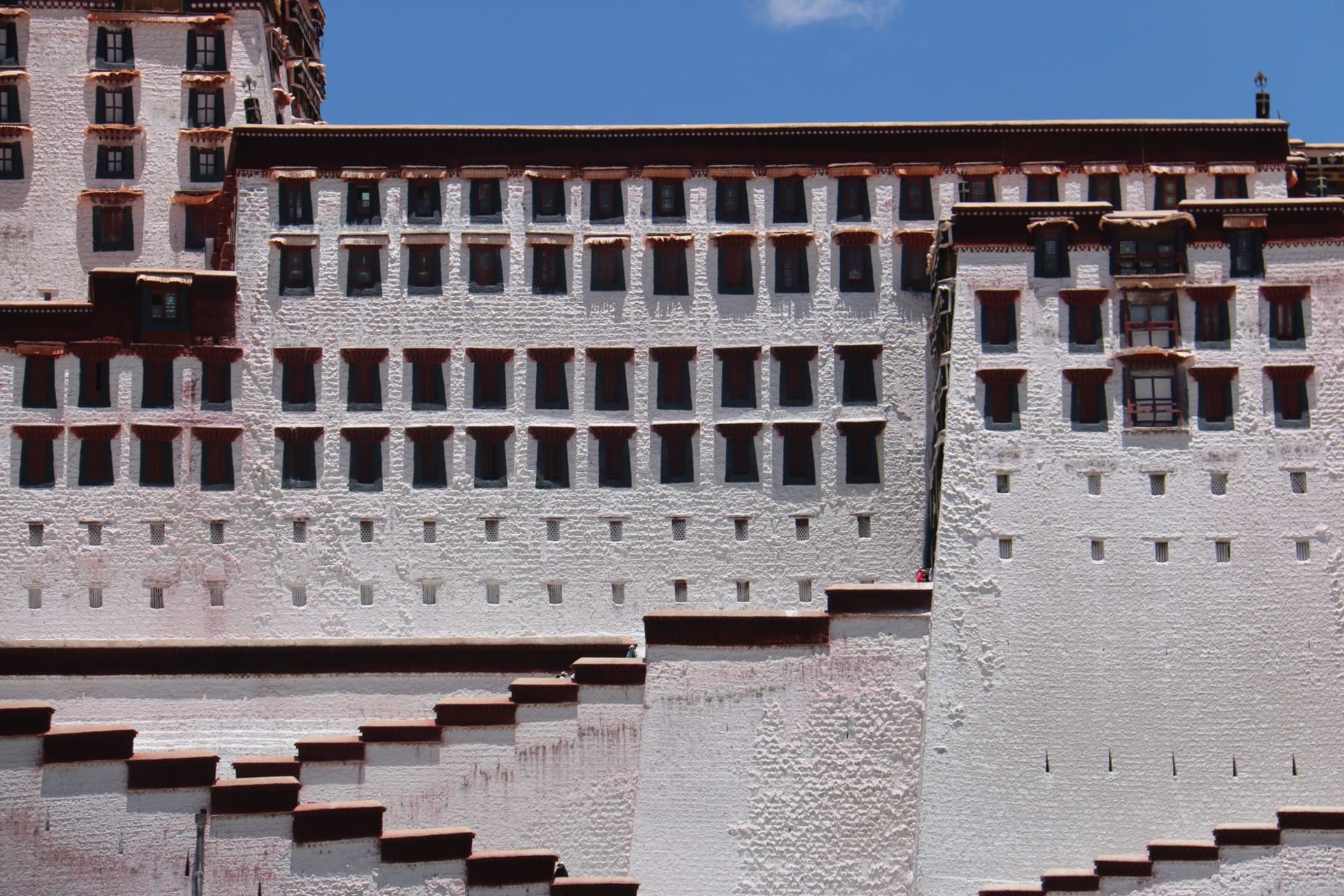
I’d seen a thousand photographs of the Potala. It still stopped me when I turned a corner and saw the real thing. The palace climbs thirteen storeys up Marpori Hill and looks less like a building than a mountain that happened to develop windows. Lia and I climbed in the early morning before the main tourist wave, following the ramp upward past fluttering prayer flags, the city spreading below us into the brown Kyichu valley. Inside, the air was cool and smelled of yak butter and old lacquer. The dim chambers held throne rooms, meditation chapels, and the gilded chorten tombs of past Dalai Lamas inlaid with turquoise and coral.
Logistics Worth Knowing
Tibet requires a Tibet Travel Permit on top of a Chinese visa, and Lhasa is the entry point through which all foreign visitors must pass. Individual travel is not permitted — you must book through an authorized agency, which controls your itinerary and provides a mandatory guide. I found the system frustrating in principle and oddly liberating in practice: with logistics handled, I could actually pay attention.
When to go: May through October offers the clearest skies and most accessible roads. April and November are shoulder months with fewer tourists and colder nights. Avoid the Chinese New Year and Tibetan New Year (Losar) periods unless you specifically want to witness the festivals — crowds are intense. Summer monsoon rains hit southeastern Tibet harder than Lhasa, which stays relatively dry.