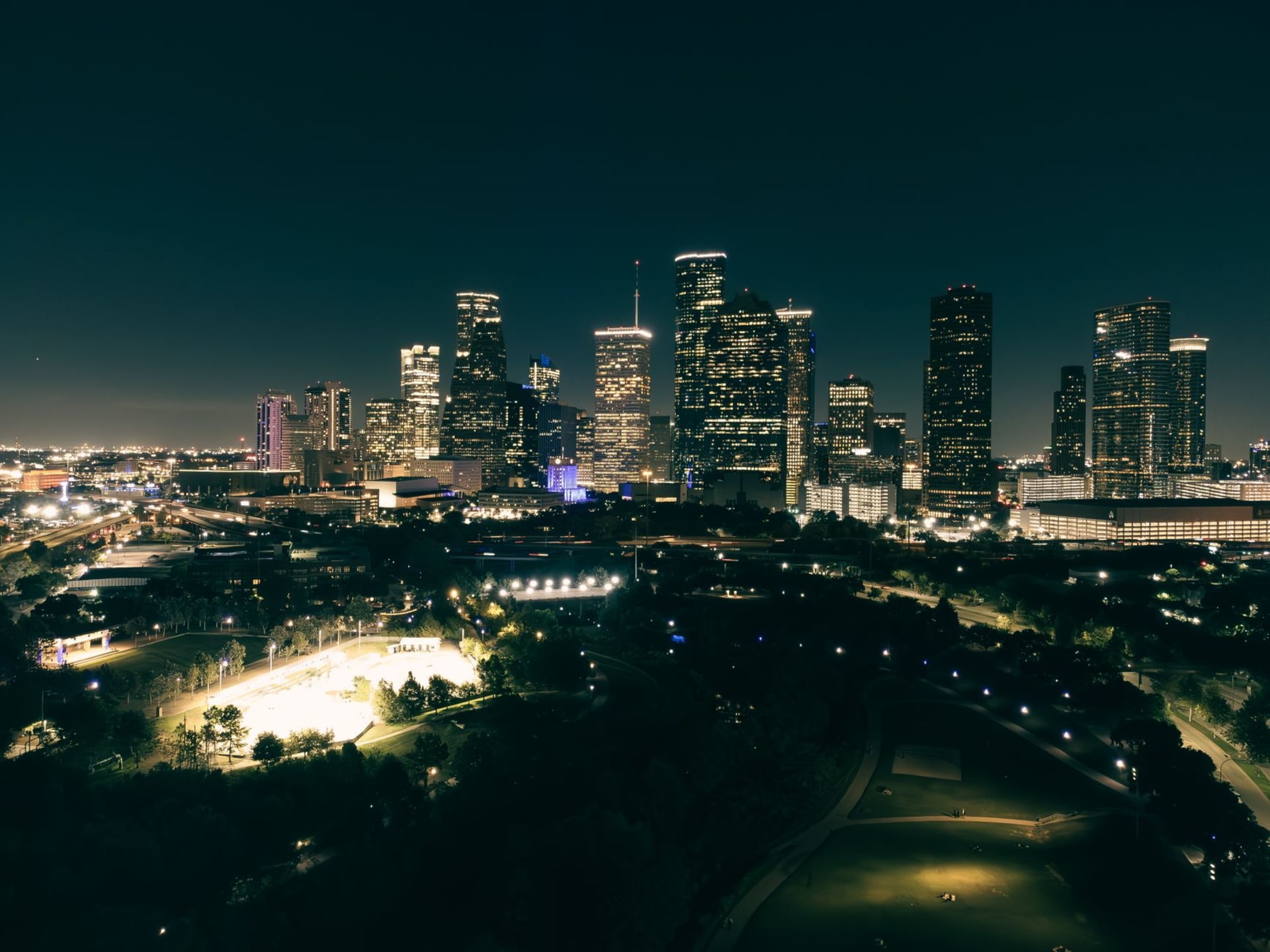
Houston
"Someone described Houston as a city with no zoning laws and it shows — in the best possible way."
Houston doesn’t perform for visitors. This is both its most frustrating and most interesting quality. The city is enormous and sprawling, car-dependent in ways that resist casual exploration, and makes almost no effort to package itself into a digestible tourist experience. What it offers instead is genuine texture — the kind of city that reveals itself to people who show up without a fixed agenda and start poking around.
I came for three days and stayed six. This happens more than you’d expect.
The Food Geography of a Global City
The cliché is that Houston has the best Vietnamese food outside of Vietnam. I’m not qualified to adjudicate that specifically, but the Viet-Cajun crawfish at several establishments on Bellaire Boulevard — boiled in a compound butter sauce with garlic, lemon pepper, and crawfish fat — is one of the more original things I’ve eaten anywhere in North America. The culinary logic is specific to Houston: Vietnamese immigrants arrived in the 1970s and 80s and adapted Cajun crawfish boil traditions they found along the Gulf Coast. The result belongs entirely to this city.
The Harwin corridor handles Pakistani and Indian groceries, halal butchers, and restaurants serving dishes I couldn’t identify without help from the people eating next to me. Chinatown is actually two Chinatowns plus a Koreantown folded inside each other along the Bellaire Boulevard corridor. Eating here requires no planning beyond pointing at what looks good.
The Museum District Without a Plan
Houston’s museum campus clusters around Hermann Park in Midtown and contains one of the finest collections of art in the American South. The Museum of Fine Arts is the anchor — Frederic Remington bronzes next to Impressionist canvases next to an African collection that warrants most of a morning. But the smaller institutions are where I spent more time: the Menil Collection, a private museum in a quiet neighborhood of bungalows, with its famous Rothko Chapel and a surrealist collection assembled with genuine eye and idiosyncrasy.
The Rothko Chapel itself is a small octagonal room with no natural light and fourteen large Rothko canvases in near-black purples and maroons. People come to sit. There is very little to do there except be present, which is apparently more than most people can manage for longer than ten minutes, but which rewards patience.
Buffalo Bayou and the City’s Green Thread
The bayou system that drains Houston’s flat terrain has been partially converted into a linear park — Buffalo Bayou Park runs several miles through downtown, with trails, public art, and views of the skyline that are considerably more dramatic from down near the water than from street level. I rented a bike and rode the full length on a weekday morning when the trail was occupied mostly by joggers and one very large tortoise crossing deliberately from one bank to the other.
The NASA Space Center Detour
Johnson Space Center sits about 25 miles south of downtown and operates as a museum and active mission control facility simultaneously. The tram tour passes by the building where flight controllers managed the Apollo missions and still monitor the International Space Station in real time. A Gemini capsule sits in a hangar next to an Apollo command module — both smaller than you’d believe anyone would agree to ride in.
When to go: October through March, without question. Houston summers are genuine subtropical punishment: 95 degrees with 90 percent humidity by 8 AM. Spring wildflower season (March-April) is beautiful but brings unpredictable storms. The Houston Livestock Show and Rodeo in February-March is a full-city event worth timing for once.