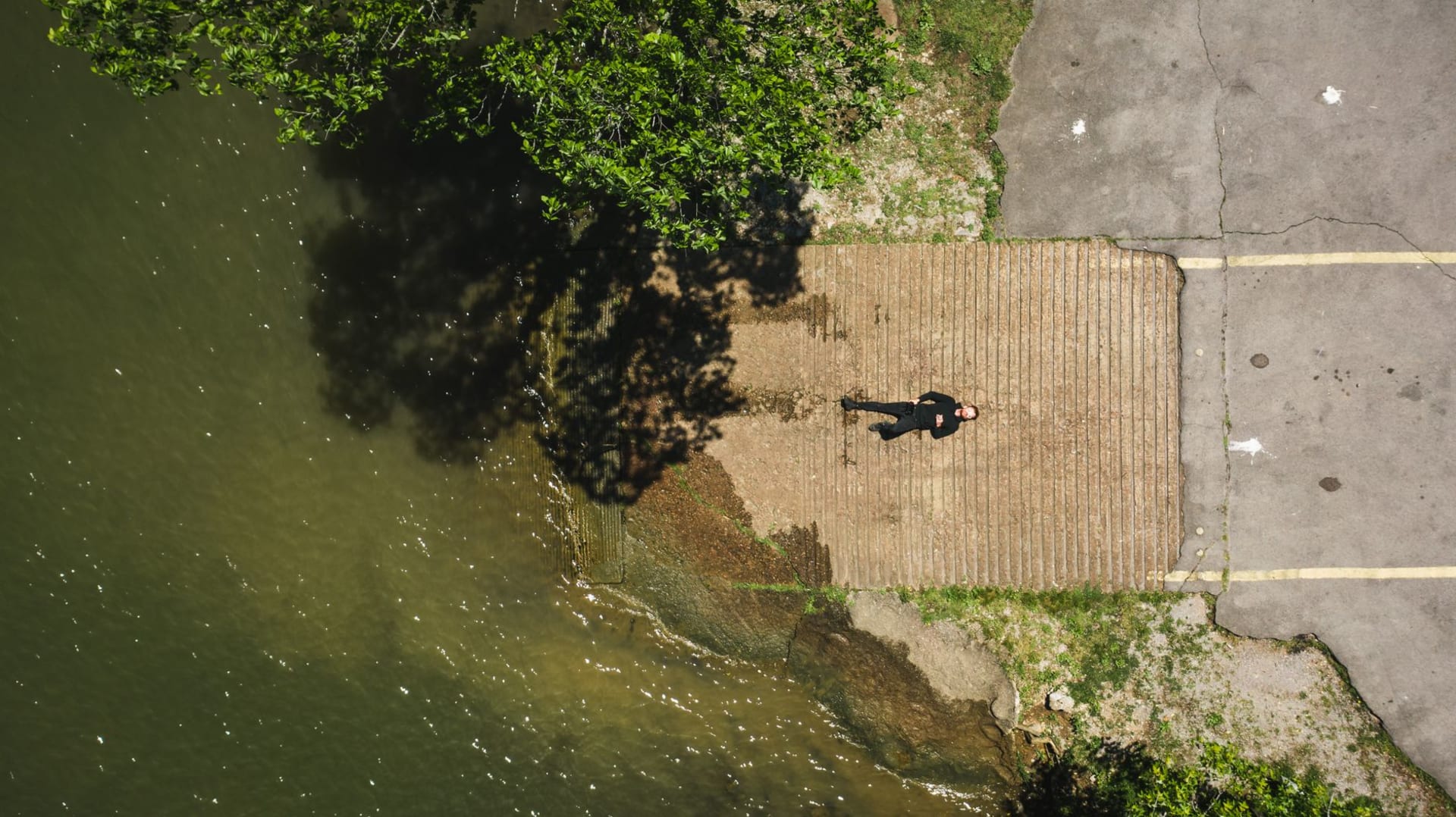
Reelfoot Lake
"The trees have been standing in water for two hundred years. They look exactly like that."
I came to Reelfoot Lake in the northwest corner of Tennessee partly because I wanted to see bald eagles and partly because the origin story of the lake is one of the stranger geological events in American history, and I like places with strange origins. The New Madrid earthquakes of 1811 and 1812 — the most powerful seismic events in recorded North American history — caused the ground in the Mississippi Valley to liquefy, forests to sink into the earth, and the Mississippi River to temporarily reverse its flow. Reelfoot Lake formed when a sunken forest filled with river water. The bald cypress trees that were growing there went underwater and stayed underwater. They are still there.
The Cypress Forest and What It Looks Like
The visual experience of Reelfoot Lake is not like any other lake I’ve seen. The surface is covered with the knees and trunks of cypress trees — hundreds of them, some dead and silver-grey, some still alive and draped in Spanish moss, all standing in water that’s rarely more than five feet deep. In morning light, with mist rising between the trunks, the effect is eerie in the precise sense of the word: uncanny, not quite of the present, like something remembered rather than observed.
You need a boat to see it properly. Reelfoot Lake State Park rents canoes and kayaks from the visitor center. I put in at the Blue Bank access point before 7am and spent two hours in near silence, paddling between cypress columns while a great blue heron tracked my movement with the stillness of something that has been doing this for ten thousand years.
Eagles in Winter
Bald eagles winter at Reelfoot in numbers that would seem exaggerated if I were making this up: two hundred or more individuals have been counted in January, drawn by the shallow water and the abundant fish population. The lake is one of the most concentrated eagle-viewing sites in the lower 48 states, and this is not widely known outside of Tennessee birders, which means you arrive and find serious people with serious binoculars and almost no one else.
The park runs guided eagle tours in January and February — boat tours that motor slowly along the shore while a naturalist identifies individuals and explains the behavior. The tours sell out weeks in advance. I went independently with my own binoculars and found eagles without difficulty; they were sitting in dead trees along the western shoreline in groups of three and four, waiting for something to swim within reach. Seeing a bald eagle in the wild for the first time is one of those experiences that recalibrates your relationship to a country. Seeing twenty in an afternoon is harder to process but equally good.
The Fishing Culture
Reelfoot is famous for crappie and bluegill, and the fishing culture around the lake is serious and long-standing. The small resort communities on the eastern shore — Tiptonville, Samburg, Blue Bank — exist largely because of the fishing. I stopped at a bait shop that also sold coffee and breakfast sandwiches and talked to a man named Harold who had been fishing the lake since 1974 and had opinions about water temperature and bait selection that he shared freely and at length. The crappie he described catching that morning — twelve inches, a dozen of them, kept in a cooler under his truck — were exactly what the fish fry places in Tiptonville were serving for lunch.
The Broader Landscape
The land around Reelfoot — flat, agricultural, alluvial — is West Tennessee at its most distinctive. Cotton fields. Soybean fields. Wetland impoundments managed for waterfowl. The flat light in late afternoon gives everything the quality of a Walker Evans photograph, in the best possible sense. It’s not picturesque in the conventional way, but it’s intensely particular to this corner of the country.
When to go: January and February for bald eagles, no contest. The lake is cold and sometimes foggy but the eagles are reliably present and the crowds are small. Spring (March through May) is beautiful for wildflowers in the surrounding bottomland forests and migratory shorebirds. Summer is hot and buggy; fall is good for waterfowl migration. Avoid the peak of summer if you have any alternative.