Natchez Trace Parkway
"I drove two hours and passed exactly one gas station, which wasn't on the Trace."
The Natchez Trace was a footpath first used by the Chickasaw, Choctaw, and Natchez peoples for centuries before Europeans arrived. By the late 18th century, it was the main route north for American flatboatmen who floated goods down the Mississippi to Natchez and then walked home through the wilderness. Meriwether Lewis died on it — allegedly by suicide, possibly by murder — in 1809 at a place called Grinder’s Stand in central Tennessee. The modern Natchez Trace Parkway follows this route for 444 miles from Natchez, Mississippi through Alabama and across Tennessee to Nashville, administered by the National Park Service, with no commercial vehicles, no billboards, and a speed limit of 50 miles per hour enforced by rangers who mean it.
The Road Itself
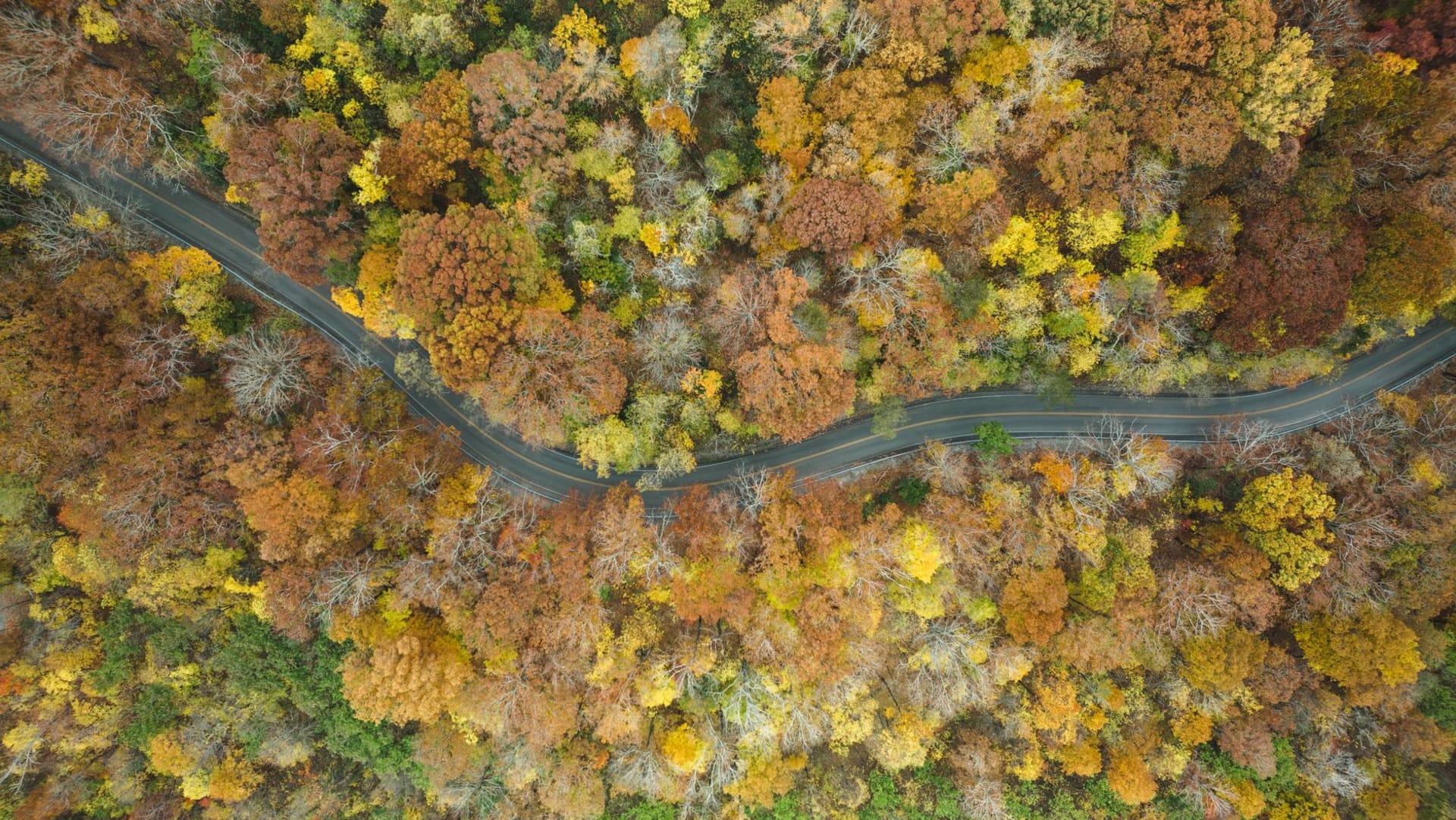
The quality of silence on the Natchez Trace is the first thing that registers. The ban on trucks means the acoustic environment is essentially that of a country road in 1985. The second thing is the density of the canopy: for much of the Tennessee section, the trees close overhead and the light comes through in pieces, dappled and shifting, so that driving feels like moving through a long green tunnel that occasionally opens onto a meadow or a river crossing.
I entered the Trace at the northern terminus in Nashville and drove south for two days, stopping whenever something interested me, which was often. There are no services on the Parkway itself — no gas stations, no fast food, no lodging. You plan ahead or you run out of gas. I ran close to empty near Gordonsburg and found a station in the town of Hohenwald two miles off the Trace with exactly enough left in the tank to make the comedy optional.
The Tennessee Sections
The Tennessee portion of the Trace — roughly the northern 110 miles — passes through rolling middle Tennessee farmland and forest with several sites that reward stopping. The Meriwether Lewis Site at milepost 385.9 marks where the explorer died; the memorial and small museum are sober and honest about the uncertainty surrounding the circumstances of his death. The gravesite is a broken-column monument, the 19th-century symbol for a life cut short.
The Gordon House at milepost 407.7 is one of the few remaining structures from the Trace’s active period — an 1817 ferry house in excellent preservation. The Duck River ford nearby was one of the most difficult crossings on the original trail. Standing at the bank, looking at the river, the logistical difficulty of crossing it in 1810 on foot with a pack becomes concrete in a way that reading about it doesn’t quite achieve.
Cycling the Trace
The Natchez Trace is one of the most celebrated long-distance cycling routes in the United States: no commercial traffic, good pavement, gentle grades, and the canopy providing shade. Cyclists plan multi-day trips from Nashville south, camping at the primitive sites the park service maintains at regular intervals. I’m not a cyclist of that ambition, but I passed a dozen people on loaded touring bikes over two days, and every single one of them looked exactly as satisfied as you’d expect.
The Broader Landscape
The farms visible from the Trace in Tennessee are working farms — tobacco barns, cattle operations, the occasional vineyard. The small towns off the exits — Leiper’s Fork, Gordonsburg, Collinwood — are not tourist destinations. They are simply towns. I stopped at a hardware store in Gordonsburg for a cup of terrible coffee and a conversation about the weather with a man who had opinions about both. This is also part of what the Trace offers: the America that exists between the designated attractions.
When to go: April through early June for wildflowers along the roadsides and mild temperatures. October for fall color, which arrives early at the Tennessee end and moves south through the month. Late November through February can bring cold and occasional ice; the Trace is open year-round but check conditions before driving in winter. Avoid driving after dark — deer crossings are constant and the speed limit is no protection against an eight-point buck materializing from the tree line at 45 miles per hour.