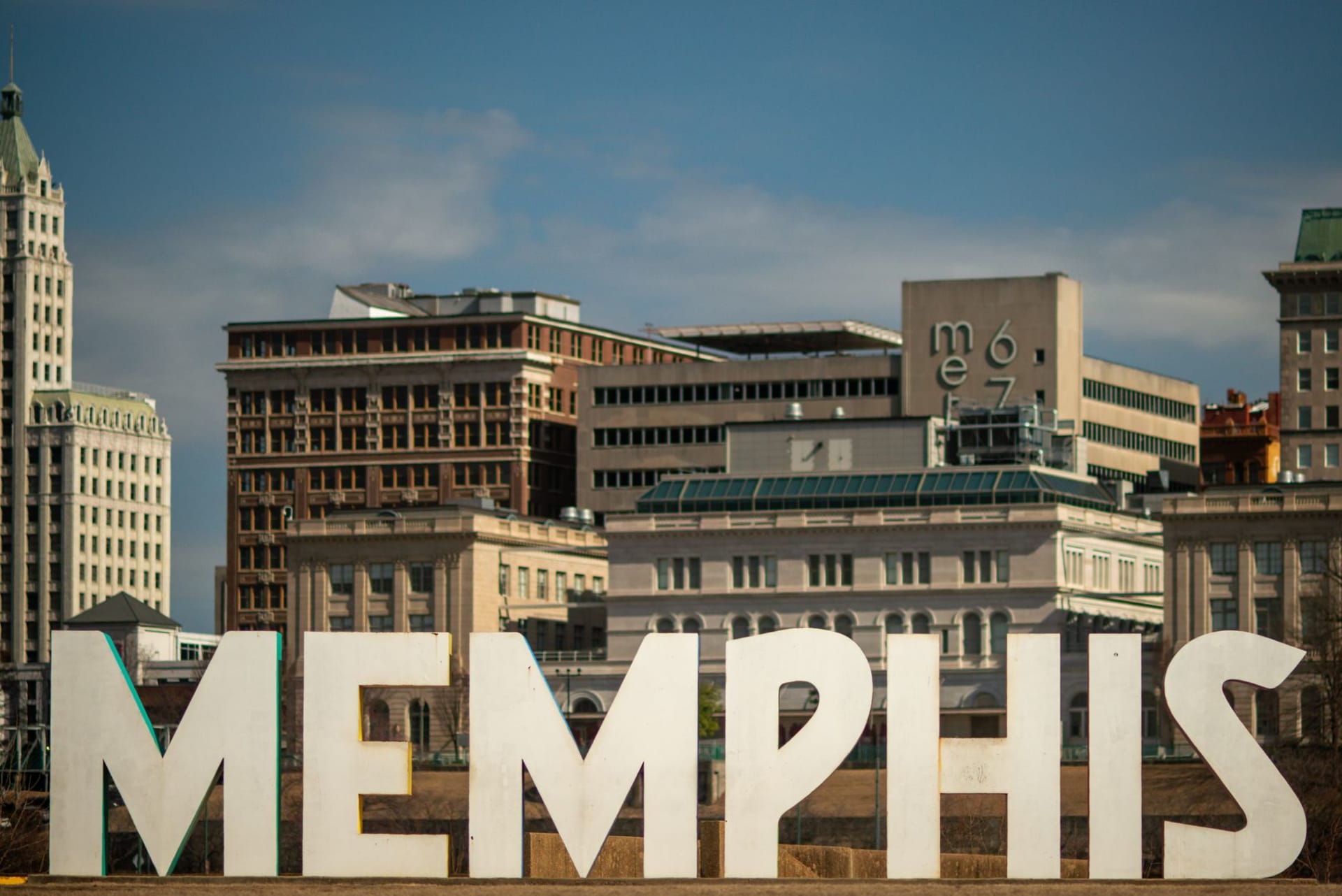
Memphis doesn’t perform for you. That’s the first thing I noticed. Nashville knows it’s a destination; Memphis seems mildly surprised you showed up. The airport is small. The downtown feels half-constructed, half-abandoned, and genuinely alive — all at the same time. The Mississippi sits wide and brown at the edge of everything, indifferent, enormous.
Beale Street and What the Blues Actually Sounds Like
The tourist version of Beale Street is real and it’s fine — neon, souvenir stores, daiquiris in plastic cups. But the musical substance is also real. B.B. King’s Blues Club is the obvious stop; less obvious is the Rum Boogie Café, where the house band plays original Delta blues with a looseness that suggests they’ve been at it for decades and aren’t particularly concerned with whether you appreciate it or not. I found that refreshing.
The history of Beale Street as a Black economic and cultural corridor — effectively destroyed by urban renewal in the 1960s and rebuilt as a tourist district — is worth understanding before you arrive. The Memphis Music Hall of Fame tells this story without flinching. I spent an afternoon there and left feeling like I understood something I hadn’t.
The Lorraine Motel and the National Civil Rights Museum
I don’t know how to write about this lightly, so I won’t try. The National Civil Rights Museum occupies the Lorraine Motel where Martin Luther King Jr. was assassinated on April 4, 1968. The building is preserved exactly as it looked that day. Room 306 — the room he stayed in — is visible through glass.
The museum doesn’t use the assassination as a punctuation mark. It traces the entire arc of the civil rights movement: from slavery through Reconstruction, through Jim Crow, through the bus boycotts and sit-ins and Freedom Rides. It takes three hours if you read everything. Read everything. I came out into the afternoon sun on Mulberry Street with nothing useful to say for about twenty minutes.
Sun Studio and the Sound That Changed Everything
On Union Avenue, in a building that looks like a converted garage (it was a converted garage), Elvis Presley recorded “That’s All Right” in July 1954. So did Johnny Cash, Jerry Lee Lewis, and Roy Orbison. The tour is led by actual humans who clearly love this material and will tell you, with some justified pride, that the original microphone Elvis used is still hanging from the ceiling.
The studio is still recording. There’s a working session booth behind the control room glass. The whole setup costs fourteen dollars. It’s one of the most legitimately historic rooms I’ve ever stood in.
The BBQ Argument
Memphis BBQ is a pork argument, specifically a pulled-shoulder-versus-ribs argument, further divided into wet (sauce-slathered) versus dry (spice-rubbed, no sauce). The Rendezvous, in an alley off Monroe Avenue, serves dry-rubbed ribs over a charcoal fire in a basement dining room with checkered tablecloths that hasn’t changed décor since the Eisenhower administration. The ribs have a bark you could knock on. The smoke smell clings to your jacket.
Central BBQ is the newer, multi-location answer — pulled pork sandwiches on brioche, solid sides, a line at lunch that moves faster than it looks. I went to both. This was not a hardship.
When to go: April and May are ideal — warm enough for walking, cool enough for thinking. The Memphis in May festival runs the whole month and includes the World Championship Barbecue Cooking Contest, which is exactly as good as it sounds. October is also excellent. Avoid August: the humidity is structural, the kind you have to push through.