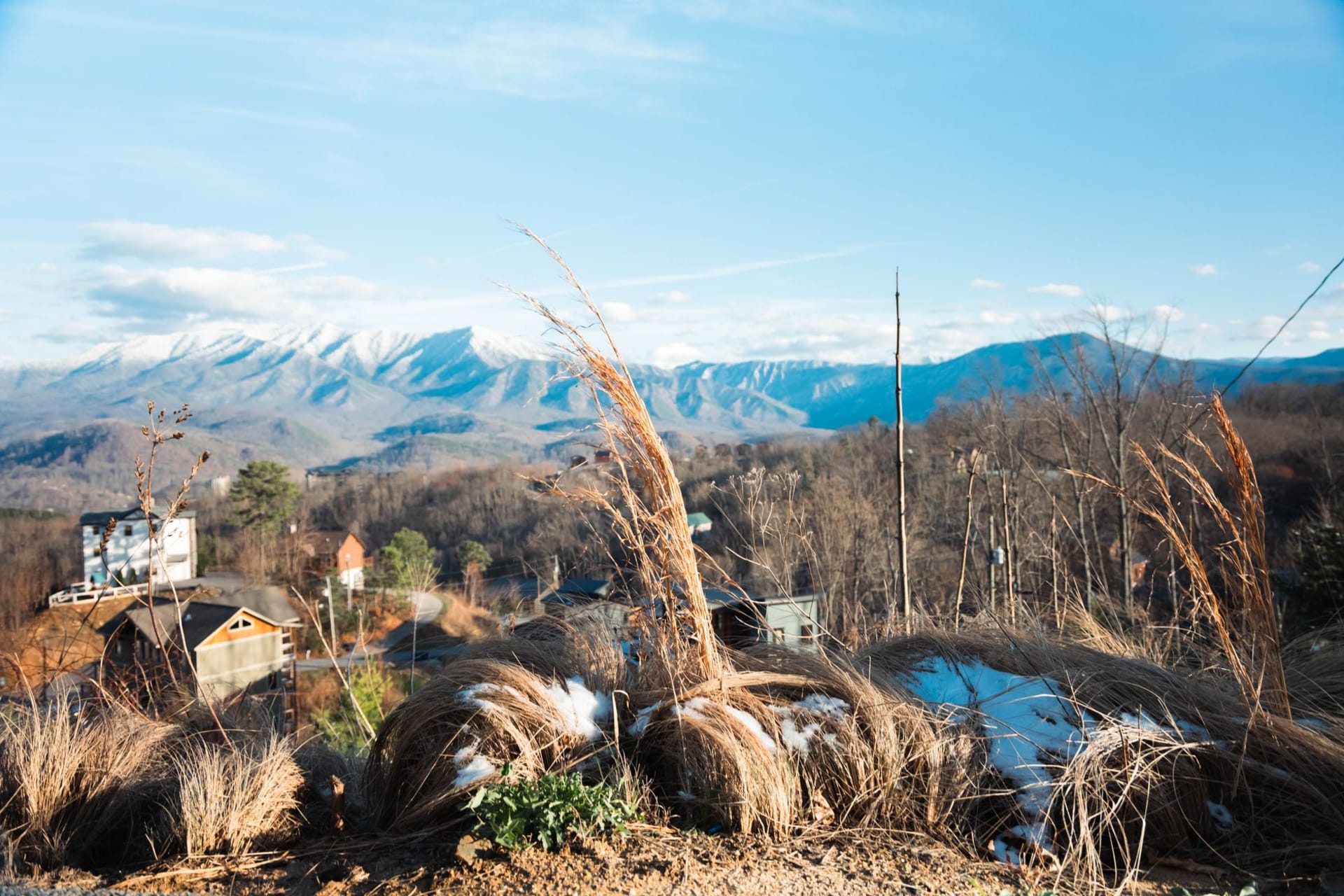
Great Smoky Mountains
"The smoke isn't smoke — it's terpenes released by millions of trees, which is somehow better."
I’d heard the warnings about crowds and decided to go anyway, which turned out to be the right call as long as I understood the basic principle: the Smokies are enormous and the crowds are not. Twelve million people visit each year, but the vast majority stay on Newfound Gap Road, park at the overlooks, and turn around. Hike a mile off any trailhead and you’re suddenly alone with ridge after ridge of Appalachian forest and the particular blue-grey haze the park is named for.
Understanding the Haze
The Smokies are old mountains — among the oldest on earth, geologically. The canopy is dense enough that the trees release isoprene and terpenes in measurable quantities, and these organic compounds scatter blue light, producing the persistent blue mist that settles over the ridgelines in the morning. It’s not fog and it’s not pollution. It’s the forest exhaling. I found it easier to appreciate once I knew what I was looking at.
Clingmans Dome, at 6,643 feet the highest point in the park, puts you above the haze on clear mornings. The concrete observation tower looks like a Cold War relic, which it sort of is — built in 1959. Standing on it at 7am with the cloud layer below and the ridgelines extending south into North Carolina, I understood why people drive from Ohio to stand here and take the same photograph.
The Wildflower Sequence
The Smokies host over 1,500 species of flowering plants, more than any comparable area in North America. Spring wildflower season runs from late March through May, with different species at different elevations. Trillium comes early; flame azaleas — a color that doesn’t quite exist in other flowers, somewhere between orange and fire — bloom higher up in May. Lia had brought a wildflower guide from a used bookstore in Knoxville and used it seriously, cross-referencing pages while I watched a pileated woodpecker work a dead chestnut.
The Porters Creek Trail in Greenbrier is the best single hike for wildflowers: a gentle graded path through an old-growth cove forest with bloodroot and hepatica in early spring, then trout lilies and Solomon’s seal later in the season.
Cades Cove and the Historical Overlay
The Cades Cove loop road — eleven miles around a valley that was farmed before the park’s creation in 1934 — is the most congested place in the Smokies on weekends. On weekday mornings before 9am, it’s something different: white-tailed deer in the meadow grass, a red-tailed hawk on a fence post, and preserved homesteads that explain what this land looked like when Appalachian families were farming it in the 19th century. The Cable Mill is still grinding corn. The Baptist church dates to 1887.
The families who lived here were displaced when the park was established. The history is complicated, and the park interprets it honestly if you read the wayside signs rather than driving past them.
Synchronous Fireflies and the Lottery
Every June, for about two weeks, Photinus carolinus fireflies in Elkmont produce synchronized bioluminescent displays — thousands of individuals flashing in unison every five or six seconds, then going dark together. It is one of the stranger and more beautiful things I have witnessed outdoors. Access requires a lottery (enter in late April); parking is extremely limited. Worth planning your trip around entirely.
When to go: Mid-April for wildflowers at lower elevations, late May for flame azaleas up high. October for fall color, which moves down the mountain through the month. Avoid the last two weeks of July and all of August — the combination of heat, humidity, and peak crowds makes Newfound Gap Road feel like a parking lot. Weekday mornings in any season are dramatically better than weekends.