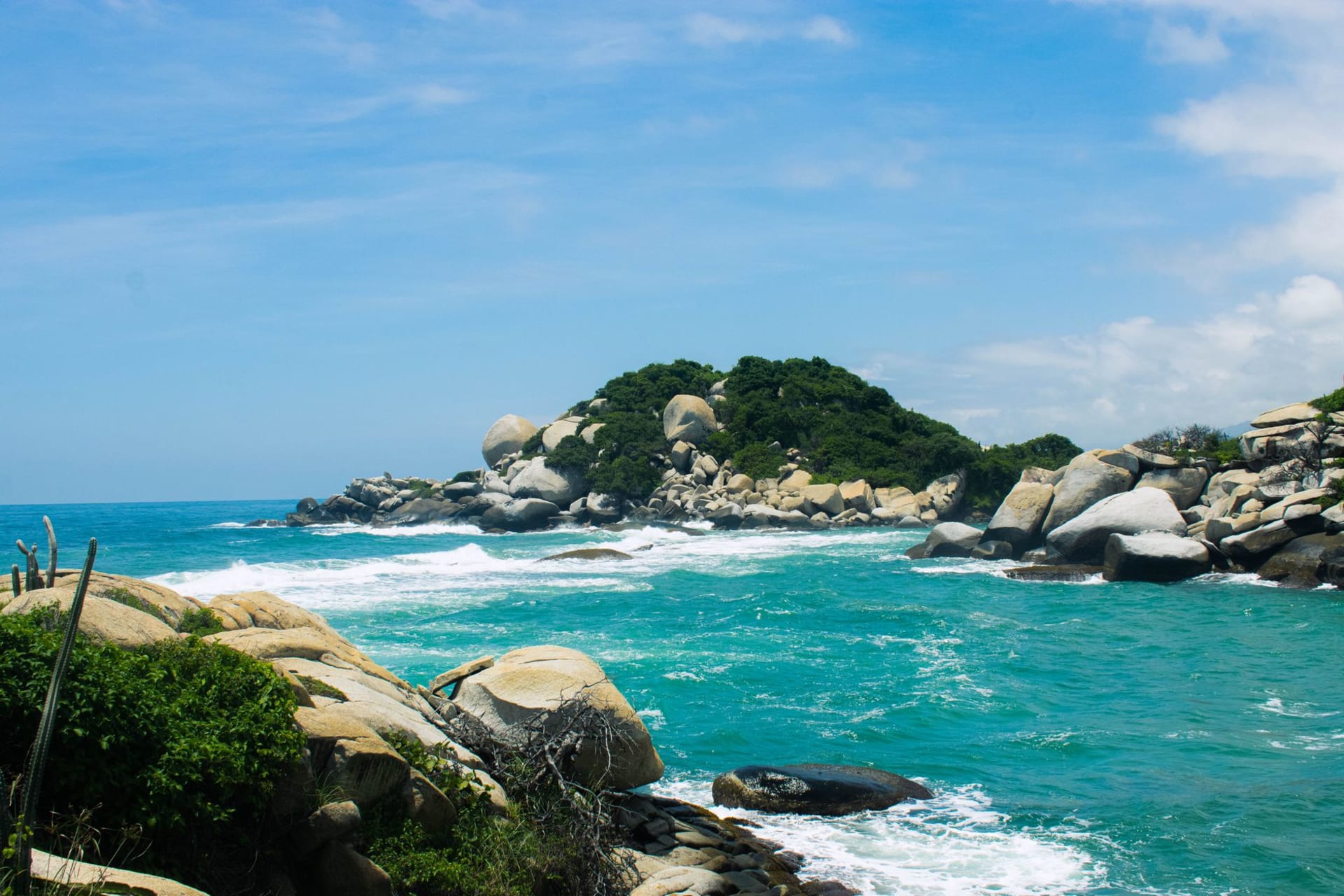
Palomino
"The river carries you to the sea whether you're ready or not, which is probably the correct policy."
Palomino sits about 45 kilometers east of Santa Marta, past the Tayrona park boundary, in a stretch of coast that the Sierra Nevada de Santa Marta treats as its front garden. The mountains here come down faster than you’d think possible — snow-capped peaks visible on clear days, descending through cloud forest, coffee and cacao country, indigenous resguardos, and then arriving at the coast in a rush of green. The Palomino River is their representative at sea level: cold, clear, fast-moving, and making a direct line for the Caribbean through a corridor of jungle.
The town itself is small and genuinely relaxed in a way that doesn’t require effort or performance. A main street with a handful of restaurants, hostels and small eco-lodges set back in the trees, horses moving along the road in the evenings. The backpacker scene arrived here maybe a decade ago and put down roots without overwhelming what was already there.
The Tubing
The thing people come to Palomino for is the river tubing, and it earns its reputation. You hike upstream about forty-five minutes through jungle — the river appearing and disappearing through the trees, the sound of it always audible — until you reach a point where the current is appropriate and the channel is clear. Then you get in an inner tube and let the Palomino River do the work.
The water is immediately, shockingly cold against the Caribbean heat. The current moves you along at a pace that’s fast enough to feel good but slow enough to watch the kingfishers on the overhanging branches, to notice the way the light comes through the canopy in shifting panels. Forty minutes later the river delivers you directly to the ocean — the cold brown river water mixing into the warm Caribbean blue in visible striations, two temperatures meeting at your legs simultaneously.
It’s a good metaphor for something. I didn’t work out what.
The Beach and the Pace
Palomino’s beach is long and largely undeveloped — dark sand, palm trees, waves that are more serious than the coves inside Tayrona. Swimming is possible but you need to read the conditions; the currents can be strong, especially near the river mouth. What the beach is genuinely excellent for is walking: an hour in either direction and the built environment falls away entirely, replaced by coast that feels genuinely solitary.
Lia and I stayed three nights, which was the right amount. Long enough to find a breakfast spot we returned to twice (fried eggs, plantain, coffee so strong it functioned as an alarm clock), to do the tubing, to watch a sunrise and a sunset and the evening bats emerging over the river. Short enough that we left still wanting a little more.
Where the Sierra Nevada Comes In
On clear mornings — rarest in November, more reliable in January — you can see the snowfields of the Sierra Nevada from the beach. The visual argument this makes is extreme: snow-covered mountains, tropical jungle, Caribbean sea, all within the same photograph. I’ve seen the image and it still seems improbable in person. The Sierra Nevada is home to the Kogi, Arhuaco, and other indigenous communities who have lived there since before the Spanish arrived and who continue to live largely by their own calendar. Their presence gives the whole landscape a quality that goes beyond scenery.
When to go: December through March is dry and clear with the best mountain views. April and May see the first rains but the river is especially beautiful with higher flow. Semana Santa brings Colombian vacationers; book accommodation ahead or avoid entirely. Arrive mid-week for the quietest version.