Landing in the Heat
Chennai hits you before the airport doors even open — a wall of humidity, the smell of something frying in coconut oil, a horn chorus that sounds less like traffic and more like a collective argument. I’d been warned about the heat but not about how quickly it starts to feel normal. By my second morning I was already matching pace with the city: slow, deliberate, punctuated by long stops in shade.
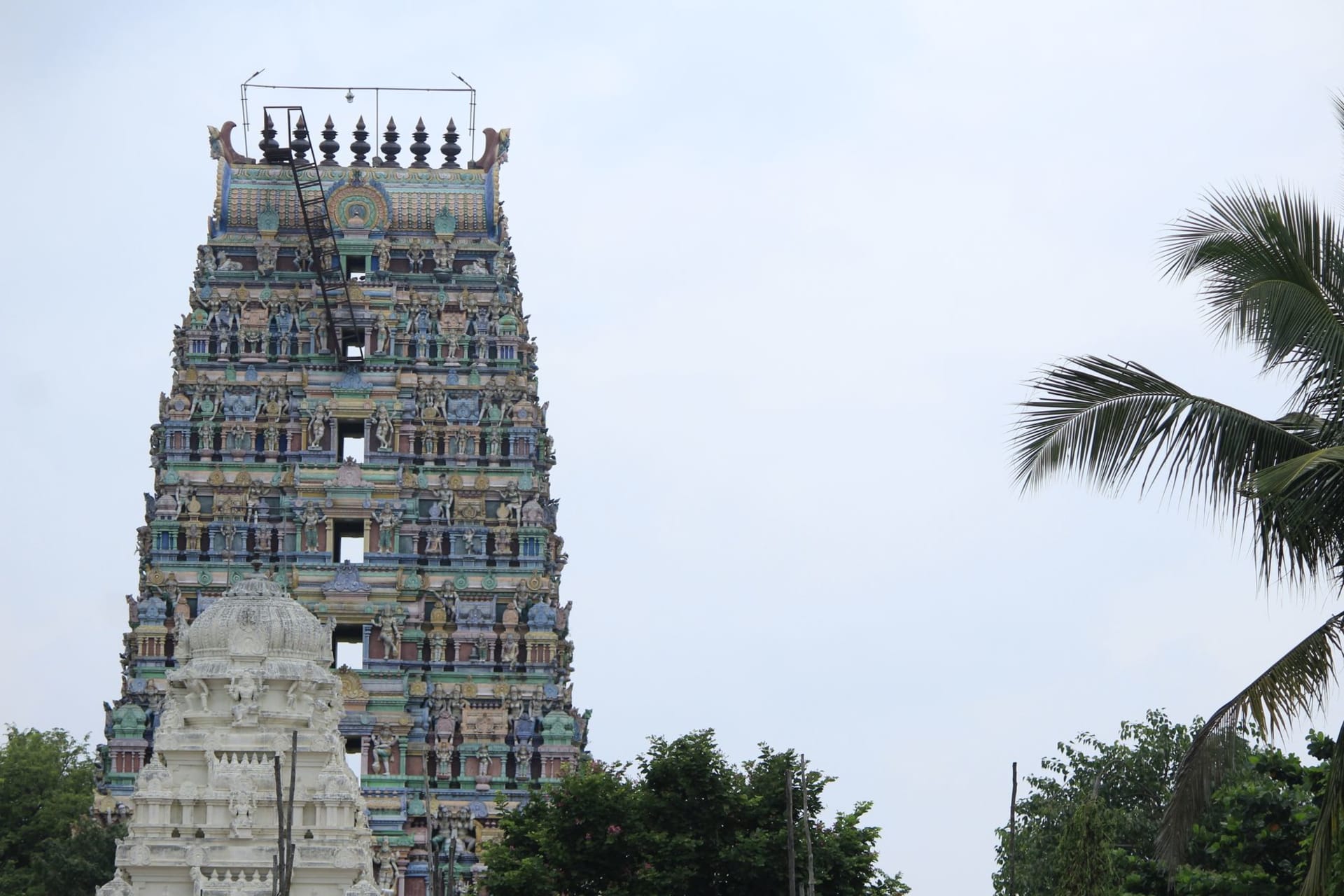
The neighborhood of Mylapore is where I found my footing. Ancient by Indian city standards, it radiates out from the Kapaleeshwarar Temple — a Dravidian gopuram so elaborately carved and painted it looks assembled by committee over many centuries, which is basically true. I arrived early enough to see the morning puja crowd: women in silk saris, jasmine wound into their hair, moving through the temple tank area with the calm efficiency of people who’ve done this every day of their lives.
Filter Coffee and the Art of the Darshini
Tamil Nadu runs on filter coffee, and Chennai is its spiritual headquarters. Not the espresso-adjacent varieties I grew up with in France — this is something slower and more philosophical. A steel tumbler of decoction mixed with hot milk, poured back and forth from a height to cool it and build froth. The ritual matters as much as the drink.
At the small darshini counters in Mylapore, you stand to eat, pay almost nothing, and leave feeling like you understand the city better. Idli with sambar and three kinds of chutney for breakfast. Dosas thin enough to read through. The coconut chutney here — white, cooling, lightly seasoned with curry leaves and mustard seeds — bears no resemblance to anything I’d had in Tamil restaurants abroad.
Marina Beach and the Long Walk
Marina Beach is the second-longest urban beach in the world, a fact Chennai mentions often and not without justification. What the statistics don’t capture is the social theater: kite sellers, corn roasters, snack vendors with carts of sundal — spiced chickpeas that taste like the sea — families sitting in circles on the sand at dusk while the full force of the Bay of Bengal pushes in from the east.
I walked south from the lighthouse toward the fishermen’s quarter as the sun dropped. The boats were wooden and brightly painted. The smell was intense and specific: brine, fish guts, engine oil. I didn’t stay long but I went back the next morning to watch the catch come in. It’s the kind of scene that reminds you a city is never just one thing.
T. Nagar and the Silk Circuit
Chennai’s T. Nagar district is built for shopping in a way that feels almost evangelical — blocks of silk saree stores, gold jewelry shops, textile warehouses where bolts of Kanjivaram silk are unrolled and stacked like geological strata. I have limited tolerance for shopping as tourism but found myself lingering anyway, pulled in by the colors. The silk here is heavy, lustrous, borderline architectural.
When to go: November through February is the sweet spot — temperatures drop to a manageable 25–30°C and the northeast monsoon has usually cleared. December brings the Margazhi music season, one of South India’s great cultural events: a month of Carnatic concerts held at dawn across the city. Avoid May and June when coastal humidity and heat combine unpleasantly.