Asia
Tamil Nadu
"Nowhere else on earth do humans build at this scale for the divine."
I arrived in Madurai on an overnight bus from Kerala with rice still on my shirt and no plan beyond finding the Meenakshi Amman Temple before the crowds arrived. I didn’t make it in time. There were no crowds to beat — just a steady, purposeful flow of Tamil pilgrims who had been coming here for centuries and needed no tourist infrastructure to navigate it. The temple was not a museum. It was alive in a way that Angkor and the Acropolis, as extraordinary as they are, simply are not anymore.
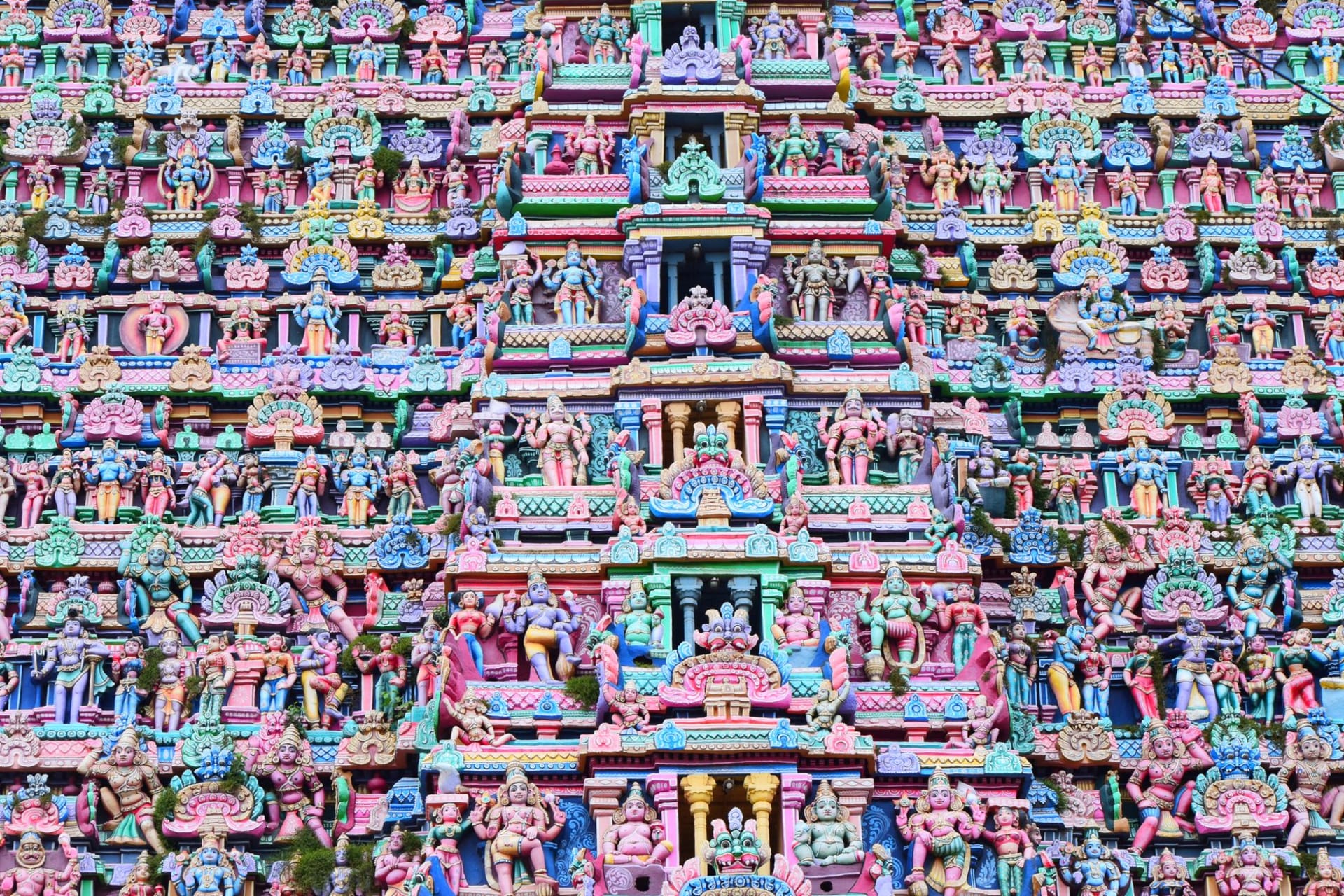
Tamil Nadu is the place I go when I want to remember that India’s south is not just “India minus the chaos.” It is its own thing entirely — Dravidian architecture with no Mughal influence, a Tamil language that dates to antiquity and has never been swept aside, a temple culture where the rituals are not performed for cameras but for the gods themselves. The gopurams — those towering gateway towers encrusted with hundreds of painted figures — announce each temple city from kilometers away. In Thanjavur, the Brihadeeswarar Temple rises eleven stories above a flat agrarian plain, built in the eleventh century, and it still stops you dead. In Mahabalipuram, stone rathas carved from single boulders face the Bay of Bengal like they’ve been waiting there forever, because they have.
The food here operates on a different logic than north Indian cooking. Chettinad cuisine — peppery, complex, built on kalpasi and marathi mokku spices you won’t find anywhere else — is one of the most underrated culinary traditions on the subcontinent. A proper Chettinad chicken curry eaten in Karaikudi with banana leaf and fresh rasam changes the scale on which you measure heat and flavor for the rest of your trip. Add a filter coffee from a steel tumbler at any roadside stall, poured from height to cool it, and the day starts correctly.
When to go: November to February is the window. Tamil Nadu sits in a climatic exception — its northeast monsoon hits October and November, so it actually sees rain when the rest of India is drying out. By December it’s cool and clear. March brings rising heat, and by May the plains around Madurai and Trichy are genuinely punishing.
What most guides get wrong: They route Tamil Nadu as an add-on at the end of a south India circuit, giving it three days between Kerala and a flight home. That is not enough time to understand anything here. Madurai alone deserves two days minimum, Mahabalipuram is a full day and a half, and the temple towns of the Cauvery Delta — Thanjavur, Kumbakonam, Gangaikonda Cholapuram — justify their own separate trip. Tamil Nadu rewards the traveler who slows down enough to sit in a temple courtyard at dusk and simply watch.