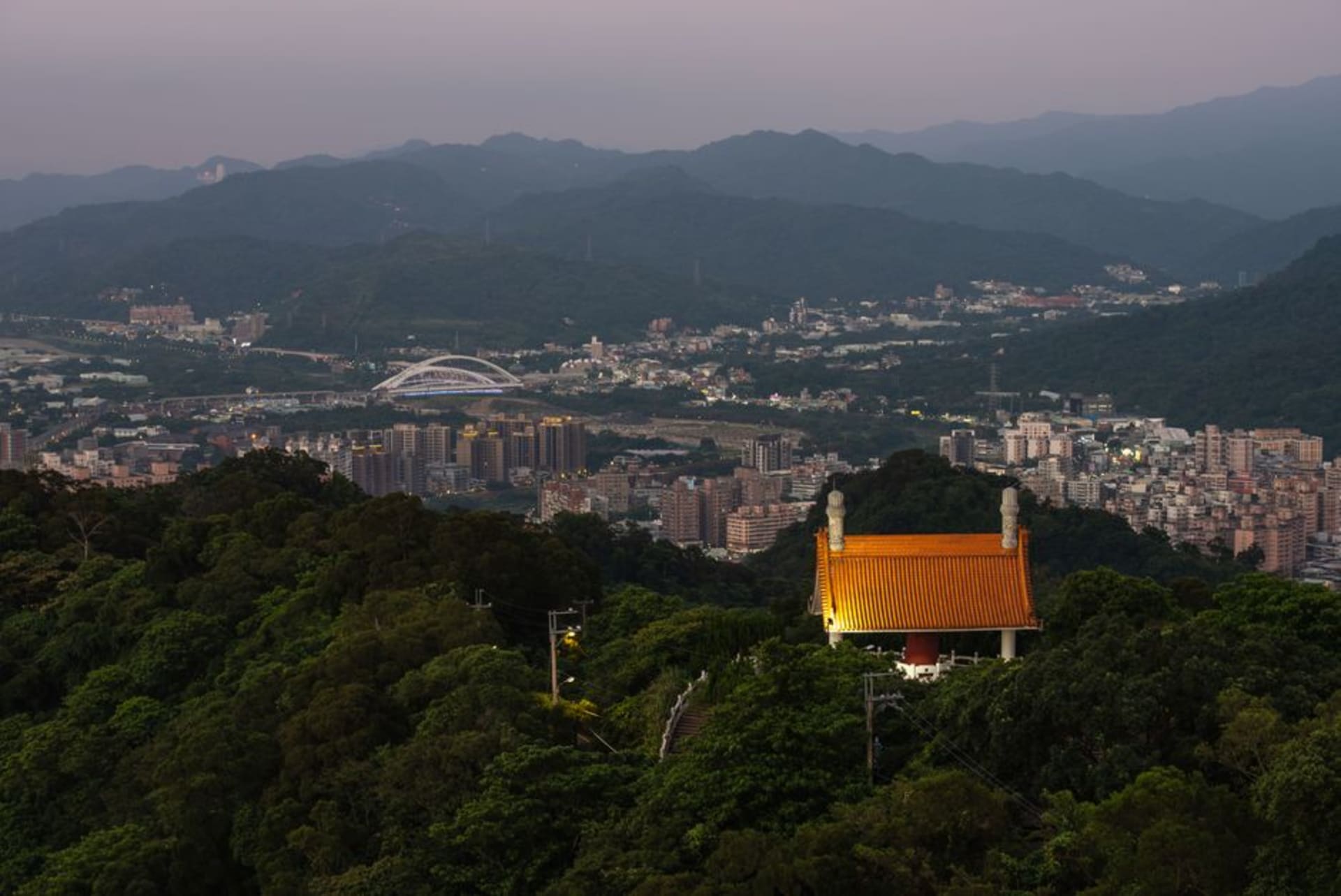
Sanxia
"I came for the temple. I stayed for the ox-horn pastry, then came back the following week for more of it."
A red-brick old street south of Taipei where baroque facades, a wooden temple that took decades to carve, and a golden pastry called jinniu horn share three blocks of covered arcade.
Lia found Sanxia the way she finds most things — scrolling a Taiwanese forum at midnight, three tabs deep, looking for something that wasn’t Jiufen. “Old street, no crowds, weird pastry shaped like a horn,” she read out loud, already putting on her shoes. We took the bus from Taipei’s Yongning MRT station on a Sunday morning, and within forty minutes we were standing under a covered brick arcade that looked like someone had transplanted a slice of 1920s Europe onto the edge of a Taiwanese river town, which is more or less exactly what happened.
An Arcade Built by Committee, Somehow Coherent
Sanxia Old Street was rebuilt in the Japanese colonial period with a strict rule: every shopfront had to have its own baroque-style facade, individually designed, no two alike. Walking its length is like reading three hundred metres of competitive architecture — one storefront has cherubs, the next has stone lions, another has a merchant’s initials worked into the brickwork in a font that looks almost Deco. The arcade itself keeps you dry in the rain and shaded from the sun, and locals still use it as an actual street, not a museum piece; there’s a hardware store next to an incense shop next to a stall selling deep-fried squid.
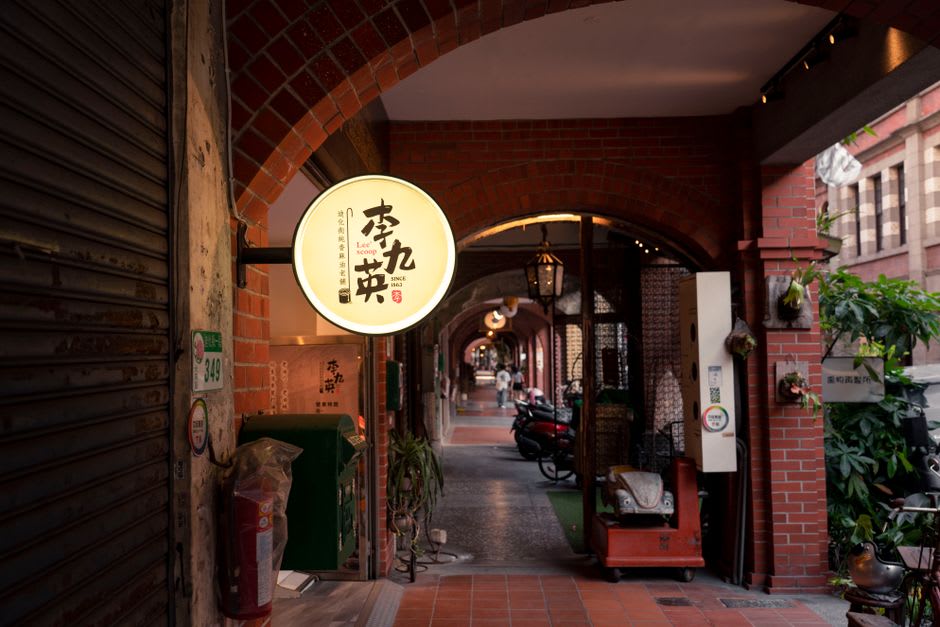
We ate our way down the street slowly. The famous item here is the jinniu jiao — literally “golden ox horn” — a twisted, curved pastry deep-fried until the outside shatters and the inside stays soft and faintly sweet, shaped, more or less, like a small ram’s horn. Lia bought four in a paper bag and we sat on a stone step to eat them while a group of schoolkids ran past chasing a badminton shuttlecock that had clearly gone rogue for the third time that afternoon.
Zushi Temple, Thirty-Six Years in the Carving
At the end of the old street sits Zushi Temple, which does not look, from the outside, like it should be as extraordinary as it is. Inside, every beam, pillar, and eave is carved stone and wood, densely layered with dragons, warriors, and folk scenes — the result of a rebuilding effort led after the war by the sculptor Li Mei-shu, who treated the temple as a lifelong art project rather than a construction job. Some sections took years. The stone pillars alone, carved by competing teams of artisans working different sections simultaneously, have a slightly showy, one-upmanship quality once you know the story — you can tell where one master handed off to a rival trying to outdo him.
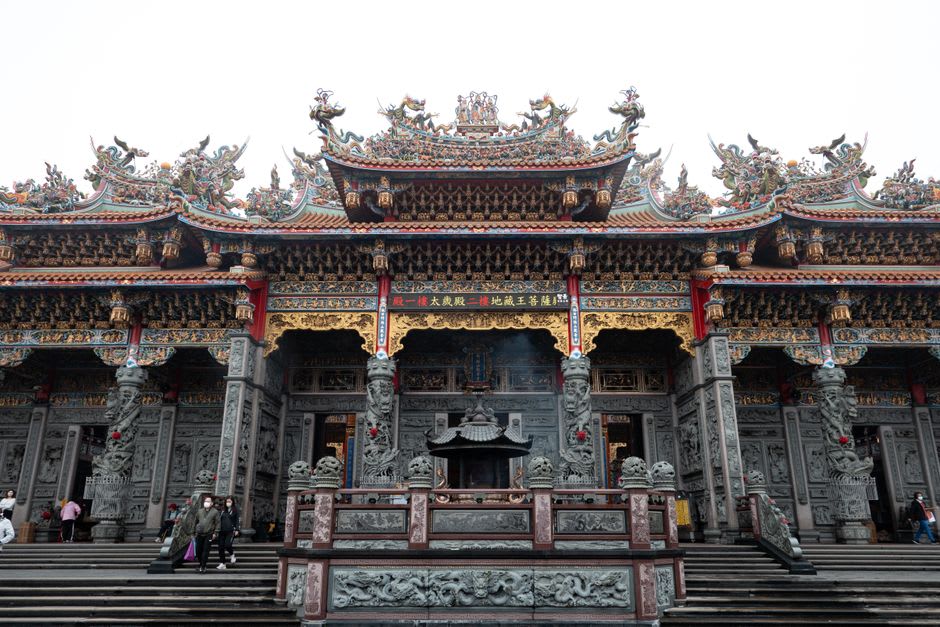
We stood there long enough that a temple volunteer, noticing our lingering, came over and explained — in patient, slow Mandarin that I mostly followed and Lia mostly translated for me afterward — that some of the carving crews never finished their sections before dying of old age, and their sons took over instead. It is, quietly, one of the most obsessive pieces of craftsmanship I’ve stood in front of anywhere in Asia.
When to go: Any weekend morning, arriving before 11am lets you see the old street before the day-trip crowds from Taipei arrive. October through April brings cooler, drier weather that makes the walk more comfortable; the covered arcade means light rain doesn’t really disrupt the visit either way.