Sandimen
"Sandimen is where southern Taiwan stops being about the coast and starts being about the mountains and the people who never left them."
A mountain township above the Pingtung plains where Paiwan and Rukai indigenous communities keep glass-bead craft and slate architecture alive.
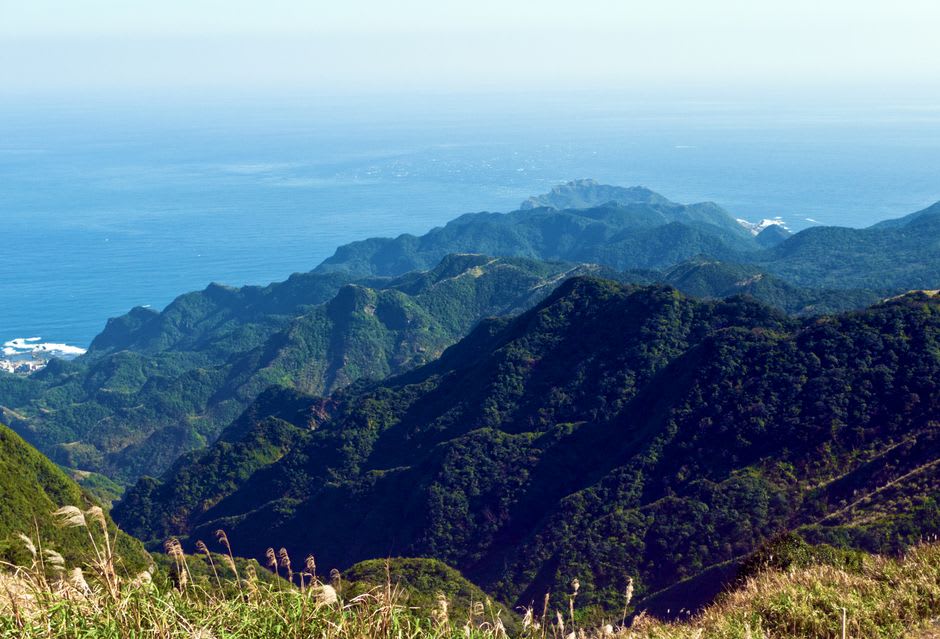
The road up to Sandimen climbs fast out of the Pingtung plains, switchbacking through betel nut groves until the air cools and the houses change character entirely — slate-roofed, stone-walled, built low against the slope in a style that has nothing to do with the concrete townhouses we’d been seeing for a week. Sandimen sits at the edge of Taiwan’s central mountain range and is home to Paiwan and Rukai indigenous communities whose presence here predates every other layer of the island’s history we’d been tracing.
Glass Beads and Living Craft
Sandimen is Taiwan’s center for Paiwan glass-bead making, a tradition tied to clan status and mythology — certain bead patterns are said to carry protective or ancestral meaning, and traditionally only chiefs’ families could wear specific designs. We stopped at a small studio where an artisan demonstrated the lampworking technique, melting colored glass rods over an open flame and twisting them into tiny patterned beads with a precision that took her, she told us, over a decade to master. Lia bought a bracelet strung with beads representing the sun and the hundred-pace snake, both recurring motifs in Paiwan mythology.

The Slate House Villages
Further up the mountain, the Rukai village of Wutai and the resettled community at Sandimen itself preserve the slate-slab construction that once defined every house in these hills — walls and roofs built entirely from stacked, split slate without mortar, engineered to withstand typhoons and earthquakes alike. Some of the oldest houses still standing carry carved lintels depicting ancestors, hundred-pace snakes, and hunting scenes. A local guide walked us through one restored house, explaining how the central hearth doubled as the family’s social and spiritual center, smoke curing the wooden beams overhead for generations.
Millet, Not Rice
Lunch was our first real introduction to indigenous Taiwanese cuisine, built around millet rather than rice: qavai, a pyramid-shaped dumpling of millet and pork wrapped in leaves, and a smoked wild boar dish that the restaurant owner, who was Rukai herself, insisted we eat with our hands. It reframed a week of night-market food entirely — a cuisine with its own logic, older than the Han Chinese and Japanese influences that dominate most of what visitors associate with Taiwanese food.
When to go: October through April for cool, clear mountain weather; the Sandimen area also hosts harvest festivals in summer, worth timing a visit around if you can confirm dates locally.