
Qixingtan Beach
"Every few minutes a fighter jet screamed overhead and the whole beach paused mid-conversation to watch it disappear over the mountains."
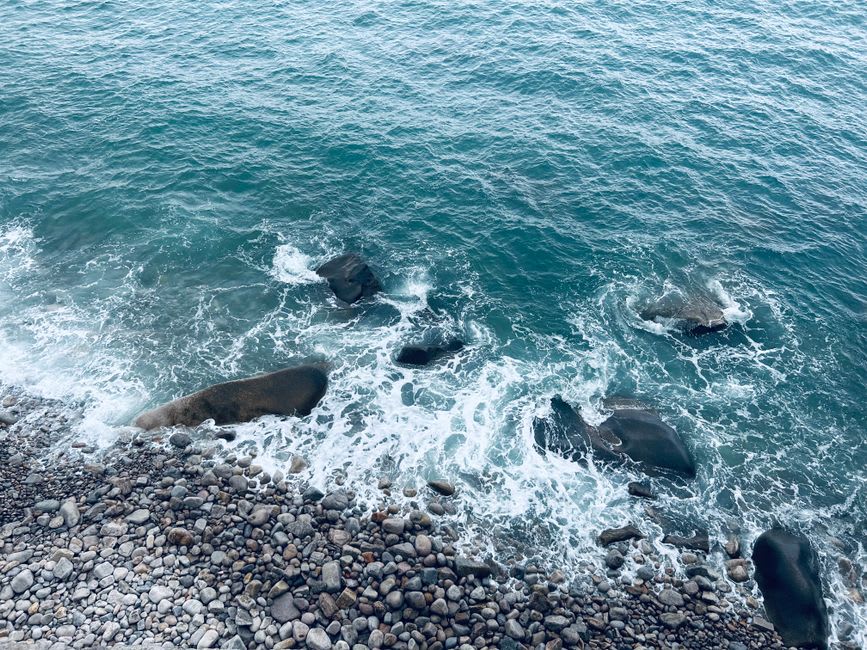
A crescent of smooth grey pebbles just north of Hualien airport, where fighter jets occasionally roar overhead and the Pacific arrives in the kind of waves that discourage swimming and reward watching.
Qixingtan — “Seven Star Lake,” despite having neither seven stars nor a lake — is a long crescent bay a short scooter ride north of Hualien city, backed by mountains and fronted by a beach made entirely of smooth grey and black pebbles rather than sand. The name is a historical relic from when the bay actually held small ponds before land reclamation filled them in; what’s left is one of the more photogenic stretches of coastline on the east side of the island.
A Beach You Don’t Swim At
The current here is strong enough that swimming is officially discouraged and, on the day I visited, actively enforced by a lifeguard with a whistle and very little patience. That restriction turns out to be freeing rather than frustrating — instead of wrestling with the water, people come to walk the pebbles, skip flat stones (harder than it sounds, given the size and weight of them), and watch the waves detonate against the shore in long curling lines that are more dramatic than anything you’d see on a swimmable beach.
Jets, Mountains, and an Odd Kind of Peace
Hualien Air Force Base sits close enough to the bay that fighter jets on training runs pass low overhead at unpredictable intervals, engines briefly overwhelming the sound of the surf before the plane vanishes behind the Central Mountain Range. It’s a strange juxtaposition — one of the most tranquil coastal views in Taiwan interrupted every so often by military hardware — but somehow it didn’t feel intrusive so much as oddly appropriate to a country that lives with that tension quietly, all the time.
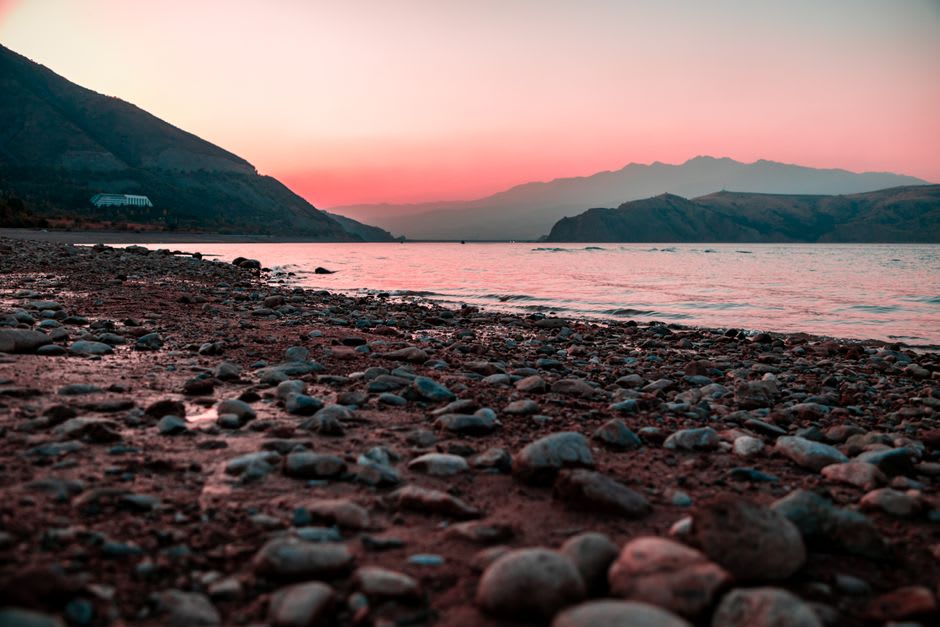
When to go: Year-round, though clearer skies from October through April give the best mountain visibility. Early morning or just before sunset avoids both the midday heat and the tour bus groups that stop briefly on the way to Taroko Gorge.