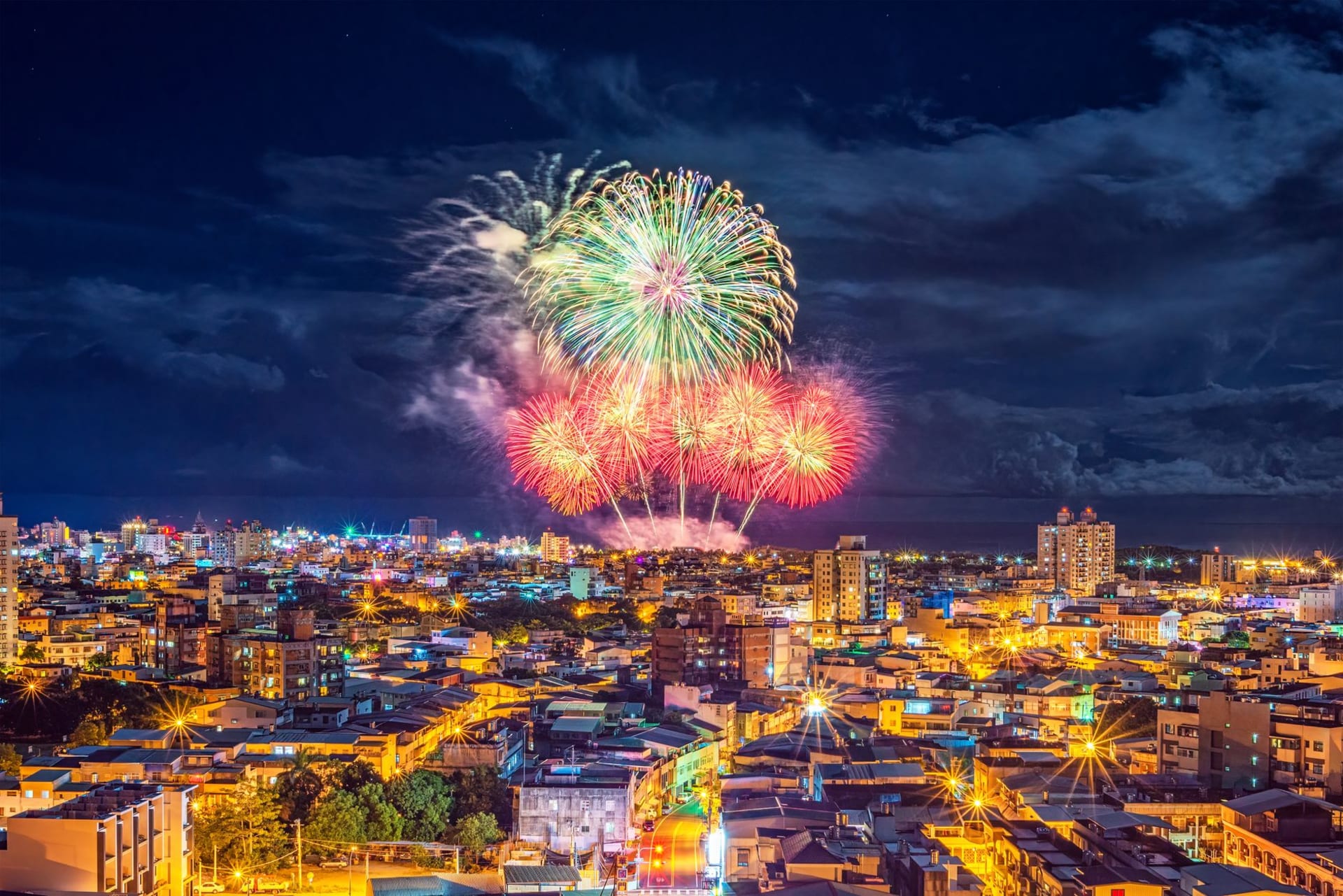
Penghu Islands
"The wind on Penghu is the kind that clears your head whether you want it to or not."
Sixty-four islands in the Taiwan Strait, and most of them are barely large enough to justify a name. Penghu sits halfway between Taiwan and China, which historically made it useful for whoever was fighting over the area — the Dutch, the Ming loyalists, the Qing, the Japanese, and eventually the Republic of China — and explains why the archipelago has a density of fortifications and Mazu temples that seems disproportionate to its small population.
I flew in from Kaohsiung in forty minutes, dropped from cloud into a flat, dry, wind-blasted landscape that looked nothing like the Taiwan I’d been traveling through for ten days. No mountains, no bamboo, no subtropical lushness. Just basalt, sky, and ocean the color of a gas flame.
The Wind Is the Climate
Penghu is one of the windiest places in Asia outside of a typhoon. The northeast monsoon hits from October through March with enough force to require that traditional houses be built low and surrounded by coral-stone windbreaks. Some older villages feel like they’re crouching. The wind farms you see on every promontory aren’t aesthetic choices — they’re the only sensible response to a resource that never stops.
I arrived in June, which is the opposite season: calmer winds, clear water, and water temperatures warm enough for swimming. The light had a quality I don’t have precise words for — flat, brilliant, almost bleaching — the way light behaves when there’s nothing for it to bounce off except stone and ocean.
Basalt Geometry
The geological signature of Penghu is its basalt columns. When the volcanic rock cooled millions of years ago, it contracted into hexagonal columns — some vertical, some fanning out from a single base like a hand of cards. The sea stacks at Tongpan Island are the most dramatic, but you find basalt everywhere: as building material, as breakwaters, stacked into windbreaks by farmers who had to do something with all of it.
I rented a scooter and spent a day circling the main island and crossing the Penghu Great Bridge to Baisha and Xiyu. The roads are quiet enough that I pulled over whenever something looked interesting, which was often. The old villages have narrow lanes between black basalt walls, shuttered in the winter and open in summer, with red-lacquered temple doors that appear without warning around corners.
Oysters at the Source
Penghu oysters are famous in Taiwan and embarrassingly good on the island itself. The aquaculture racks you see in every bay are bamboo frames where oysters cluster in enormous cascades — the ones I ate at a roadside stand near Magong Harbor were the size of my palm and tasted clean and cold with a mineral edge that I associate with very cold water, though the Strait runs warm.
Lia ordered three plates and I ordered two and the owner seemed pleased without making a production of it. The dipping sauce was a thin soy with ginger and coriander. We ate standing up and took the scooters back toward town with our hands smelling pleasantly of the sea.
The night market in Magong is small but focused — grilled squid, oyster vermicelli, peanut ice cream rolls — and winds down earlier than you’d expect, which suits the pace of the place. Penghu doesn’t try to be exciting in the Taipei sense. It’s somewhere you go to let the wind work on you for a few days.
When to go: May through September for swimming, calm weather, and the Penghu Ocean Festival (fireworks over the harbor in July and August). October through March is windy, dramatic, and empty — worth it if you want the landscape without the summer crowds. Avoid typhoon season peak (August to September) if you’re sensitive to last-minute flight cancellations.