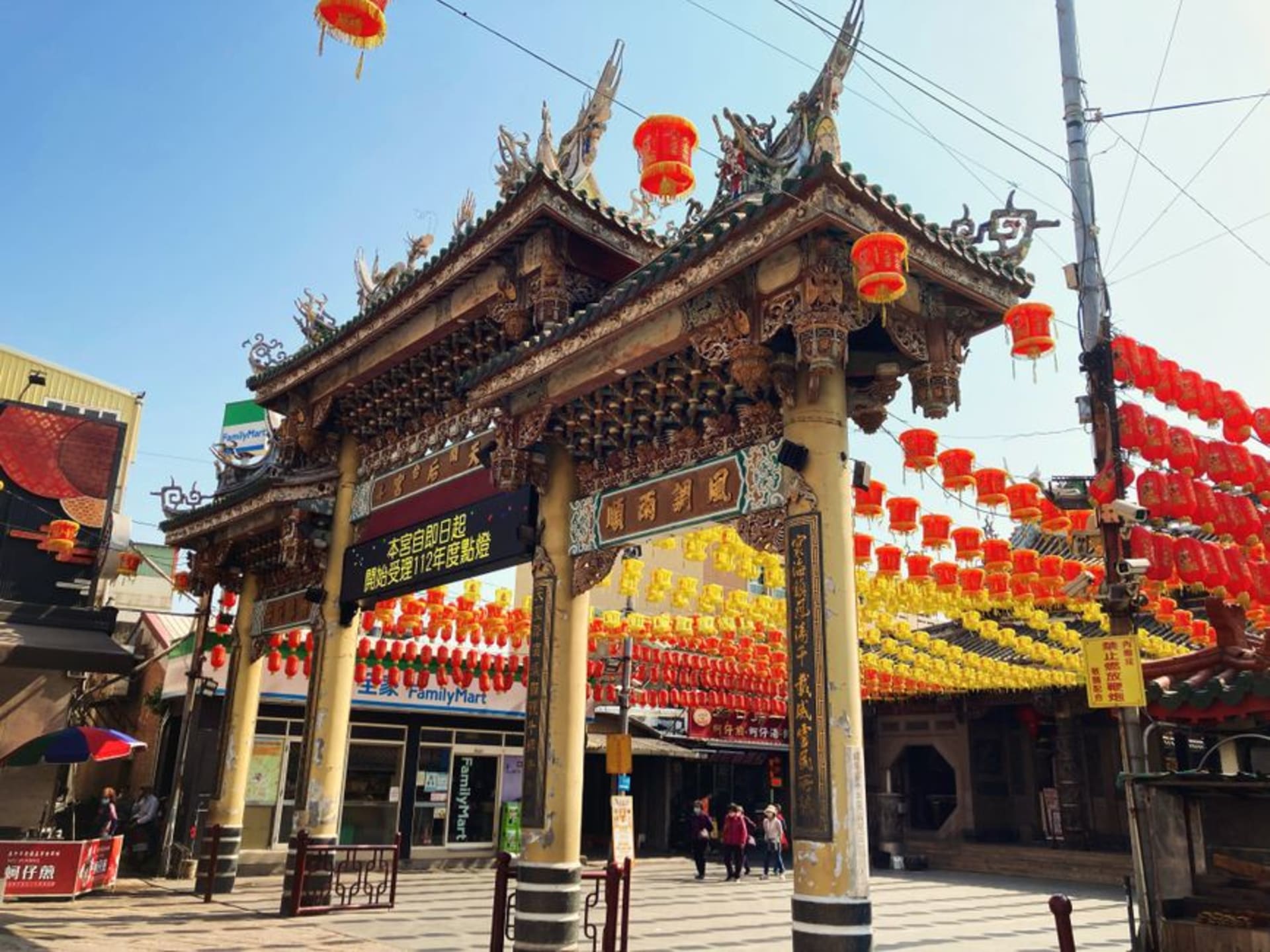
A former Qing-dynasty trading port frozen mid-breath, all red-brick alleys, incense smoke, and centuries-old temples still in daily use.
The silt did this. Lukang was once the second-busiest port in Taiwan, a Qing-dynasty boomtown thick with merchant houses trading camphor and sugar across the strait to Fujian, and then over the course of a century the harbor quietly filled in with silt and the ocean simply moved a few kilometers away. The port died, the money left with it, and what remained was a town too poor to tear itself down and rebuild. That accident of economic bad luck is the reason Lukang’s old town still looks, in places, like the nineteenth century never ended.
Half Moon Alley and the Logic of Narrow Streets
Jiuqu Alley, nicknamed Half Moon Lane for how the sunlight only touches the ground at noon, is barely wide enough for two people to pass shoulder to shoulder. The brick walls here were built close and curved deliberately — against wind, against pirates, against prying eyes from the street — and walking it now, laundry strung overhead and cats asleep on windowsills, I felt like I’d wandered onto a film set except every door was somebody’s actual home. Lia stopped counting the cats after eleven.
Longshan Temple, Without the Crowds
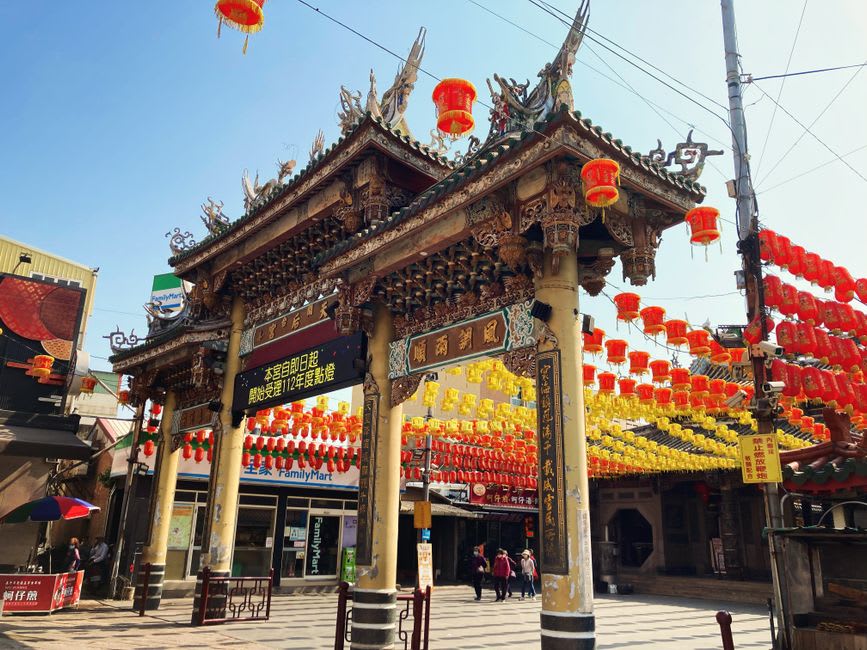
Taiwan has no shortage of Longshan Temples, but Lukang’s version predates the more famous Taipei branch and, on the Tuesday afternoon we visited, had exactly four other people in it. Built in 1786 and virtually untouched by the reconstruction that modernized so many of the island’s other historic temples, its wooden roof structure is exposed and genuinely ancient-looking, dark with two and a half centuries of incense smoke. An old man was refilling oil lamps at the main altar, moving with the unhurried precision of someone who has done this every day for decades. Nobody photographed him. Nobody needed to ask permission. This was simply Tuesday.
Oyster Omelets and Ox Tongue Cookies
Lukang’s food identity runs on two unrelated tracks: fresh oysters pulled from the shallow tidal flats that replaced the old harbor, and a strange, dense cookie called niu-she-bing — “ox tongue cake” — named for its shape, not its ingredients, thin and slightly chewy with a caramelized sugar crust. We bought a bag from a shop that has apparently been making them the same way since the 1970s and ate the entire thing walking back to the bus stop, which tells you what you need to know about their quality control on portion sizes.
When to go: Autumn through early spring, roughly October to March, avoids both the summer heat trapped between the brick walls and the crowds of the Dragon Boat and Mazu pilgrimage festivals — though if you can time a visit to the Lukang Folk Arts Festival in autumn, the town puts on a genuinely unpolished, local celebration worth catching.