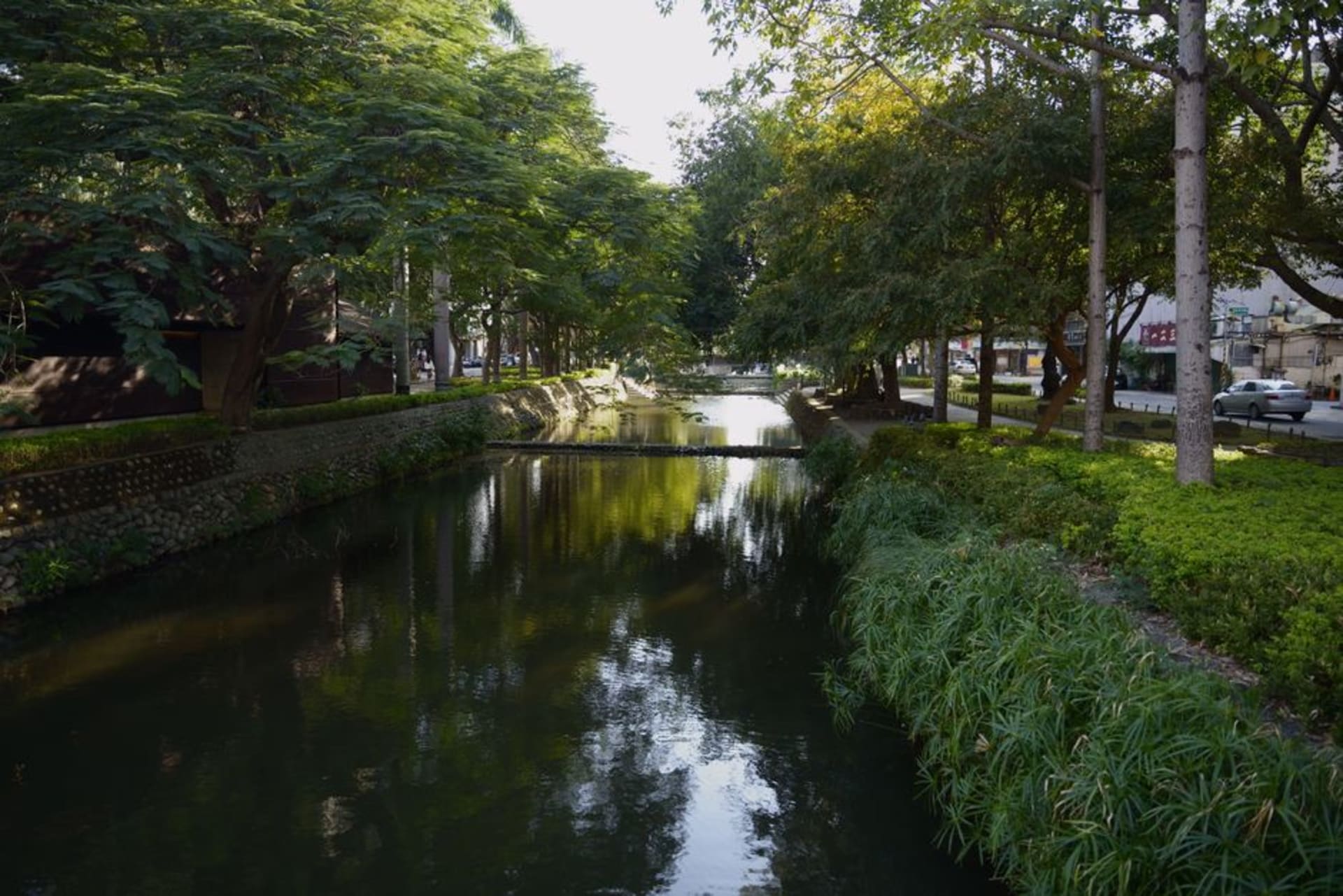
Hsinchu
"Half the world's most advanced chips are made a few kilometers from a 200-year-old city gate. Nobody in Hsinchu finds that strange."
Taiwan's Silicon Valley by day and a walled Qing-dynasty city by night, split evenly between chip fabs and centuries-old temple lanes.
Hsinchu gets described, almost exclusively, as the place where Taiwan’s semiconductor industry lives — TSMC’s home base, a science park responsible for a meaningful share of the world’s most advanced chips. What surprised me, arriving with zero expectations beyond that framing, was how much older and stranger the city underneath it turned out to be.
The Wind City’s Old Gate
Hsinchu is nicknamed the Wind City for the gusts that funnel down from the mountains through its streets, strong enough that locals have opinions about which corners to avoid in winter. At its center stands the Yingxi Gate, or East Gate, the last intact remnant of the old Qing-dynasty city wall, a squat stone-and-tile structure now marooned on a traffic roundabout, ringed by motor scooters and lit gold at night. Standing beneath it with traffic circling on all sides, watching commuters in company badges walk past a 200-year-old fortification without a glance, captured something true about how this city holds its two eras.
City God Temple and the Food Court Underneath
The Hsinchu City God Temple dates to the 1700s and is one of the most elaborately restored temples we saw anywhere on the island, its roof crowded with ceramic figures and its interior thick with carved beams telling stories neither Lia nor I could fully follow without a guide. What we did not expect was the temple’s own food court, a warren of stalls selling meatball soup, rice noodles, and glutinous rice dumplings tucked directly into the temple’s outer courtyards — sacred space and lunch counter sharing the same roofline without apparent contradiction.
Rice Noodles With an Actual Terroir
Hsinchu’s mifen, thin rice vermicelli, is considered some of the best in Taiwan, and locals credit it specifically to the city’s wind — strong, steady, and dry, ideal for air-drying the noodles outdoors on bamboo racks in a way that more humid coastal towns simply can’t replicate. We watched racks of it drying behind a family workshop near the old city center, white strands catching the afternoon light like something between laundry and art installation.
When to go: Autumn through spring, October to April, when Hsinchu’s famous wind is brisk rather than punishing. Summer brings both heat and the industrial hum of the science park at full capacity, which does nothing for the old town’s charm.