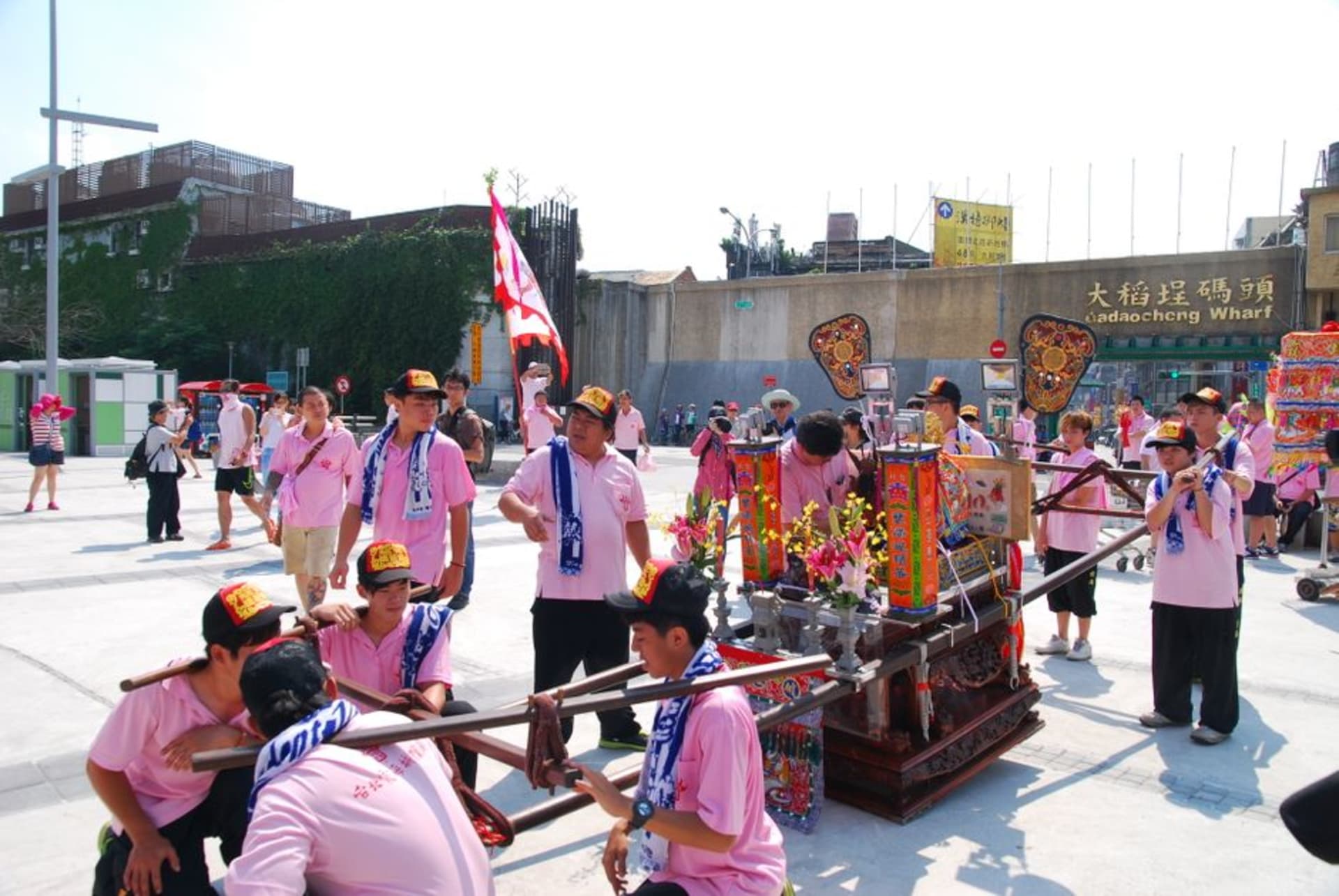
Dadaocheng
"Dihua Street smells like every apothecary my grandmother ever dragged me into, and I mean that as the highest compliment."
A nineteenth-century merchant quarter of tea houses, herbal apothecaries, and Dihua Street's slow-burning revival.
We came to Dadaocheng looking for tea and left three hours later with a paper bag of dried longan, a jar of preserved plums Lia insisted we needed, and no clear memory of how either purchase happened. That is what Dihua Street does to you. It is Taipei’s oldest commercial thoroughfare, a strip of nineteenth-century shophouses that once handled the city’s entire trade in tea, textiles, and Chinese medicine, and it still smells the part.
Dihua Street, Slowly
The facades are the first thing you notice — baroque cornices and Fujianese tile work bolted onto narrow shopfronts, a genuinely strange architectural mash-up left over from a period when Taipei’s merchants were building status symbols out of borrowed European motifs. Behind those facades, the shops have not changed much: sacks of dried mushrooms, glass jars of ginseng, bins of red dates sold by weight from scales that look older than the building.
An older shopkeeper spent ten minutes explaining to us, in a mix of Mandarin and hand gestures, the difference between three grades of dried scallop before Lia bought the cheapest one out of what I think was simple relief that the lesson had ended. He seemed satisfied regardless. I got the impression the explanation mattered more to him than the sale.
Tea Houses and the Yongle Market
Behind the main street, the Yongle Fabric Market occupies a building that has sold cloth to Taipei’s tailors for generations, and upstairs from it we found a quiet tea house with low stools and a woman roasting oolong leaves in a flat iron pan over a small gas burner, filling the whole floor with a toasted, almost smoky smell. We sat for the better part of an hour, drinking tea poured from a pot too small to share properly, arguing amiably over whose turn it was to refill it.
As evening came on, the Xiahai City God Temple two blocks over filled with worshippers lighting incense for the matchmaker god enshrined inside — reputedly one of the most effective in Taiwan, judging by the crowd of young couples and the sheer volume of paper offerings burning in the courtyard furnace.
When to go: Year-round, but aim for a weekday morning when the shopkeepers have time to talk and the street has not yet filled with weekend crowds. Lunar New Year, when Dihua Street becomes the city’s dried-goods shopping epicenter, is chaotic but worth seeing once.